June 15, 2026
Unsafe hospital waste disposal raises health, environmental concerns
Improper disposal of hospital waste is raising health and environmental concerns as hazardous material reportedly enters informal recycling networks. Experts warn the practice could spread infections and expose consumers to contaminated plastic products.

June 15, 2026
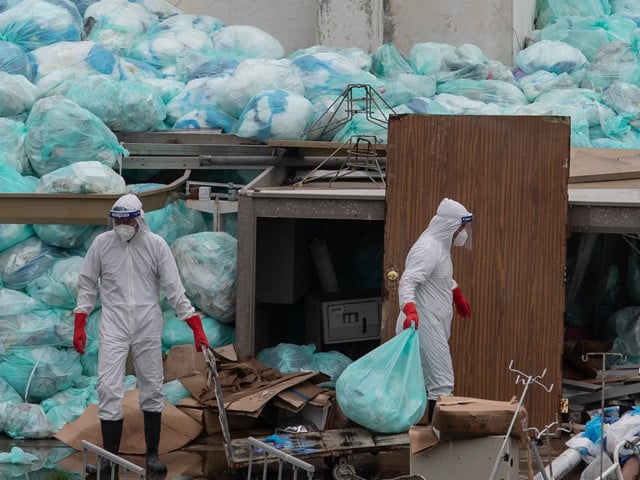
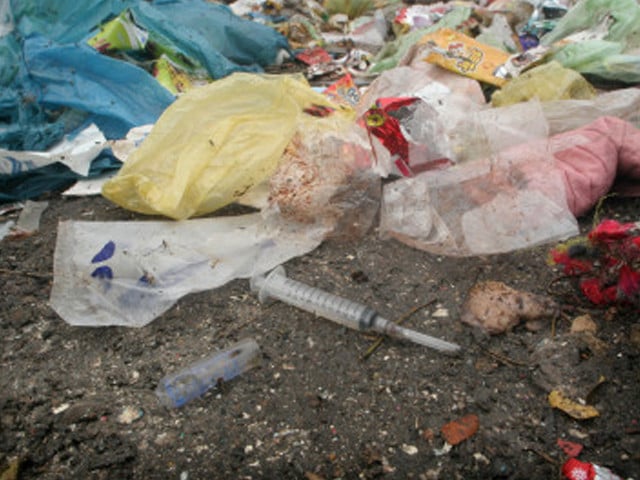
LAHORE: Improper handling of hospital waste is heightening concerns over public health and environmental safety, with hazardous material from medical facilities reportedly ending up outside hospital premises and entering unregulated recycling channels.
According to public health experts, waste generated in operating theatres, emergency wards and laboratories includes used syringes, injection needles, blood-stained dressings, intravenous fluid bottles, surgical gloves, medicine vials, expired medicines and plastic tubing. Under health and environmental rules, such material is classified as infectious and is required to be separated at the point of generation and destroyed through incineration or sterilisation.
In health authorities, major hospitals in Lahore and other large cities, including Faisalabad, Rawalpindi, Chakwal, Gujrat, Bahawalpur, Narowal, Gujranwala and Sialkot, have not ensured adequate arrangements for the safe disposal of medical waste generated in tonnes, while enforcement of the relevant rules remains inconsistent. In a number of cases, hazardous waste is not separated properly and is instead mixed with ordinary garbage before being taken outside hospital premises and dumped in municipal containers or open locations.
Informal recycling chain
Once discarded in this way, the waste becomes accessible to informal waste pickers who sift through the garbage in search of recyclable items, especially plastics that can be sold. The recovered material, including syringes, saline bottles, drip sets and plastic medical packaging, is reportedly passed on to scrap dealers and small recycling units. These items are then cleaned, melted and remoulded into low-cost plastic products for sale in local markets, including household containers, cups, buckets and inexpensive toys.
Punjab University Professor Munawar Sabir warned that the risks linked to such practices go beyond visible contamination.
"Hospital plastics are not ordinary waste as they may carry biological contamination such as blood residues and drug traces. Even when melted, there is concern that toxic chemical remnants from medical use and plastic additives may persist, creating long-term health risks for both workers and consumers"A particularly serious concern relates to used syringes and other sharp objects. Health authorities classify used injection equipment among the most dangerous forms of medical waste because of its ability to spread blood-borne infections, and such items are meant to be destroyed immediately. Reports, however, suggest that in some informal systems, plastic syringe casings are separated from needles and diverted into recycling streams.
Health and environmental risks
Public health specialists have highlighted the possibility of transmitting hepatitis B, hepatitis C and other infectious diseases when contaminated material is handled improperly. Informal-sector waste workers are considered the most exposed, often working without gloves, masks or other protective gear. Experts say the danger may also extend to the wider public if contaminated material is turned into everyday consumer products.
There are also concerns that recycled hospital plastics may be used in manufacturing units producing household goods such as toys, utensils and containers sold in local markets. Because these goods are made in unregulated settings, experts say there is often no way to trace the source of the raw material, leaving buyers unaware of possible hazards.
An expert also warned of the environmental fallout from poor disposal methods.
Under Punjab’s hospital waste management rules, medical waste must be segregated, transported securely and disposed of through specialised systems. Experts, however, say implementation remains uneven, especially in smaller hospitals and private clinics where oversight is weaker and resources are limited.
0 Comments
No comments yet. Be the first to join the discussion!