June 15, 2026
Government Girls Degree College Bara gets BS Zoology programme
The Khyber-Pakhtunkhwa Directorate of Higher Education has approved a BS Zoology programme at Government Girls Degree College Bara. The programme will initially offer 40 seats and is being seen as a step toward improving women’s access to higher education in Khyber district.

June 15, 2026
PESHAWAR: The Khyber-Pakhtunkhwa Directorate of Higher Education has granted formal approval for a BS Zoology programme at Government Girls Degree College Bara, a move expected to expand access to higher education for women in Tehsil Bara and across Khyber district.
The new programme will initially admit 40 female students. The approval has been welcomed locally because it will allow many young women to continue their studies closer to home instead of having to seek admission in Peshawar or other cities.
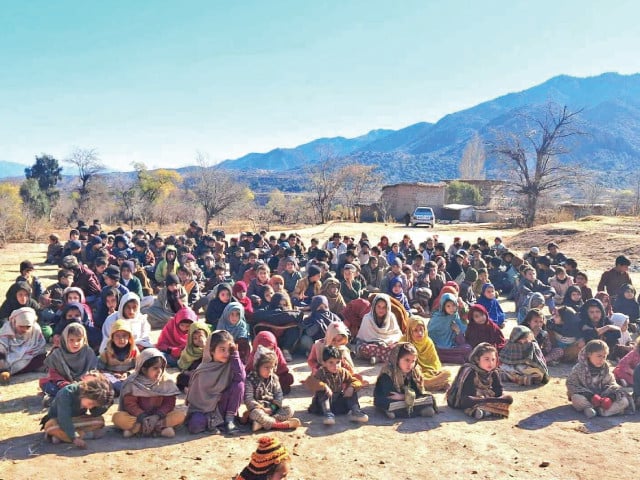
Residents, parents, teachers and community elders had for years raised concern over the lack of higher education options in the tribal districts, saying many girls were unable to continue beyond FSc. The start of the BS Zoology programme is being seen as an important development for women’s education, science learning and access to local higher education.
The demand for a BS programme at the college had remained under discussion for several years. Students, parents and teachers had repeatedly urged authorities to expand academic opportunities so girls from the area would not need to travel outside the district for further study. The issue gained wider attention after a detailed report highlighted the difficulties faced by female students and the shortage of degree options.
Following that, Provincial Assembly Member and District Khyber Dedac Chairman Abdul Ghani Afridi took up the matter with higher education authorities, while Chief Minister Sohail Afridi also gave it special attention. The approval was achieved through the efforts of college principal Zarqa Shabir, the Higher Education Department, elected representatives and local education stakeholders.
The decision prompted a positive response from students at the college, many of whom said the new programme would spare them the hardship and expense of travelling to distant cities. For families in rural parts of Khyber, regular commuting to Peshawar and elsewhere has been difficult and often beyond their means. Social and cultural considerations discourage many parents from sending daughters away from home for education.
Students have also called on the government to introduce BS programmes in other disciplines, including Chemistry, Botany, Computer Science and Physics.
Education picture in Khyber district
Official statistics show that 126,318 students are enrolled in government institutions in Khyber district, including 73,218 boys and 53,100 girls. Although girls’ enrolment has improved in recent years, a gender gap remains, particularly in higher education.
From nursery to Class 5, total enrolment stands at 97,472 students, comprising 53,692 boys and 43,780 girls. The highest enrolment is in KG with 22,787 students, followed by Class 1 with 18,010 and Class 2 with 16,469. Educationists said this reflects increasing parental interest in early schooling.
From Class 6 to 10, overall enrolment drops to 28,846, including 19,526 boys and 9,320 girls. The figures fall from 8,100 students in Class 6 to 3,804 in Class 10, underscoring high dropout levels, especially among girls, due to social, economic and academic pressures.
Bara has the largest concentration of students in the district. At primary level, 44,485 students are enrolled in Bara, compared with 32,141 in Jamrud and 20,846 in Landi Kotal. A similar pattern is visible at middle and high school levels.
Khyber district has 747 government educational institutions, including 406 for boys and 341 for girls. While the primary school network is relatively broad, the number of high and higher secondary schools, especially for girls, remains limited. This shortage is a major factor behind many girls ending their education after matriculation and FSc.
0 Comments
No comments yet. Be the first to join the discussion!