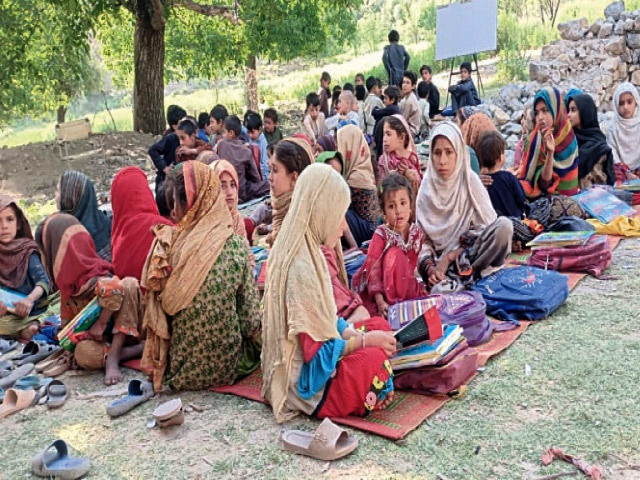
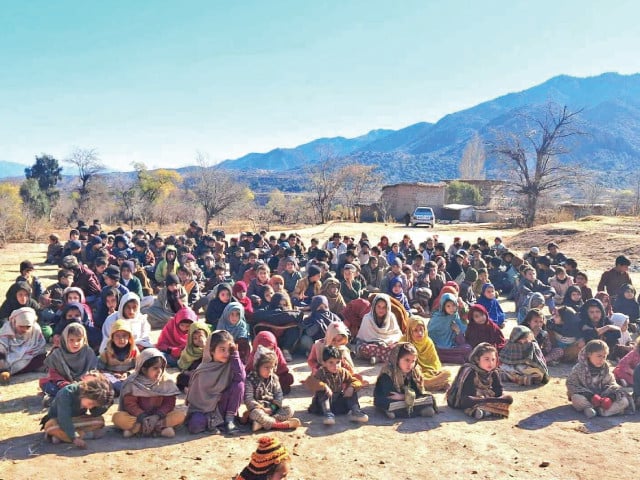
Teacher shortages, limited facilities hamper girls’ education in Bara
Girls’ education in Bara tehsil is being affected by a severe shortage of teachers, limited higher-level institutions and inadequate college facilities. Officials and local stakeholders have also raised concerns over security gaps and the impact of displacement in Tirah Valley.

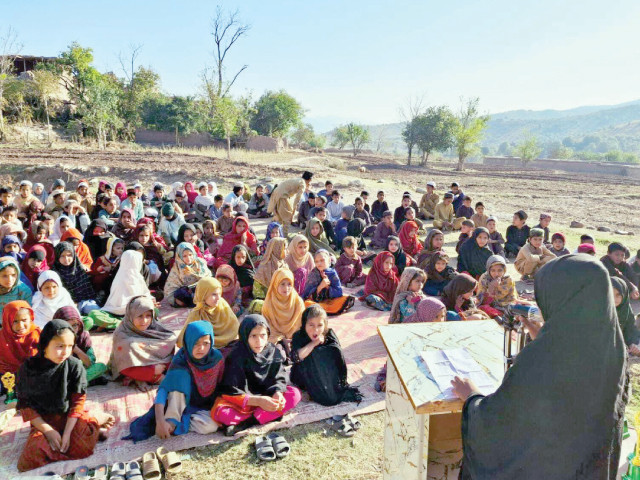
PESHAWAR: Girls’ education in Khyber district, particularly in Bara tehsil, is facing major difficulties because of staff shortages, limited facilities and a lack of modern learning resources, according to officials and local stakeholders.
Official figures show there are 420 government girls’ schools in Khyber district. In Bara tehsil, the education network includes 132 girls’ primary schools, nine middle schools, five high schools and only one girls’ higher secondary school. More than 22,000 girls are enrolled at the primary level, while about 6,000 students are studying from Class 6 to Second Year. Bara also has only one girls’ degree college.
Sub-Divisional Education Officer Bara Dr Sher Zaman Afridi said most school buildings have been completed and basic facilities are available, but a severe shortage of teachers remains the central issue. He said girls’ primary schools in Bara are short by more than 500 teachers, a gap he said is seriously affecting female students’ education.
Dr Afridi said there is an urgent need to recruit teachers locally to address the shortfall. He also said the lack of subject specialists, particularly science teachers, at the high and higher secondary levels has become a serious concern.
According to Dr Afridi, provincial policy requires one higher secondary school every 12 kilometres, but Bara has only one girls’ higher secondary school, situated in Klanga Akakhel.
Degree college faces multiple constraints
The only girls’ degree college in Bara has also not been able to meet modern educational requirements. Principal Zarqa Shabir said the college is affiliated with Benazir Women University and currently has around 400 students. She said only the BS Urdu programme is operational, with 18 students enrolled in it.
Shabir said the absence of science and computer laboratories has blocked the introduction of other BS programmes. She added that the issue has repeatedly been raised with the government, especially Chief Minister Sohail Afridi, but no practical action has been taken.
She further said the college is also dealing with shortages of transport, security and non-teaching staff. According to the principal, only two police personnel have been assigned for security at the college, which she described as inadequate. She said repeated requests to the District Police Officer Khyber for stronger security arrangements have not received a response.
Concerns from Upper Bara and Tirah Valley
Social activist Torab Ali Afridi from the mountainous Upper Bara area said that although schools exist in many places, they remain deserted because there are no teachers. He said this is depriving both boys and girls of basic education, adding that repeated complaints to the authorities have not produced progress.
Separately, senior Jamiat Ulema-e-Islam leader Maulana Syed Jaleel Afridi highlighted the situation of students affected by displacement in Tirah Valley. He said education is a fundamental right of every human being, but children in the former tribal districts, especially in Bara and Tirah Valley, are being denied that right.
He said thousands of families displaced from Tirah Valley because of recent unrest have been without educational facilities for more than four months. He called on the government to take emergency measures to restore educational activity for affected students. He noted that in tribal society, girls' education is now being given considerable importance, and any further delay would be highly damaging.
Repeated efforts were made to obtain comments from elected public representatives and relevant officials, but no response was received.
Comments
No comments yet. Be the first to join the discussion!