

June 10, 2026
Gilgit-Baltistan trout population halves amid climate and fishing pressures
Gilgit-Baltistan’s trout population has declined by an estimated 50pc over two decades, with officials and experts blaming climate-related floods, habitat damage and overfishing. At the same time, trout farming in the region has expanded rapidly amid rising demand.

June 10, 2026
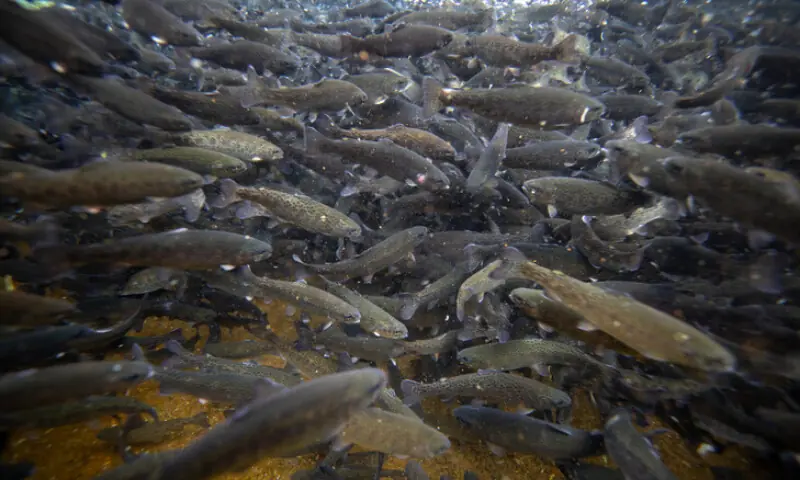
ISLAMABAD: Gilgit-Baltistan’s trout population has dropped sharply over the past two decades as climate-related disasters, damage to habitats and overfishing put increasing pressure on the fish found in the region’s cold, glacier-fed waters, according to officials and experts.
Officials and conservation experts said the decline is linked to a combination of factors, including flash floods, glacial lake outburst floods, pollution, habitat fragmentation, hydropower construction and illegal fishing methods. They estimated that trout numbers in the region have fallen by about 50 per cent over the last 20 years.
Farasat Ali of WWF-Pakistan said climate change-driven flash floods have damaged spawning grounds in many streams and tributaries by altering sediments and gravel composition. He also said overfishing through dynamite, nets and electric shocks remained a major threat even though many local rivers and streams were still in relatively good condition.
He further said hydropower plants had created another obstacle for trout because many projects in Gilgit-Baltistan were built without fish ladders or bypass systems. According to him, trout move upstream to breed, and blocking that movement can wipe out entire offspring populations within affected habitats.
Floods, landslides and overfishing cited
Inayat Ali, assistant director at the Gilgit-Baltistan Fisheries Department, said repeated floods since 2010, as well as glacial lake outburst floods, had severely affected trout in the region. He said trout need clean, oxygen-rich water, while floods and landslides bring mud and rocks that degrade water quality and destroy breeding sites.
He also said the fish being caught now are generally smaller than in the past, which he linked to overfishing. According to him, trout weighing more than one kilogram have become uncommon, while most catches now fall between 500 and 600 grams. He said fish weighing 2kg or more were once considered a normal single catch until about a decade ago.
Although he said there had been no official survey or statistical count of the trout population, Inayat Ali described the estimate of a 50pc fall over two decades as conservative. Khadim Hussain, an official of the local environment protection agency, also supported that estimate.
Hussain said improved roads and transport links across Gilgit-Baltistan had opened access to remote lakes and streams, increasing commercial fishing activity in areas previously harder to reach.
Introduced species and fishing controls
Trout is not native to Gilgit-Baltistan and was introduced to the region by British colonial officers in the late 19th and early 20th centuries. It described trout as an exotic species that has displaced most native fish in many rivers and streams.
Gilgit-Baltistan has two trout varieties — brown trout and rainbow trout — with brown trout said to be more common. The Ghizer district is regarded as a main centre for trout in the region.
Fishing for trout is prohibited from October to March, the six-month breeding season, though the ban is often violated. Under regional law, a licence is required for trout fishing. The fisheries department currently issues between 5,000 and 6,000 seasonal and daily licences each year, up from around 1,000 to 1,500 a decade ago.
Farming expands as wild stocks decline
At the same time, trout farming has expanded rapidly across Gilgit-Baltistan as demand for the fish has increased. Inayat Ali said farmed trout production was rising even as numbers in rivers and lakes were falling.
According to the fisheries department, the number of trout farms in the region has climbed to more than 450 in the last three to four years from just over 100 previously. These farms now supply around 600 tons of trout annually to markets across Pakistan. Since 2013, the department has been offering guidance and financial support for trout farming, which officials described as a profitable business that has created employment opportunities.
Maaz Alam, who established a trout farm in Ghizer in 2017, said he now sends 10 tons of fish each year to Islamabad, Lahore, Peshawar and other cities. He said demand was rising both within Gilgit-Baltistan and elsewhere in the country, and added that trout farming offers returns of 80pc to 100pc.
He said much of the production is consumed locally as tourism has increased, adding that trout has become closely associated with Gilgit-Baltistan for visitors. Alam also said the region had potential to export trout, especially to Middle Eastern markets, but that better marketing and quality packaging would require government or third-party support.
Conservation proposals
Farasat Ali called for community-based conservation and fish management measures, including trophy hunting-style programmes, to help revive trout stocks. He pointed to Pakistan’s markhor conservation model, under which the Gilgit-Baltistan government last year auctioned permits for hunting the endangered animal for a record $370,000.
Under that programme, about 80pc of the revenue generated through hunting licences is spent on local communities on projects such as schools, mosques, health centres and scholarships, while the remaining amount goes to the national exchequer. Farasat Ali said a similar approach could help both fish populations and wetland conservation in selected areas.
0 Comments
No comments yet. Be the first to join the discussion!


