June 10, 2026
Climate, energy security dominate talks between Musadik and Spanish envoy
Climate Minister Dr. Musadik Malik met Spain’s envoy to discuss climate change, energy security, and bilateral renewable energy cooperation, warning against placing the Indus Waters Treaty in abeyance amid flood risks.

June 10, 2026

Climate Minister Musadik meets Spanish envoy to discuss regional and global challenges, warns against unilateralism, questions sanctity of global accords
Calls for stronger preparedness amid growing climate uncertainty and flood risks, saying suspending IWT raises concerns over rules-based cooperation
Pakistan, Spain explore cooperation in renewable energy and sustainable development, stressing urgent shift to solar and wind power amid energy disruptions
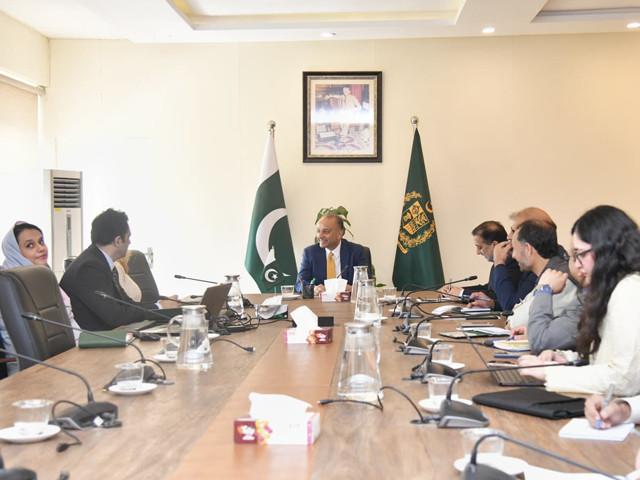
ISLAMABAD: Federal Minister for Climate Change and Environmental Coordination Dr. Musadik Malik on Wednesday said the international system appeared to be shifting from multilateralism towards increasing unilateralism, warning that any unilateral move to place a long-standing international accord such as the Indus Waters Treaty in abeyance raised serious questions about the sanctity of international agreements and rules-based cooperation.
The minister made these remarks during a meeting with Spanish Ambassador to Pakistan Carlos Aragón, who called on him here. The two sides discussed a range of regional and global issues, including climate change, energy security and opportunities for bilateral cooperation in sustainable development, according to a statement issued by the ministry.
During the meeting, both sides exchanged views on the implications of climate change, evolving geopolitical dynamics and other matters of mutual interest, including the Indus Waters Treaty and recent regional developments.
Dr. Malik highlighted the devastating impact of recent floods in Pakistan, noting that changing weather patterns and increasing climate variability had heightened uncertainty and vulnerability to extreme weather events.
He stressed the need for stronger preparedness measures and preventive interventions to mitigate future climate-related risks and enhance resilience.
The discussion also focused on energy security and the global transition towards renewable energy sources. Both sides explored potential avenues for cooperation and knowledge-sharing to support clean energy initiatives and reaffirmed their commitment to strengthening collaboration in climate action and sustainable development.
Against the backdrop of ongoing geopolitical tensions and their impact on global energy markets, the minister and the ambassador underscored the importance of accelerating the adoption of green energy solutions, including solar and wind power.
They observed that recent developments had exposed the vulnerability of many regions, including Europe, to disruptions in conventional energy supply chains, reinforcing the need for diversified, resilient and sustainable energy systems.
Ambassador Aragón shared observations from his recent visit to Gilgit-Baltistan and praised the region’s natural beauty, cultural diversity and the hospitality of its people.
Dr Malik also briefed the ambassador on two initiatives being developed by the Ministry of Climate Change and Environmental Coordination — Green University and Green Fields.
He said the Green University initiative aimed to advance climate education, research and innovation, while Green Fields sought to connect young entrepreneurs working on environmentally sustainable ventures with investors and opportunities to scale up green businesses.
0 Comments
No comments yet. Be the first to join the discussion!