Iran fires missiles at Israel after Beirut strike as Trump urges restraint
Iran launched missiles at Israel on Sunday after Israel struck Beirut’s southern suburbs, marking Tehran’s first such attack since the April ceasefire. Donald Trump said he would urge Benjamin Netanyahu not to retaliate as diplomacy continued on multiple fronts.

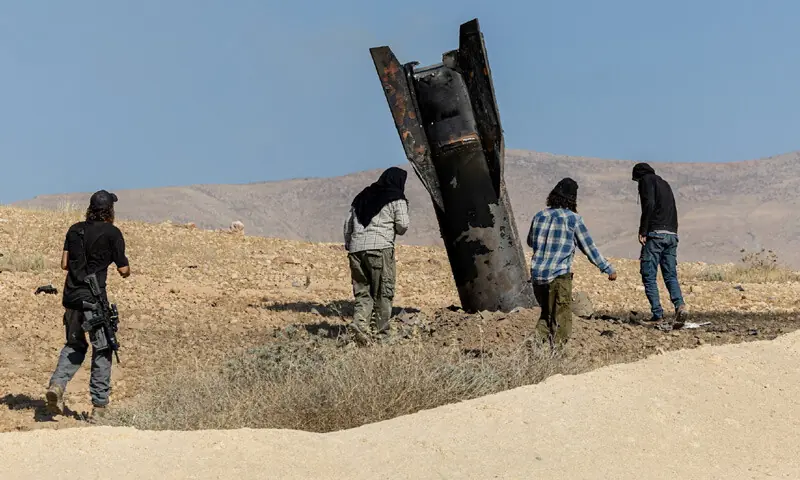
JERUSALEM: Air raid sirens sounded across Israel on Sunday as the Israeli military said it was intercepting multiple waves of Iranian missiles, in what was described as the first attack from Iran since a ceasefire took effect in April.
The missile launches came hours after Israel said it had struck a militant command centre in Beirut’s Dahiyeh district in response to Hezbollah fire toward Israeli territory. Lebanon’s health ministry said the strike killed two people and wounded 20 others. Iran’s Revolutionary Guards said the missile attack was a warning over the Israeli action in Beirut and cautioned that any repeat would draw a wider response targeting US and Israeli interests in the region.
Israel’s military said there were at least three incoming waves of missiles and that its air defences were identifying and intercepting threats. The US embassy in Jerusalem told its staff and their families to shelter in place. Soon after the attack, Iran said it was closing airspace over the west of the country, while Iraq and Syria also shut their airspace.
The latest escalation came as the conflict reached its 100th day. Earlier on Sunday, Iran’s parliament speaker Mohammad Bagher Ghalibaf, who is also described as Tehran’s chief negotiator in talks with Washington, accused the United States of giving a green light to the Beirut strike and said US and Israeli assets were now legitimate targets. The head of Iran’s military central command said Israel had crossed all red lines with the Beirut attack and demanded that it stop its campaign in Lebanon.
"Tonight’s operation was a warning. If such aggressions are repeated, the responses will be broader and will cover all US-Zionist targets in the region," the Revolutionary Guards said in a statement.
US calls for de-escalation
After the Iranian strikes, US President Donald Trump said he would urge Israeli Prime Minister Benjamin Netanyahu not to retaliate. "I am going to call Bibi right now and tell him not to retaliate," Trump said.
"Each of them had their fun. Israel had its strike and Iran had its strike. We don’t need another one," he added.
Trump said the Iranian strikes had not hurt anybody and expressed hope that Israel would not respond militarily. He added that a fresh Israeli strike would risk perpetuating the conflict. He also said Washington was very close to a final deal with Iran and that he did not want current events to derail it.
In a separate interview with Fox News, Trump said the missile attack would not help negotiations, but added that an agreement was very close and could be signed as soon as Monday, Tuesday or Wednesday of the coming week. He urged Iran to return to talks and also said he was not happy about Israel’s strike on Beirut.
Regional moves and diplomacy
The US Central Command said earlier it had destroyed two Iranian drones that it said threatened international maritime traffic in the Strait of Hormuz, after previously announcing strikes on four other drones and coastal surveillance radar sites. Centcom said American forces remained ready to continue defending against Iranian aggression.
Iranian Foreign Minister Abbas Araghchi held telephone calls after the missile attack with the foreign ministers of France and Qatar. Earlier in the day, he had also spoken with his counterparts in Britain and Turkiye.
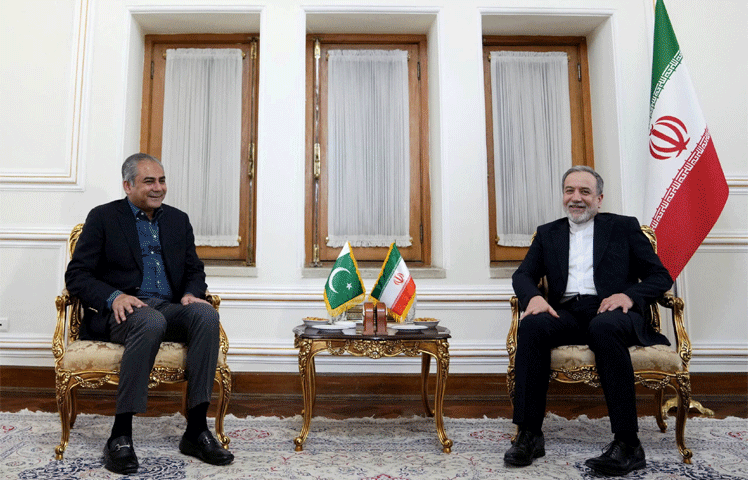
Separately, Pakistan’s Interior Minister Mohsin Naqvi visited Tehran and met Araghchi. The two sides reviewed bilateral relations and exchanged views on the latest status of the ongoing diplomatic process mediated by Pakistan to end what was described as the imposed US-Zionist war against Iran. The meeting also covered issues of mutual interest and ways to deepen cooperation between the neighbouring countries.
During the meeting, Naqvi delivered a letter from Prime Minister Shehbaz Sharif addressed to Iran’s supreme leader, Ayatollah Mojtaba Khamenei.
Earlier, Mohsen Rezaei, an adviser to Iran’s supreme leader, told CNN that negotiations with the United States were at a deadlock and that Trump needed to break it, while calling for the release of about $24 billion in frozen Iranian assets. Trump, however, said he would not unfreeze Iranian assets before an initial agreement with Tehran. He said those discussions could begin if Iran behaved and did a good job. Washington may seek to use those funds to cover damage caused by Iranian strikes on Gulf allies, citing a source familiar with Treasury Secretary Scott Bessent’s thinking.
Comments
No comments yet. Be the first to join the discussion!