June 8, 2026
Democrats show early edge in US mid-term polling
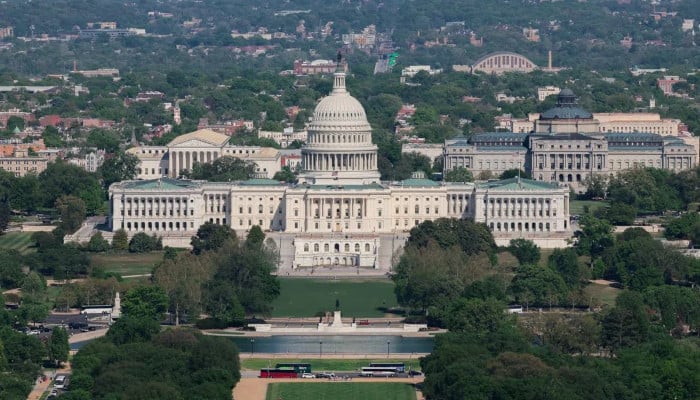
National polling shows Democrats with a modest lead over Republicans ahead of the 2026 US mid-terms. The race could shape President Donald Trump's ability to advance his agenda as concerns over democracy, redistricting and voter sentiment intensify.

June 8, 2026
WASHINGTON: National polling indicates Democrats currently hold a narrow advantage over Republicans ahead of the 2026 US mid-term elections, a contest that could have major implications for President Donald Trump's ability to push through his agenda in the latter half of his term.
A compilation of recent generic congressional ballot surveys published by The New York Times on Sunday showed Democrats ahead in most national polls, with leads ranging from one to six percentage points, while one survey recorded a wider Democratic margin. The generic ballot measures which party voters would back for Congress without naming individual candidates.
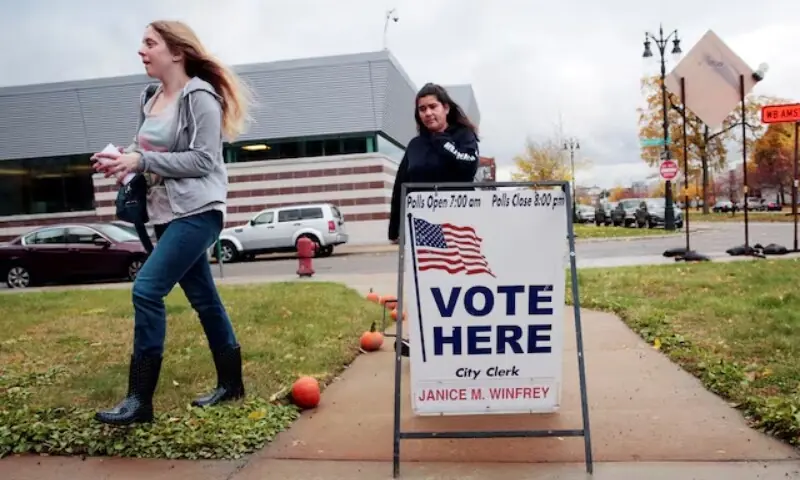
According to the non-partisan US Vote Foundation, mid-term elections are held halfway through a president's four-year term. In 2026, voters will choose all 435 members of the US House of Representatives and 35 senators in the 100-seat Senate.
The foundation said the makeup of Congress and which party holds greater lawmaking power, and can decide whether to support, alter or reject a president's actions, has a major bearing on the president and the performance of an administration.
Congress and presidential power
Congress is the legislative branch of the US government and acts as a significant restraint on presidential authority. When the opposition controls Congress, it can obstruct legislation, open investigations and complicate a president's efforts to carry out policies.
The US Vote Foundation noted that mid-term elections have historically posed challenges for sitting presidents, saying voters often seek change and the president's party usually loses ground in House races during mid-terms. According to the organisation, that has happened in 20 of the past 22 mid-term elections.
Current polling may reflect that long-running pattern. President Trump's approval ratings remain low by historical standards. The New York Times polling average put his approval at 38 per cent and disapproval at 58 per cent, while the Economist/YouGov average placed approval at 35 per cent and disapproval at 60 per cent.
Political scientists have long linked presidential popularity to mid-term election outcomes, making Trump's standing a potentially important factor in the 2026 vote.
Debate over democracy and district maps
The election is also taking place amid intensified debate over the state of American democracy. Analysts say voter reaction to the administration's domestic and foreign policies, including the effects of the conflict with Iran, could influence public sentiment and electoral decisions.
The Washington Post recently reported that the Trump administration had pursued several contentious steps, including attempts to redraw congressional districts in some states, changes to voting procedures and prosecutions of political opponents.
Among the organisations voicing concern is the Washington-based non-profit Campaign Legal Centre, which works on voting rights and fair electoral maps. "Our democracy is under threat," the group warned.
The CLC said that protecting voting freedom and pushing for fair maps and transparent elections were necessary to keep the democratic system resilient, adding that the future of elections depends on actions taken now.
Another issue in the battle for House control is the congressional map that will be used in 2026. Because House seats are decided district by district rather than by the national popular vote, boundary lines can shape which party secures a majority even when the national vote is close. That means a Democratic lead in national polling would not automatically translate into control of the House.
Analysts say control of the chamber is likely to hinge on a comparatively small number of competitive districts, where local concerns, candidate quality and turnout can be as important as broader national trends. With less than five months before the elections, the political picture could still change considerably as economic conditions, international developments, presidential approval and voter participation all play a role in the outcome.
0 Comments
No comments yet. Be the first to join the discussion!