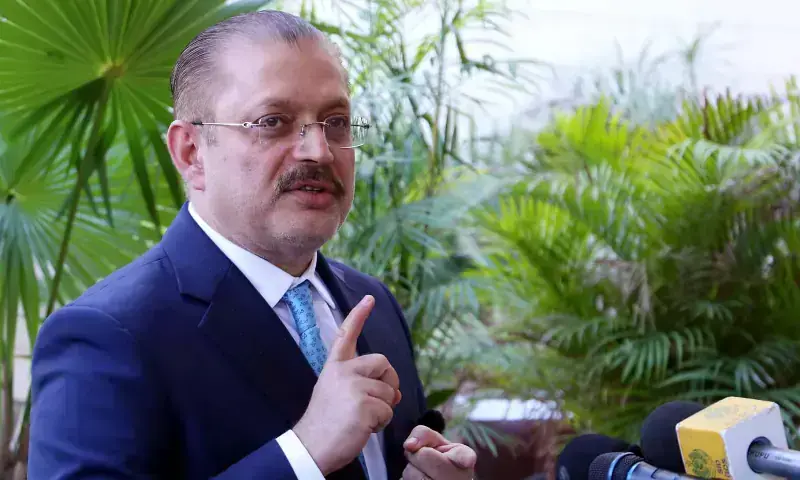
Sharjeel Memon criticises Centre over Karachi’s infrastructure priority
Sharjeel Inam Memon says Karachi has been given low priority by the federal government despite carrying major economic and infrastructure pressures. He also outlined Sindh government plans to divert freight traffic and improve transport facilities.


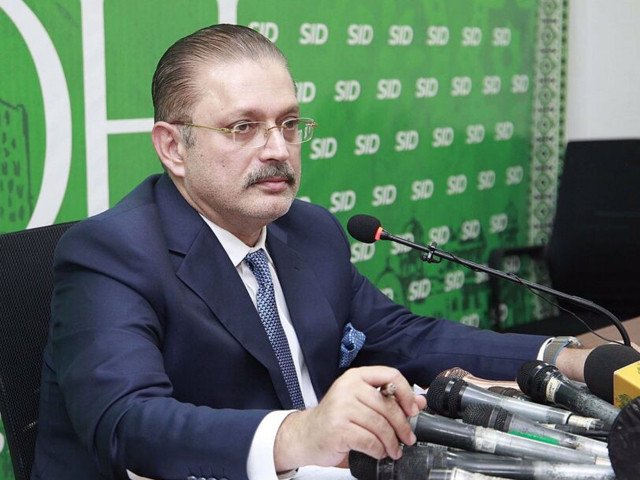
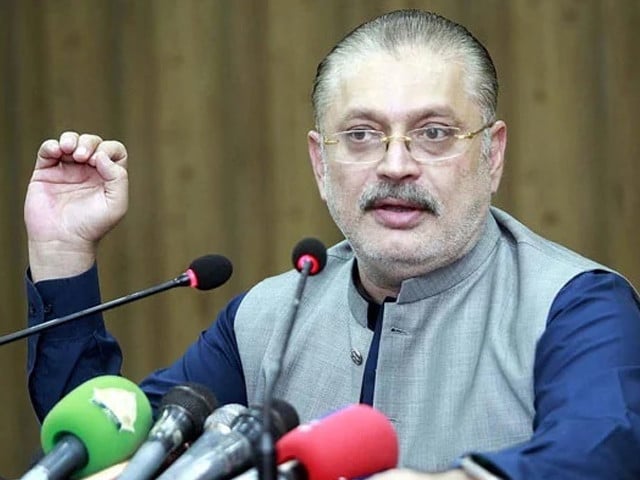
KARACHI: Senior Sindh Minister Sharjeel Inam Memon on Saturday criticised the federal government for what he described as a low-priority approach towards Karachi, saying the country’s largest city continued to carry major economic and infrastructure pressures despite its central role in the national economy.
Speaking to the media in Karachi, Memon said Karachi remained Pakistan’s most difficult city to manage because of pressures linked to migration, trade, jobs and transport. He said the city should have been given greater importance in motorway development because it served as the country’s main port hub.
Attributing the strain on the city to the volume of freight movement, he said heavy traffic from across the country entered Karachi and damaged its infrastructure. He said the Sindh government was working on several schemes to reduce that burden, including a plan to divert freight movement away from the city centre.
“We do have motorway issues. Karachi has been given low priority by the federal government,”
Memon said, adding that motorway development should have started from Karachi rather than other parts of the country.
“When you have to start a motorway, you should start it from Karachi. But it has been built everywhere except Karachi,”
Traffic diversion and transport projects
The minister said the provincial government had launched a project aimed at shifting traffic away from the city and establishing a modern transport terminal on the Northern Bypass. He said a railway line was also being developed so that goods could be taken directly to the bypass, reducing the need for heavy vehicles serving the ports to enter Karachi.
“We have launched a project under which we aim to shift Karachi’s traffic and develop a state-of-the-art transport terminal on the Northern Bypass,”
He also referred to the completion of the Shahrah-i-Bhutto project, calling it a major infrastructure development that had been well received by commuters. According to Memon, those travelling from Karachi to Hyderabad, lower Sindh and other parts of the country were saving time because of the project.
Describing Shahrah-i-Bhutto as a state-of-the-art scheme, he said police personnel, Rescue 1122 teams, ambulances and other basic services had been deployed along the route for commuters.
Pressure on civic infrastructure
Memon said the provincial government had taken difficult decisions to improve public services and infrastructure, while acknowledging that these measures had caused inconvenience for residents.
“We have taken some tough decisions. The public will have to face hardship, and we are apologising for that,”
Responding to comparisons with Punjab, he said Karachi faced a distinct set of challenges that separated it from other cities and provinces. He said around 20 per cent of the city’s water shortfall was being met through tanker services, which in turn added to traffic congestion.
He also said people from across Pakistan continued to come to Karachi in search of jobs and better prospects, increasing pressure on the city’s civic systems, including infrastructure, drainage and other resources.
“Despite so many challenges, Karachi is coping, and we also have to provide facilities. When people from outside come and use the infrastructure, drainage systems, and resources, it puts additional pressure on Karachi,”
Comments on Gilgit-Baltistan elections
Memon also spoke about the upcoming Gilgit-Baltistan elections and said he was confident the PPP would clean sweep the polls. Referring to former PML-N leader Captain Safdar, he said his political importance was already known.
He alleged that Gilgit-Baltistan had historically been given low priority and claimed that people without significant political relevance elsewhere were often sent there. He also criticised the use of abusive language during election campaigns in the region, saying such conduct was regrettable and reflected poorly on democratic politics.
Discussing electioneering in the area, he said PPP public meetings in Gilgit-Baltistan had drawn large crowds, while PML-N rallies had seen lower attendance. He said this showed rising support for the PPP in the region and maintained that the party would win the elections while the PML-N would be defeated.
Comments
No comments yet. Be the first to join the discussion!