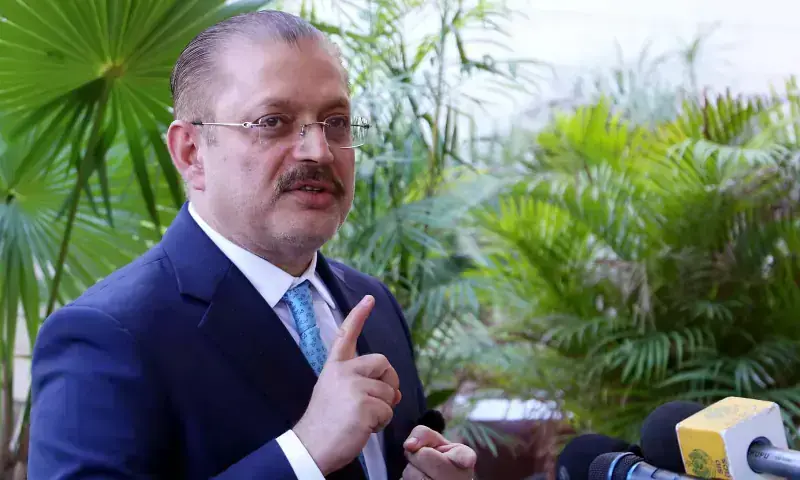
Sharjeel says MQM politicising civic issues to revive ‘dead politics’
Sindh Senior Minister Sharjeel Inam Memon has accused MQM of politicising Karachi’s civic issues for political gain. He said gas shortages were a federal matter and that Sindh had already reported a 22 per cent water shortage to IRSA.

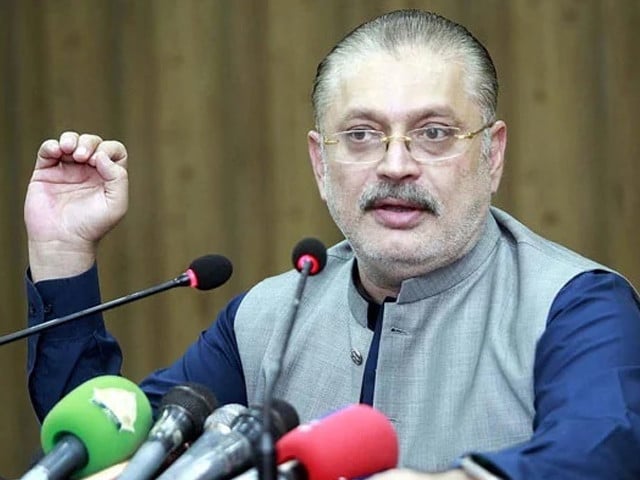
KARACHI: Sindh Senior Minister Sharjeel Inam Memon has accused the Muttahida Qaumi Movement (MQM) of turning public issues into political controversies in an effort to revive what he described as its fading politics.
Memon said the gas shortfall fell within the domain of the federal government, while K-Electric was not under the administrative control of the Sindh government. On water availability, he said the provincial government had already informed the Indus River System Authority (IRSA) through an official letter that Sindh was facing a 22 per cent water shortage, and that the shortage was also affecting Karachi.
He said Karachi was the last major city in Sindh to receive water from the provincial distribution system, adding that any overall reduction in water availability was therefore directly reflected in the city. Memon also said the MQM repeatedly sought to hold the Sindh government responsible for matters that, according to him, were under the federal government’s authority.
The senior minister said that instead of concentrating on solving people’s problems, the MQM’s politics in Karachi centred on using such issues for political benefit. He also stated that the Pakistan Peoples Party (PPP) was not an ally of the federal government, saying the party had only supported the centre to ensure the continuation of the parliamentary system and the democratic process.
Comments on Karachi’s decline
Memon said Karachi had once been regarded as one of the world’s finest cities and had also served as Pakistan’s capital. He said students from different areas, including Gulf countries, used to come to the city for higher education.
According to Memon, Karachi’s decline began after the emergence of ethnic and linguistic politics. He further said the city’s difficulties deepened when parks were converted into marriage halls.
He added that the MQM leadership was fully aware of these realities, alleging that parks and sports grounds had been encroached upon and that people involved in serious crimes, including terrorism, were inducted into local government institutions.
Comments
No comments yet. Be the first to join the discussion!