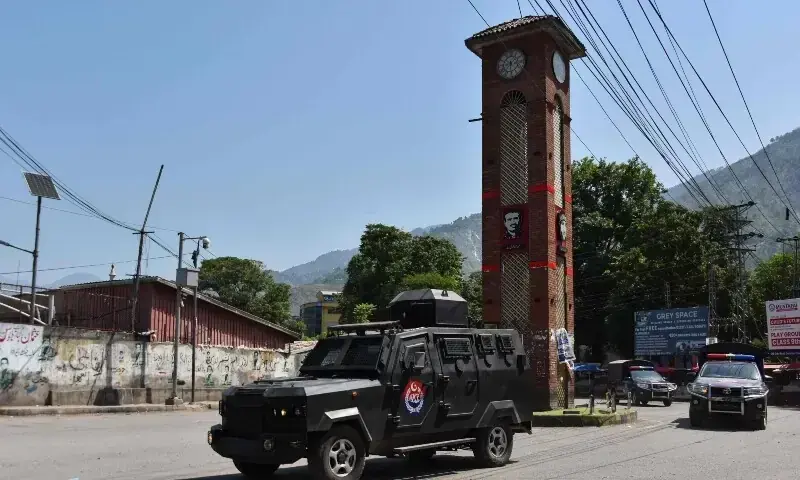
Protest or pressure tactic?
Opinion splits in Azad Jammu and Kashmir over JAAC’s June 9 strike. Supporters cite delayed development and transparency; critics warn strikes harm daily wages, schools and healthcare.

Debating JAAC’s June 9 strike in AJK
Azad Jammu and Kashmir is a self-governing territory formed after the partition of the subcontinent and the 1949 ceasefire line, not a province like Punjab or Sindh. Although with its own president, PM, legislative assembly and supreme court, it remains heavily dependent on Pakistan for defence, foreign policy, currency and financial survival.
Due to its border with Indian Occupied Kashmir, Pakistan considers AJK both a strategic asset and a moral responsibility, providing billions every year through grants, subsidies, infrastructure projects and development packages even during Pakistan’s own economic crises.
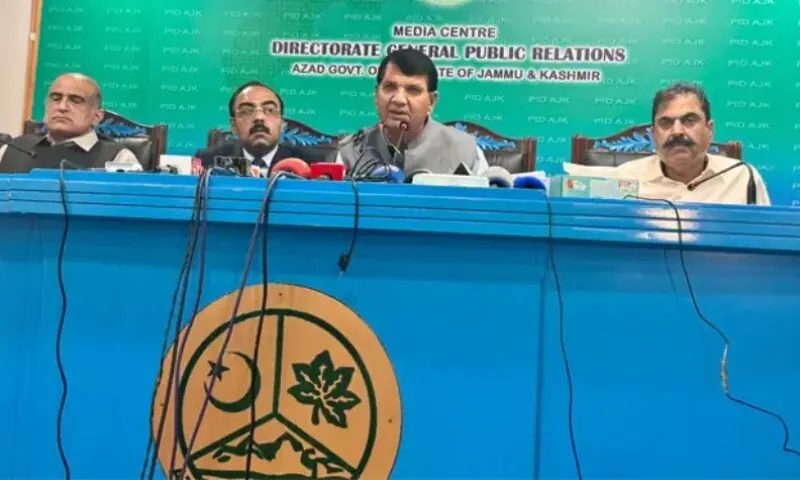
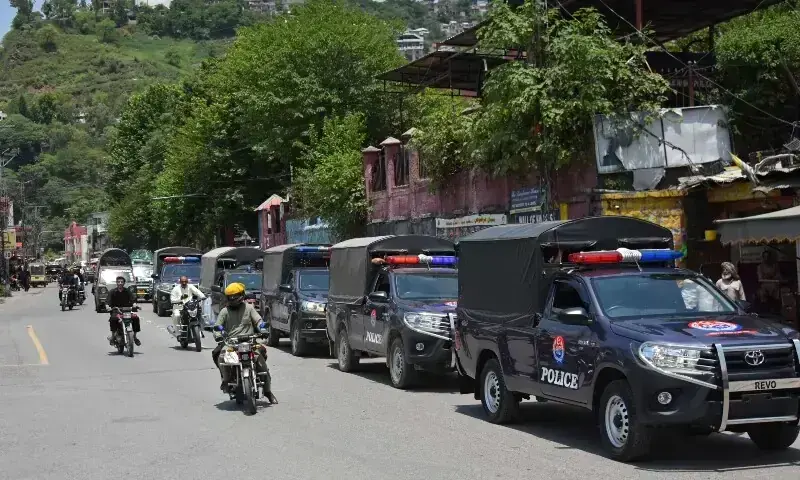
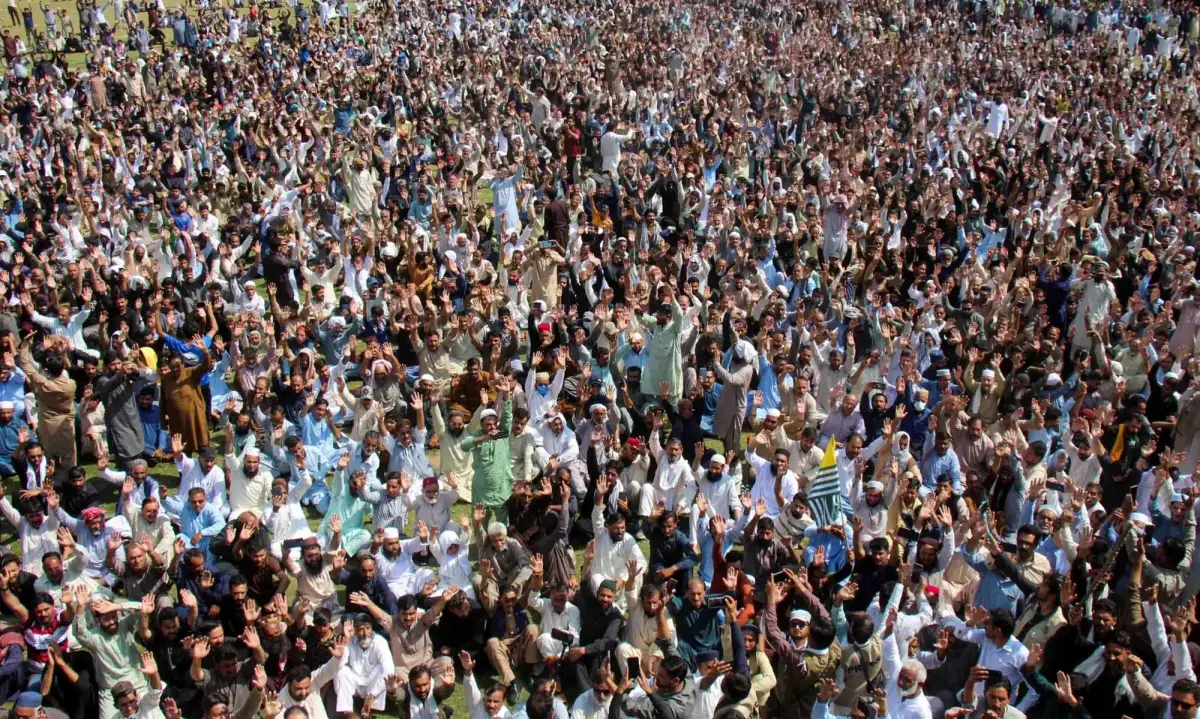
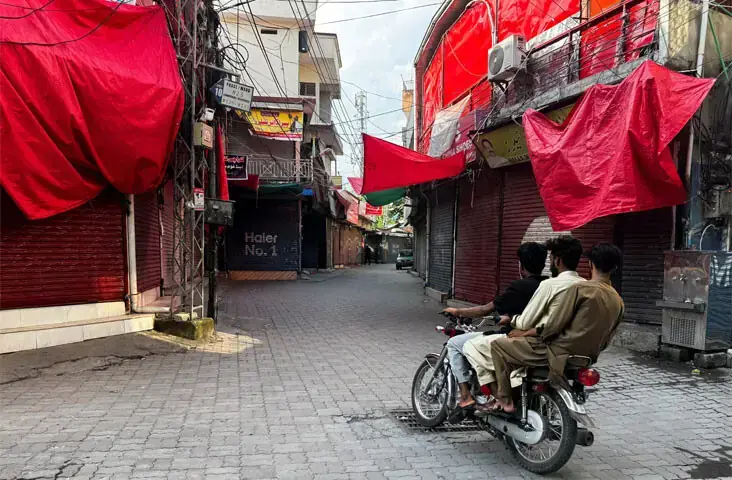
Despite this support, the Joint Awami Action Committee’s announcement of a strike on June 9 has divided public opinion. Supporters believe the strike is a peaceful way to highlight delayed development projects, lack of transparency, rising prices and poor healthcare in rural areas, while a much larger group argues that strikes only create hardship for ordinary people. They point out that strikes shut down markets, schools, universities, transport and government offices, causing daily wage labourers and shopkeepers to lose income, students to face disruption, and patients to experience delayed treatment.
Many critics also question the timing of the strike because Pakistan is itself facing severe economic difficulties, including inflation, rising fuel and electricity prices and IMF-related tax measures, while still continuing to provide subsidized flour, electricity, fuel and special development grants to AJK through programmes such as the Annual Development Program, the Kashmir Economic Package and relief funds.
Since AJK reportedly receives a larger share of federal transfers per capita than most provinces, many analysts and ordinary citizens in Muzaffarabad, Mirpur, Kotli, Bagh and Rawalakot consider the strike disruptive, damaging to AJK’s image and potentially harmful to future federal support. They also criticize the JAAC’s history of repeated strikes, protests, sit-ins and road blockades over various political and economic issues, arguing that these actions rarely solve underlying problems and mainly leave ordinary citizens to bear economic losses after the committee declares success and withdraws.
Many believe the committee uses public suffering to maintain political relevance and present itself as the sole defender of the people. A distinction is therefore made between genuine protest and pressure tactics: peaceful demonstrations, legal challenges and organized sit-ins can demand accountability without harming the public, whereas road blockades, transport shutdowns and market closures deliberately pressure the government by making ordinary citizens suffer. Critics argue that governments may sometimes accept demands simply to restore normal life rather than because the demands are justified, encouraging more strikes in the future and creating a cycle of repeated disruption and instability.
The people of AJK are not fools, and they have started to see through this cycle. They have realized that every strike brings more hardship and no lasting solution. And that JAAC leaders do not themselves suffer. These leaders have their own sources of income, their own vehicles, their own homes and their own security. They do not stand on the roads with the daily wage workers, nor do they miss meals because of a strike. When a strike is called, they appear on television and at press conferences, but when the strike ends, they return to their comfortable lives. The people who actually suffer are the poor, the working class, the patients, students and elderly.
This growing awareness has led to a sense of fatigue and resentment among the general population.
More and more people are now openly saying that they do not support the strike culture and that they want their leaders to sit down with the government and talk, rather than shutting down the region every few months. This shift in public sentiment is very important because it shows that the people of AJK are maturing politically, unwilling to be used as pawns in political games. They understand that real development comes from peace, stability, hard work and constructive engagement, not from street power and mob politics.
Another dimension is the impact on the youth. The JAAC has been actively involved in mobilizing young people, especially college and university students. They organize rallies, distribute pamphlets, use social media and give emotional speeches to attract them.
This may seem a healthy exercise in political awareness, but a closer look reveals a much darker picture. The committee is not teaching these young people about civic responsibility, legal methods of protest, the importance of dialogue or the value of education. Instead, it is teaching them to hate the state, to hate the police and law enforcement agencies, and even Pakistan and its institutions.
They portray every problem as a federal conspiracy and every difficulty as deliberate oppression. They fill the minds of young people with anger, frustration and a sense of victimhood. This is extremely dangerous because an angry and frustrated youth can be easily manipulated for political purposes. The committee uses these young people as a human shield, putting them at the front lines of protests where they can be injured, arrested or even killed.
When a young person is hurt during a protest, the committee uses that injury as propaganda to further fuel anger and recruit more young people. This is a vicious cycle that benefits no one except the JAAC leaders.
The long-term consequences of this culture of hate and division are extremely alarming for the future of AJK. AJK has always been known as a peaceful, hospitable and moderate region where people from different backgrounds live together in harmony. The region has produced thousands of doctors, engineers, teachers, civil servants and professionals who have served both AJK and Pakistan with distinction. The educational institutions of AJK, including the University of Azad Jammu and Kashmir, have a proud history of academic excellence and intellectual freedom.
But if the youth of AJK are continuously exposed to messages of hate, violence and confrontation, then this peaceful and productive culture will be destroyed. Instead of focusing on their studies, skills development and career building, young people will waste their energy on destructive protests that bring them no benefit. Instead of becoming productive citizens who contribute to the economy and society, they will become instruments of disruption and chaos.
This is exactly what the enemies of Pakistan want. India, which has always tried to destabilize Pakistan and create unrest in AJK, watches with satisfaction when groups like the JAAC organize strikes and protests.
Every strike in AJK is a gift to Indian propaganda, because India can then claim that the people of Pakistani-administered Kashmir are unhappy and that the region is unstable. The JAAC may not realize this, or perhaps it does not care, but its actions are playing directly into the hands of Pakistan’s adversaries.
Given all these concerns, it is not surprising that there is a growing demand from the people of AJK themselves to call back the of June 9 strike. This demand is not coming from the government or any political party but ordinary citizens, civil society organizations, trade unions, traders associations and even religious leaders. They have organized small gatherings, written letters to newspapers, posted messages on social media and used local radio stations to express their opposition. They say that they have had enough of strikes and shutdowns and they want peace, normalcy and the freedom to go about their daily lives without fear of disruption.
They argue that if the JAAC has any genuine grievances, it should present them in writing to the government and engage in serious negotiations. If the government does not respond, they should take legal action or use parliamentary forums. But they should not force the entire population to suffer for their political agenda. This message is resonating with more and more people every day, and it is likely that if the committee goes ahead with the strike on June 9, they will face public resistance and non-cooperation.
The people of AJK are demanding that the government take tangible and visible steps to stop the growing culture of hate, division and violent protests that groups like the JAAC are promoting. They want the government to enforce the law strictly. They want the government to work with educational institutions to teach students about peaceful and legal methods of protest, and to protect young people from being exploited by political groups.
They also want the government to improve governance, transparency and service delivery so that genuine grievances are addressed before they can be exploited by pressure groups. If the government delivers good governance and listens to the people, then groups like the JAAC will have no excuse to call strikes. But even if governance is not perfect, the people of AJK have made it clear that they prefer dialogue over strikes and peace over chaos.
They understand what is good for them and what is bad for them, and they have decided that the strike culture is bad. Therefore, they are speaking with one voice to say that the June 9 strike should be cancelled, that the JAAC should change its approach, and that the government should act firmly to protect the peaceful and prosperous future of AJK.

Comments
No comments yet. Be the first to join the discussion!