Fact-check finds viral Lebanon church video was AI-generated
A viral video claiming to show Israeli soldiers vandalising a church in southern Lebanon was AI-generated, according to a fact-check by iVerify Pakistan. The review cited visual inconsistencies and forensic tools that flagged the clip as fabricated.

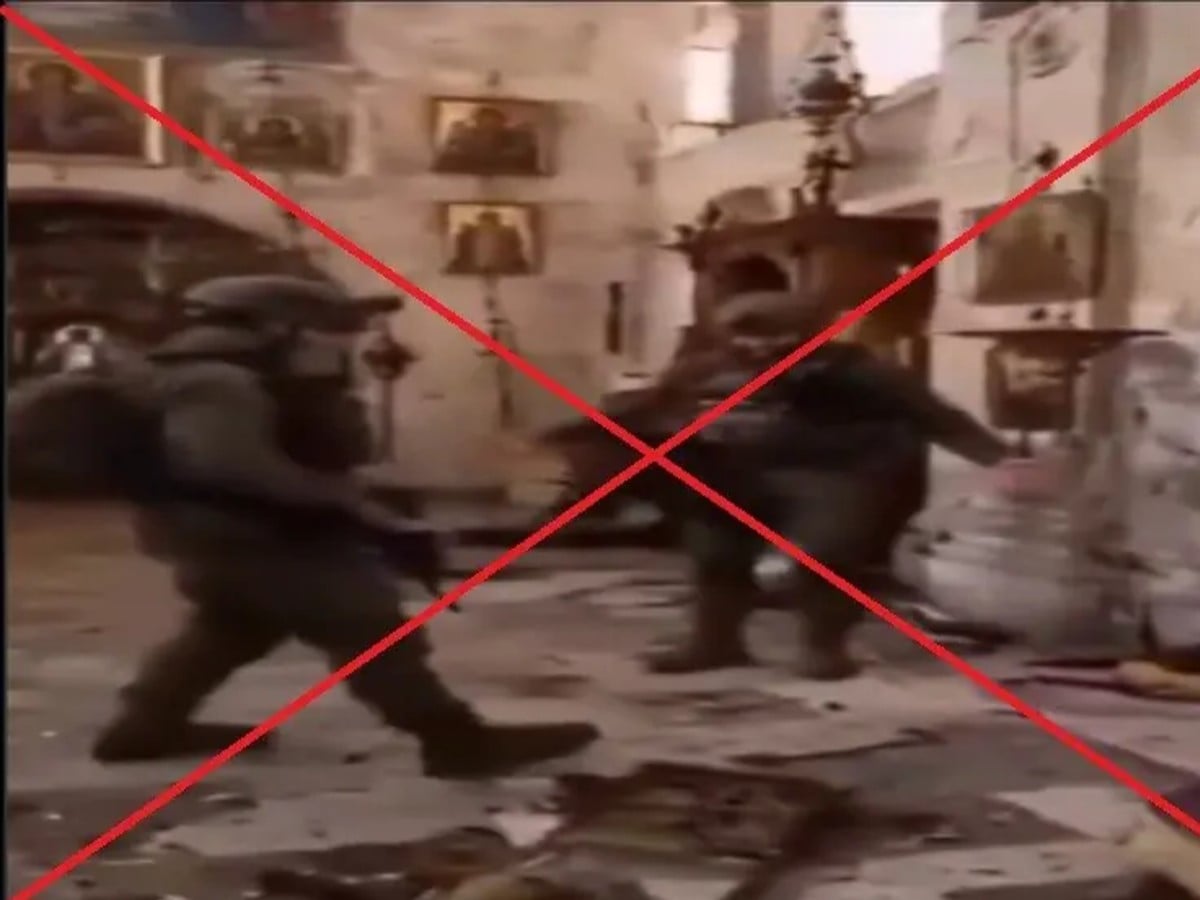
ISLAMABAD: A video shared widely on social media with claims that it showed Israeli soldiers vandalising a church in southern Lebanon was digitally fabricated, originally published by iVerify Pakistan, a project of CEJ-IBA and UNDP.
The clip began circulating from June 2, 2026, across Instagram, X and Facebook, where several accounts described it as footage of Israeli troops desecrating a church in southern Lebanon. The posts were shared by multiple users, including accounts identified from their past activity as pro-Palestinian and pro-Iranian. Among the captions cited were claims that Israeli soldiers were boasting about damaging a Christian church in Lebanon and that the footage came from the town of Debel.
The video gained significant traction online. One Instagram post drew 265,000 views, while an X post received 170,000 views. Other shares included posts with 138,700, 85,300, 90,000, 47,000 and 44,700 views. The same clip was also reposted across Facebook, Instagram and X in similar contexts, with those additional shares collectively drawing 170,000 views.
How the video was assessed
iVerify Pakistan said it began examining the claim because of the scale of its circulation and the high public interest in developments linked to the Middle East conflict. A keyword search was carried out to see whether any credible international, local or mainstream media outlet had reported such an incident, but no matching coverage was found.
A close review of the footage showed inconsistencies associated with AI-generated videos. In the opening frame, only two religious portraits could be seen on a church wall, but by the 10-second mark the same wall showed six. The wall initially appeared as a continuous concrete surface with red religious banners carrying crosses, but later the same area appeared to contain a recessed alcove with a religious portrait that had not been visible earlier.
Another inconsistency involved the soundtrack. At the 17-second mark, a soldier’s foot appeared to strike the floor with a loud banging noise, but at the 18-second mark the same action was repeated twice without corresponding audio, which was another common sign of AI-generated material.
Forensic analysis and conflict context
Several forensic tools also flagged the footage as fabricated. Hive Moderation assessed it as 83 per cent AI-generated content, while Uncov.ai classified it as AI-generated with 94 pc confidence. DeepFake-O-Meter, a tool provided by the University of Buffalo, also indicated high levels of digital manipulation.
Based on those findings, the claim was rated false and the video did not show Israeli soldiers vandalising a church in southern Lebanon.
The broader conflict backdrop in Lebanon is that since the war with Israel began on March 2, 2026, more than 3,000 people had been killed in Lebanon, according to the latest casualty toll issued by the country’s health ministry on May 18, 2026. Hostilities between Hezbollah and Israel had continued since US President Donald Trump first announced a ceasefire on April 16, 2026, with fighting mostly confined to southern Lebanon. The Israeli military claimed it had struck more than 30 Hezbollah infrastructure targets in southern Lebanon, including a weapons warehouse, observation posts and buildings used to advance attacks against Israeli forces.
Comments
No comments yet. Be the first to join the discussion!