

Islamabad traffic police book 496 motorists in two weeks over road violations
Islamabad Traffic Police registered 496 criminal cases over traffic violations in two weeks, including one-way driving and speeding. Police officers voiced concern over criminalising offences that were previously handled through fines.

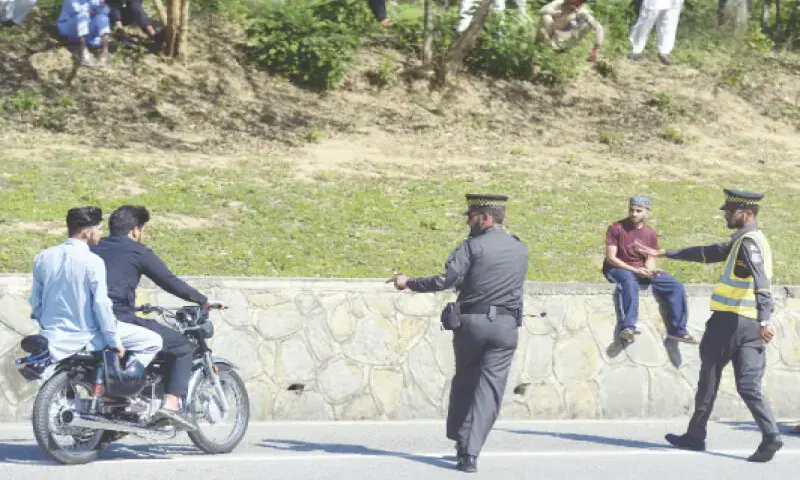
ISLAMABAD: The Islamabad Traffic Police registered 496 criminal cases for traffic violations over the past two weeks, shifting from the earlier practice of dealing with such offences through fines, according to information cited by police officers.
The officers said the cases were lodged under Section 279 of the Pakistan Penal Code, while other PPC provisions were also applied in some instances. Of the total, 312 cases related to one-way driving, 102 to rash driving and speeding, 20 to lane violations, six to traffic violations, five each to triple riding and one-wheeling, three to riding without a helmet, and one each to wrong parking, jumping a red light and underage driving. In addition, 40 cases were registered for driving without a licence.
They said 496 people were booked in these cases while using 298 motorcycles, 54 cars and 145 other vehicles. According to the officers, fines already exist for these violations, although red-light jumping, one-wheeling, rash driving and speeding are treated as serious offences.
Concerns over criminalisation
The move has drawn concern because some of the FIRs were registered for one-way violations even though a number of roads in the capital, including portions of Khayaban-i-Suhrwardy, Mohammad Tufail Niazi Road and AK Brohi Road in front of the Police Lines Headquarters, have been closed for security reasons. The officers said these closures force motorists either to take longer routes or drive on the wrong side.
They also said the Islamabad Traffic Police routinely shut the middle lanes of highways, including Srinagar Highway at the G-9 signal, for hours, creating risks for motorists. According to the same officers, the Islamabad High Court in October 2025 had warned against criminalising minor traffic offences. The court had observed while disposing of a constitutional petition that registering a criminal case or impounding a vehicle for driving without a licence was an excessive and unlawful measure that undermined citizens’ rights and the principle of proportionality in law enforcement.
The petition had challenged the Islamabad Traffic Police’s decision to arrest citizens and file criminal cases against them. The officers further said that putting drivers into the criminal record for traffic offences could affect their reputation and future prospects, including visas, jobs and university admissions. They added that although Section 279 is a bailable offence, suspects were asked to appear before a court the following day to obtain bail.
Police response and registration figures
According to the officers, the FIRs in these cases followed a standard format stating that the suspects, by violating the law, endangered their own lives and those of the public. They also alleged that while traffic-related FIRs were being registered within minutes and violators were taken into custody, complainants in serious criminal matters such as robbery often had to make repeated visits to police stations before cases were registered or acted upon.
The officers said the use of criminal cases for traffic violations, ordered by senior officials, was intended to raise the overall FIR registration ratio. They said case registration in the capital had dropped to 29 per cent between Jan 1 and April 30, 2026, prompting displeasure from the relevant authorities and a demand for an explanation from officials concerned.
They said police issued 25,053 e-tags and registered 7,324 cases up to May 16. From May 17 to 31, police issued 2,622 e-tags and registered 1,247 cases, including 496 linked to traffic violations, taking the registration ratio to 47.55 per cent.
When approached for comment, the senior superintendent of police for traffic responded through the public relations branch, which said the campaign against lane indiscipline, reckless and negligent driving, wrong-way driving, riding without helmets, speeding and other hazardous behaviour was necessary because such conduct threatened public safety, traffic discipline and the orderly functioning of the road network.
The public relations branch further said these violations contributed to fatal and life-threatening accidents, congestion and inconvenience, requiring a firm, structured and sustained institutional response. It added that the approach included the registration of FIRs in incidents involving life-threatening conduct.
Comments
No comments yet. Be the first to join the discussion!


