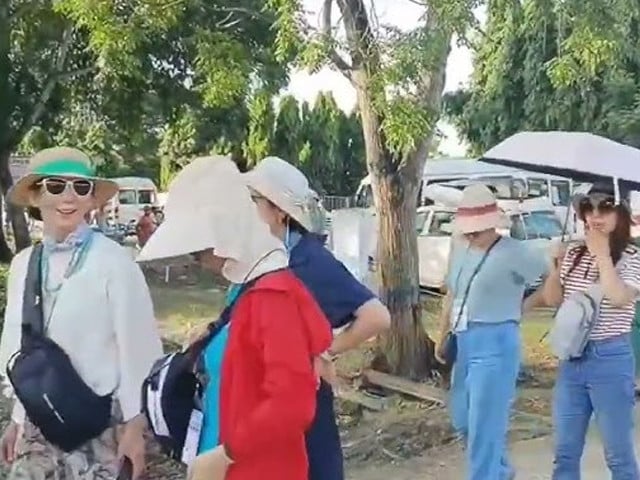
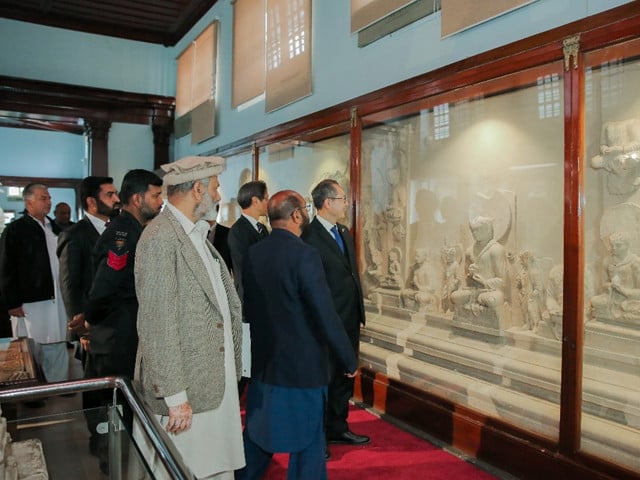
World Bank delegation visits Taxila heritage sites, Jaulian monastery
A World Bank delegation led by Vice-President Mamta Murthi visited Taxila Museum, Sirkap, Dharmarajika Stupa and Jaulian to review Gandhara heritage sites. Officials highlighted conservation work, historical significance and tourism potential.

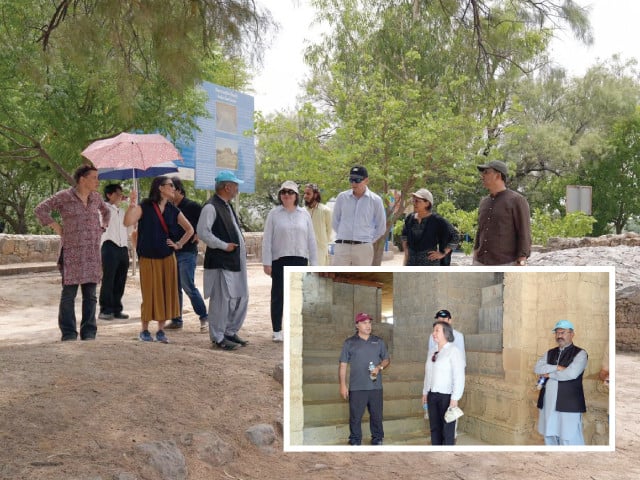
ISLAMABAD: A senior World Bank delegation led by Vice-President Mamta Murthi visited the ancient city of Taxila and several major archaeological sites to review the legacy of the Gandhara civilisation, its cultural importance and ongoing preservation work.
The visit began at the Taxila Museum, where the delegation was received by Deputy Director SRO Taxila Muhammad Asim Dogar and senior archaeologist Dr Arsalan. Officials briefed the visitors on the museum’s collection of Gandharan artefacts, Buddhist architecture, sculpture and other archaeological material. They told the delegation that the museum is among South Asia’s key repositories of Gandharan heritage, with sculptures, coins, jewellery, pottery and other rare objects dating back thousands of years.
Members of the delegation toured the museum galleries and showed particular interest in examples of Gandharan art. They were also taken to the UNESCO World Heritage sites of Sirkap and Dharmarajika Stupa, where archaeologists outlined the significance of both locations. According to the briefing, Sirkap was one of the principal urban centres of ancient Taxila, while Dharmarajika Stupa is considered one of Buddhism’s most sacred sites.
Visit to Jaulian
The delegation later visited the ancient Buddhist monastery of Jaulian in Khyber Pakhtunkhwa, described by officials as an important monument from the height of the Gandhara civilisation. Director General Archaeology Khyber Pakhtunkhwa Dr Abdul Samad received the delegation and gave a detailed presentation on the monastery’s historical significance, archaeological research, conservation and restoration efforts, and its tourism potential.
Dr Abdul Samad told the visitors that Jaulian had functioned as a major centre of Buddhist learning and religious activity. He said discoveries made at the site provide important evidence of the intellectual and cultural accomplishments of the Gandhara civilisation. He also said the provincial government and the archaeology department were pursuing multiple initiatives to preserve the region’s historical heritage and promote it internationally.
Preservation efforts highlighted
During the visit, the World Bank delegation praised the work being carried out to conserve, restore and promote the archaeological sites. Members of the delegation said Pakistan’s cultural heritage has significance beyond the national level and stressed the importance of stronger international cooperation for its preservation.
Experts accompanying the visit noted that Taxila and nearby archaeological sites represent a distinctive blend of Buddhist, Greek, Persian and indigenous civilisations, making the region one of the world’s most important historical centres. Officials said the World Bank delegation’s visit was an important step in presenting Pakistan’s cultural heritage more prominently at the international level and drawing wider attention to its preservation.
Comments
No comments yet. Be the first to join the discussion!