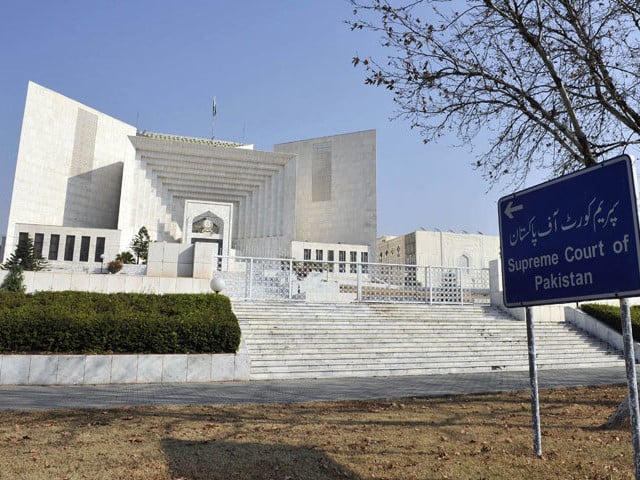
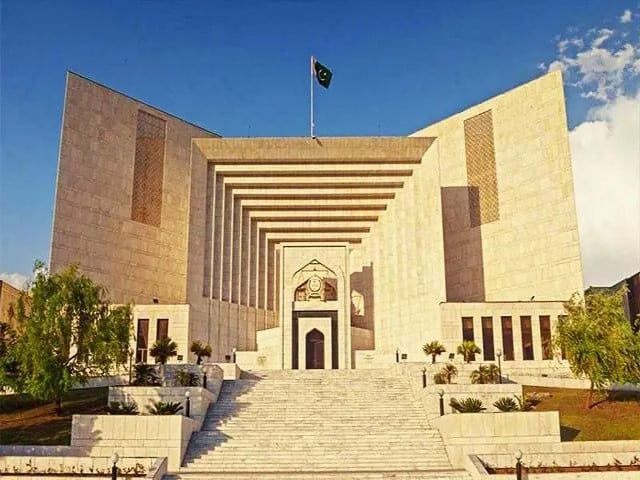
SC lays down ‘doctrine of complete justice’
The Supreme Court has held that complete justice requires courts to prevent injustice from persisting through technicalities. It dismissed a government department’s petition in a promotion dispute and upheld the Federal Service Tribunal’s ruling.

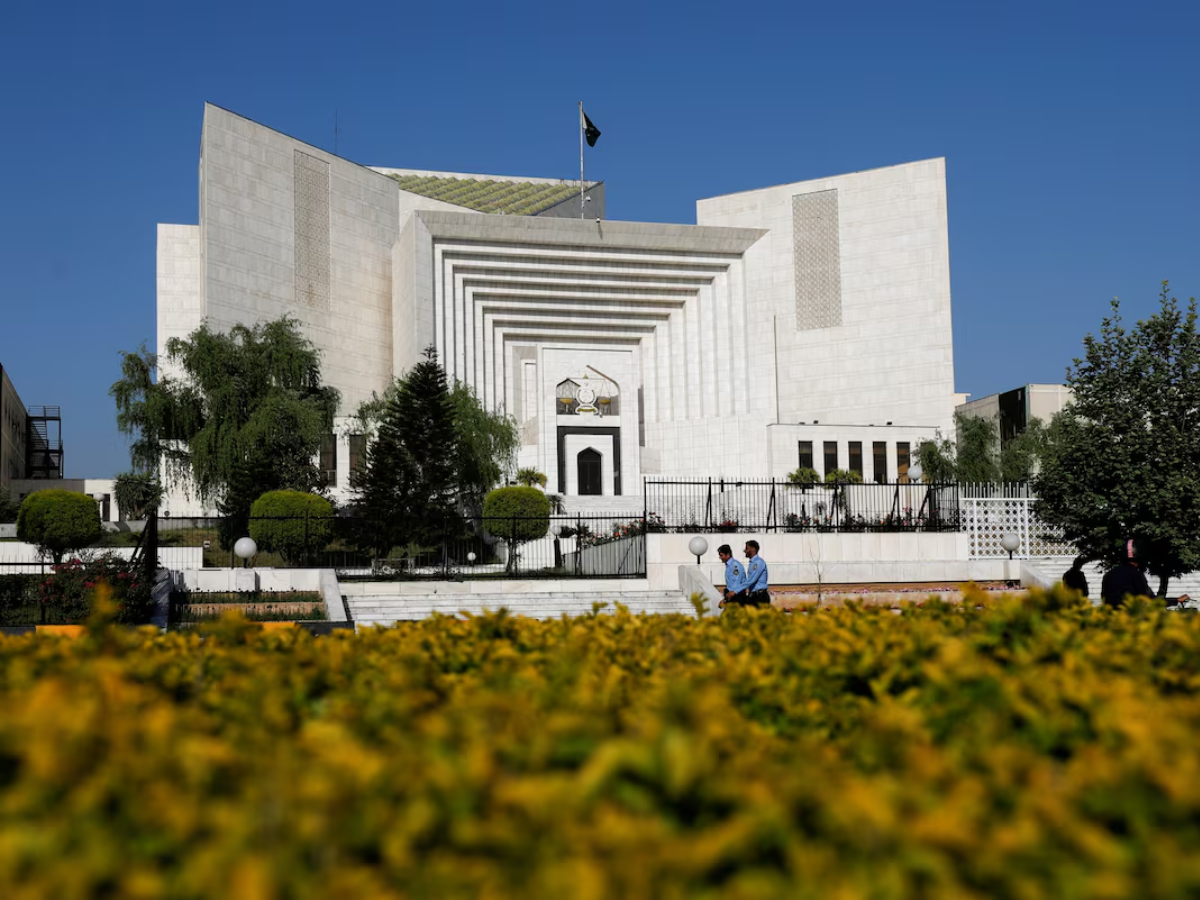
ISLAMABAD: The Supreme Court has ruled that the doctrine of complete justice is a wide-ranging principle meant to ensure that justice is delivered without being defeated by procedural technicalities, while dismissing a government department’s petition in a promotion dispute and maintaining the Federal Service Tribunal’s decision.
In an eight-page judgement authored by Justice Muhammad Ali Mazhar, the court said laws exist to serve people and not the other way around, and held that it is the judiciary’s responsibility to correct injustice and prevent the continuation of unlawful orders or actions. The ruling said statutory rules and regulations governing disciplinary action and punishment also safeguard employees’ service rights, and that non-compliance with those laws amounts to inherent illegality and an infringement of those rights.
Promotion dispute and tribunal proceedings
According to the judgement, the respondent was appointed as assistant chemist and metallurgist in BPS-17 on a two-year contract through a letter dated October 10, 2009. He was later selected and recommended by the Federal Public Service Commission for regular appointment to the same post through a notification dated September 22, 2011.
The court said the main issue was that the respondent was assigned additional charge of the higher post of CC&M (BS-18) through a letter dated March 2, 2012, and continued performing those duties without interruption for nearly eight years until his regular promotion took effect on August 17, 2020. He subsequently filed a departmental appeal seeking antedated promotion, but that appeal was dismissed on May 26, 2021. He then approached the Federal Service Tribunal, which allowed the appeal and passed the impugned judgement along with certain directions.
SC’s observations on stopgap arrangements
A division bench of the apex court observed that a stopgap arrangement is a temporary and makeshift appointment intended to keep official work running until a permanent or regular arrangement is made. The judgement said such arrangements include ad-hoc, look-after, current, acting and additional charge assignments, and are used to fill a vacancy on an interim basis so that public services are not interrupted.
The court held that such engagements are not treated as permanent or regular appointments within a cadre, and serving in such a post on a stopgap basis does not by itself create a vested right to regular promotion in the higher grade. At the same time, it stressed that stopgap arrangements cannot be allowed to continue indefinitely, describing prolonged ad-hoc or additional-charge postings as a form of exploitation that frustrates the spirit of service laws.
"The statutory rules and regulations, while providing the disciplinary actions and punishments, also protects the service rights of employees and failure to follow such laws and rules amounts to an inherent illegality and infringement of employees' rights," it stated.
The judgement further said the state, under the Constitution, is bound to secure social and economic justice and ensure transparency and fairness in the civil service structure as part of good governance. Referring to Article 3, the court said the state must work toward eliminating all forms of exploitation and realising fundamental principles, including from each according to his ability to each according to his work.
Reasonable time and administrative fairness
The ruling also discussed the doctrine of reasonable period or reasonable time, saying that where a duty is to be carried out, the law does not permit indefinite delay and requires completion within a fair timeframe. In that context, the court said appointments or promotions in place of stopgap arrangements should ordinarily be finalised within a reasonable period that may extend from three to six months to meet administrative exigencies.
The bench noted that if, within that period, an employee performing duties in a higher post on ad-hoc, acting, look-after or additional charge is not confirmed by the Departmental Promotion Committee or the Central Selection Board, the stopgap arrangement should come to an end. In the present matter, however, the respondent remained in an uncertain position for at least eight years under the guise of a stopgap arrangement, which the court said was contrary to appointment, promotion and transfer rules.
The judgement added that misuse of power, procedural irregularities and mala fide conduct by departments, administrative bodies or public officials can undermine laws and rules through overreach. It referred to the legal maxim A communi observentia non est recedendum, explaining that where the law prescribes a particular method for doing something, it must be done in that manner. It also said that no person should suffer because of a court’s fault, and observed that the same principle should apply to administrative bodies when exercising powers under the law.
Concluding the matter, the Supreme Court said the objective of good governance cannot be achieved through arbitrary or unreasonable use of discretionary powers, but through fairness, transparency and proper application of mind in line with constitutional provisions, including Articles 4 and 25. It therefore dismissed the petition filed by the government department and upheld the tribunal’s ruling.
Comments
No comments yet. Be the first to join the discussion!