Dar rejects Abraham Accords pressure, reaffirms Pakistan’s firm Palestine stance
Ishaq Dar says Pakistan will not join the Abraham Accords, stressing “no flexibility” until Israel recognises an independent Palestinian state on pre-1967 borders with Al-Quds Al-Sharif as capital. He also calls his US visit successful.

FM Ishaq Dar rules out any flexibility on joining Abraham Accords
Reiterates demand for Palestinian state on pre-1967 borders with Al-Quds Al-Sharif as capital
Terms US visit “highly successful,” cites appreciation for Pakistan’s peace efforts
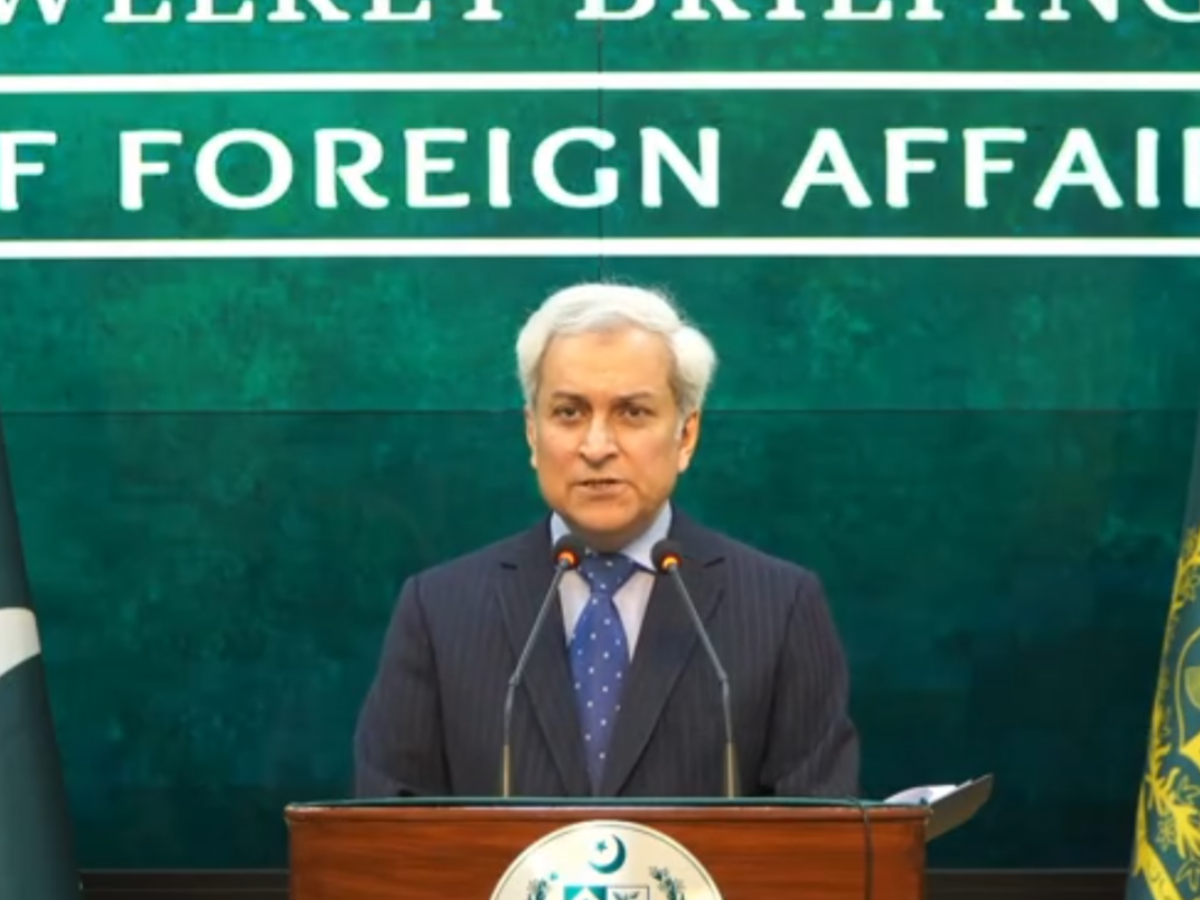
WASHINGTON/ISLAMABAD: Deputy Prime Minister and Foreign Minister Ishaq Dar on Friday categorically rejected any suggestion of Pakistan joining the Abraham Accords, reiterating that there would be “no flexibility” in Islamabad’s position until the establishment and recognition of an independent Palestinian state based on pre-1967 borders with Al-Quds Al-Sharif as its capital.
“There are a lot of rumours circulating regarding the Abraham Accords. Let me make it clear that Pakistan’s stance is very clear and consistent. Until Palestine is recognised on the pre-1967 borders with Al-Quds Al-Sharif as its capital, there will be no flexibility,” Dar said while addressing US-based Pakistani media at the Pakistan Embassy in Washington, DC on Friday.
Thank you to #TeamPakistan at the Embassy of Pakistan in Washington DC @PakinUSA, with Ambassador Rizwan Saeed Sheikh @AmbRizSaeed and his dedicated team for their support during my short but highly productive visit to DC.
Grateful as always to @ForeignOfficePk for their… pic.twitter.com/BMmQFDvk9Q— Ishaq Dar (@MIshaqDar50) May 29, 2026
The foreign minister’s press interaction came after his meeting with US Secretary of State Marco Rubio, who acknowledged Pakistan’s “sincere diplomatic and mediatory efforts” for peace and stability in the region.
Dar’s clarification comes days after US President Donald Trump said he had asked several countries, including Qatar, Saudi Arabia, Pakistan, Egypt, Jordan and Turkiye, to consider joining the Abraham Accords to normalise relations with Israel.
‘Join Abraham Accords to normalise relations with Israel’
In a lengthy social media post, Trump listed countries whose leaders he said he had engaged regarding efforts to end the conflict in Gaza and broader regional tensions.
“After all the work done by the United States to try and pull this very complex puzzle together, it should be mandatory that all of these countries, at a minimum, simultaneously sign onto the Abraham Accords,” Trump wrote.
“The countries discussed are Saudi Arabia, the United Arab Emirates, Qatar, Pakistan, Turkiye, Egypt, Jordan and Bahrain,” he added.
Trump has repeatedly expressed his desire to expand the accords, which were brokered during his first term in office.
The Abraham Accords are US-sponsored agreements that normalised relations between Israel and several Muslim-majority countries during Trump’s first term. The United Arab Emirates and Bahrain signed the accords in 2020, becoming the first Arab states in 25 years to establish ties with Israel. Morocco, Kazakhstan and Sudan later followed suit.
Trump had earlier expressed optimism that Saudi Arabia could join the accords following a ceasefire in Gaza last year, although Riyadh has not indicated any such move. Egypt and Jordan already maintain diplomatic relations with Israel.
Pakistan has long maintained its support for an independent Palestinian state based on pre-1967 borders with Al-Quds Al-Sharif as its capital.
Last year, after US Special Envoy for the Middle East Steve Witkoff suggested that additional countries not previously “contemplated” were preparing to join the accords, Pakistan again ruled out any possibility of recognising Israel under such arrangements.
‘No normalisation until two-state solution accepted’
“We are not ready to recognise Israel until the two-state solution to the Palestine conflict is accepted,” Dar had said at the time. “There is no change in our stated policy on the Palestine issue.”
He had also stated that joining the Abraham Accords would amount to abandoning Pakistan’s longstanding demand for a Palestinian state with Al-Quds Al-Sharif as its capital based on pre-1967 borders.
“Let it be clear to everyone that our seven-decade-long policy remains unchanged,” he had said.
He reiterated that Pakistan’s position is rooted in support for the Palestinian people’s legitimate rights, including self-determination and the establishment of an independent, viable and contiguous Palestinian state.
Deputy Prime Minister and Foreign Minister @MIshaqDar50 says Pakistan is increasingly being recognized as a peacemaking state worldwide@ForeignOfficePk @AmbRizSaeed @PakinUSA #News #RadioPakistan https://t.co/BglutakOGN pic.twitter.com/b0wNU1sKpz
— Radio Pakistan (@RadioPakistan) May 29, 2026
US visit termed highly successful
The deputy prime minister said Pakistan is increasingly being recognised as a peacemaking state globally, adding that the international community views Pakistan with respect for its contributions toward peace and stability.
He said his meeting with US Secretary of State Marco Rubio was cordial and productive, with the US side appreciating Pakistan’s role in regional peace efforts.
Terming his US visit highly successful, Dar said he held several important meetings with key international leaders.
Regarding the Palestine issue, he said he strongly reiterated Pakistan’s principled stance during his address at the United Nations.

Comments
No comments yet. Be the first to join the discussion!