

Pakistan, China reaffirm support for Kashmir resolution, regional peace and CPEC 2.0 expansion
Pakistan and China reiterated opposition to unilateral actions and urged dialogue to resolve Jammu and Kashmir, while stressing regional peace. The leaders also agreed to deepen cooperation and expand CPEC 2.0.

ISLAMABAD: Pakistan and China on Tuesday reiterated their opposition to unilateral actions and reaffirmed the importance of maintaining peace and stability in South Asia, stressing that all outstanding disputes — including the Jammu and Kashmir issue — should be resolved through dialogue, diplomacy and in accordance with international resolutions.
The understanding was reached during Prime Minister Shehbaz Sharif’s four-day official visit to China at the invitation of Chinese Premier Li Qiang, according to a comprehensive joint statement issued at the conclusion of the visit.
The two sides agreed to deepen strategic coordination and expand cooperation across a broad range of sectors, including economy and trade, energy, digital economy, finance, scientific and technological innovation, artificial intelligence, information and communication technology, water management and marine affairs.
Both countries also agreed to enhance personnel training, consult on advancing trade liberalisation and jointly safeguard the stability and security of industrial and supply chains.
China Reaffirms Position on Kashmir
The Pakistani side briefed China on the latest developments concerning Jammu and Kashmir, with Beijing reiterating that the dispute was a historical issue that should be resolved peacefully in accordance with the United Nations Charter, relevant UN Security Council resolutions and bilateral agreements.
The two countries also expressed readiness to conduct trans-boundary water resources cooperation on the basis of equality and mutual benefit.
Reaffirming the importance of regional peace and security, both sides stressed the need to prevent terrorist organisations from using any territory to threaten regional stability.
Referring to the recent informal talks among China, Pakistan and Afghanistan held in Urumqi, the statement underlined that no individual or group — including Tehreek-e-Taliban Pakistan (TTP) and the Eastern Turkistan Islamic Movement (ETIM) — should be allowed to use any territory for terrorist activities.
Pakistan-China Friendship Called ‘Rock Solid’
During the visit, Prime Minister Shehbaz Sharif met Chinese President Xi Jinping and Premier Li Qiang, with both sides reaching broad consensus on further strengthening the Pakistan-China All-Weather Strategic Cooperative Partnership.
As both countries celebrated the 75th anniversary of diplomatic relations, the statement described the Pakistan-China friendship as a “strategic asset” built and nurtured by generations of leadership in both countries.
“Throughout the 75 years of diplomatic relations, this friendship has remained rock solid no matter how the international and regional situations evolved,” the statement noted.
The two countries pledged to accelerate efforts to build an even closer “China-Pakistan Community with a Shared Future in the New Era.”
Pakistan also reiterated support for President Xi Jinping’s major global initiatives, including the Global Development Initiative (GDI), Global Security Initiative (GSI), Global Civilization Initiative (GCI) and Global Governance Initiative (GGI).
Strong Support on Core Interests
Both sides reaffirmed unwavering support for each other’s core interests.
Pakistan reiterated its firm commitment to the One-China Principle, declaring Taiwan an inalienable part of the People’s Republic of China and opposing all forms of “Taiwan independence.”
Pakistan also expressed support for China’s positions on Xinjiang, Xizang, Hong Kong and the South China Sea.
In return, China reaffirmed strong support for Pakistan’s sovereignty, territorial integrity, national security and development priorities.
The two countries agreed to strengthen high-level exchanges and strategic dialogue to further deepen political mutual trust and maintain the positive trajectory of bilateral relations.
CPEC 2.0, Gwadar and Economic Cooperation
China congratulated Pakistan on achieving macroeconomic stability under the “URAAN Pakistan” economic transformation framework.
Both sides agreed to advance high-quality Belt and Road cooperation and accelerate the upgraded phase of the China-Pakistan Economic Corridor (CPEC 2.0).
The two countries agreed to convene the meeting of the CPEC Joint Cooperation Committee (JCC), move forward with the Karakoram Highway realignment project and develop Gwadar Port into a major regional connectivity hub.
They also welcomed the participation of third parties in CPEC projects under mutually agreed arrangements.
Pakistan and China agreed to promote industrial cooperation through the development of industrial parks and demonstration projects in sectors such as textiles and home appliances.
The two sides also pledged to expand cooperation in mining, oil and gas exploration, agriculture and food security.
China agreed to facilitate greater market access for Pakistani agricultural products and encourage Chinese investment in Pakistan’s agricultural sector.
Security, Counterterrorism and AI Cooperation
The Chinese side expressed readiness to establish a China-Pakistan Security Partnership and further strengthen military-to-military cooperation and counterterrorism collaboration.
Pakistan assured China that targeted security measures would continue to ensure the safety of Chinese citizens, institutions and projects operating in Pakistan.
Both sides strongly opposed double standards in counterterrorism and called on the international community to enhance cooperation against terrorism.
Pakistan also supported China’s proposal to establish the World Artificial Intelligence Cooperation Organization and pledged to work closely with Beijing on global AI governance and international technological cooperation.
Middle East Peace and Multilateral Coordination
China appreciated Pakistan’s diplomatic efforts in facilitating the temporary ceasefire between the United States and Iran, as well as hosting the Islamabad Talks.
Pakistan expressed support for President Xi Jinping’s four-point proposal for peace and stability in the Middle East.
The two countries reiterated support for the early implementation of the five-point initiative aimed at restoring peace and stability in the Gulf and the broader Middle East region.
China also reaffirmed support for Pakistan as the next rotating President of the Shanghai Cooperation Organisation (SCO) and praised Pakistan’s initiatives at the United Nations Security Council aimed at strengthening multilateralism and peaceful dispute resolution.
During the visit, the two sides signed multiple agreements and cooperation documents covering a wide range of sectors.
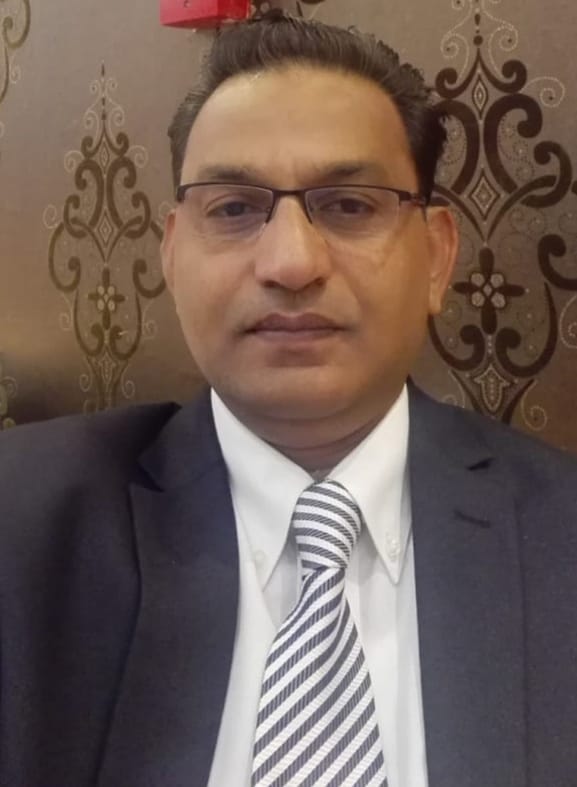
The writer is Head of News at Pakistan Today. He has a special focus on current affairs, regional and global connectivity, and counterterrorism. He tweets as @mian_abrar and also can be reached at [email protected]
View all articles →Comments
No comments yet. Be the first to join the discussion!


