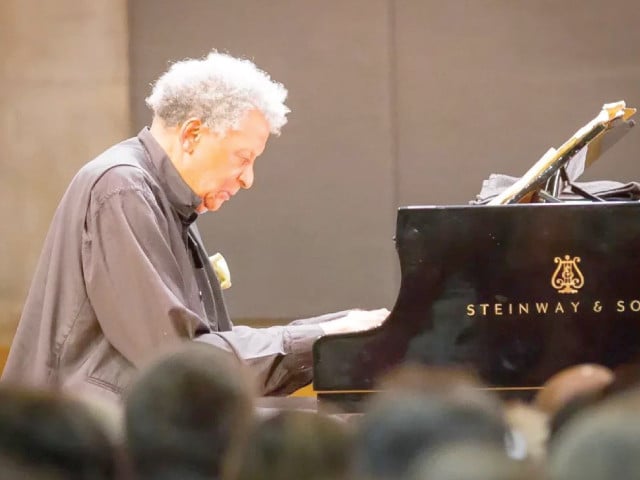
Jazz great Sonny Rollins dies at 95 in New York
Sonny Rollins, the celebrated tenor saxophonist known as the Saxophone Colossus, has died at 95 in New York. The jazz icon’s career spanned more than six decades and included landmark recordings, major honours and enduring compositions.

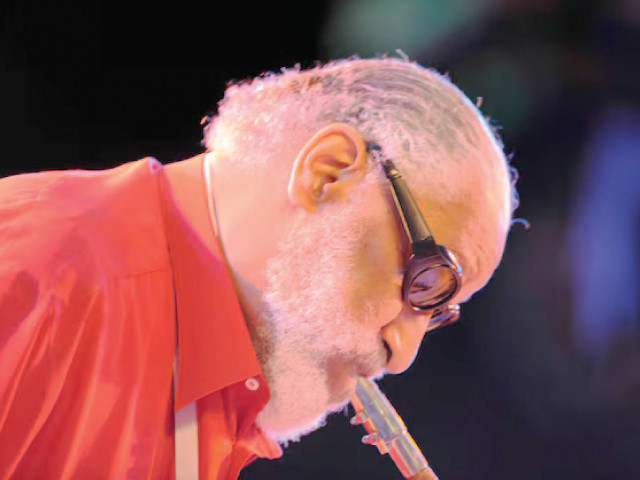
NEW YORK: Sonny Rollins, the influential tenor saxophonist known as the Saxophone Colossus and regarded as one of the central figures in modern jazz, has died at the age of 95, according to a statement from his family and publicist.
No cause of death was announced. The statement said Rollins died at his home in New York. He had faced respiratory illness in later years and retired from performing in 2014, bringing to a close a career of more than six decades that left a deep mark on jazz improvisation.
Born Theodore Walter Rollins in Harlem in 1930, he grew up in New York’s jazz environment and developed into a major talent while still a teenager. Inspired by Coleman Hawkins and guided by Thelonious Monk, he went on to record with leading musicians including Miles Davis, Bud Powell and Art Blakey.
Rollins wrote several compositions that became enduring jazz standards, among them Oleo, Airegin, Doxy and the calypso-influenced St Thomas, a piece that reflected his family’s roots in the US Virgin Islands. His 1956 album Saxophone Colossus established him as one of the foremost improvisers of his era. He was also seen as one of the few musicians considered the equal of John Coltrane, and their encounter on Tenor Madness in 1956 remains one of the best-known moments in jazz history.
Career breaks and personal struggles
Despite his stature, Rollins struggled with dissatisfaction over his own playing. In 1959, at the height of his fame, he stepped away from public performance and spent more than two years practising alone on New York’s Williamsburg Bridge. That period was followed by his return on the 1962 album The Bridge.
Speaking later to The Guardian about that withdrawal, Rollins said:
What made me withdraw and go to the bridge was how I felt about my own playing. I knew I was dissatisfied.
Like many musicians of the bebop period, Rollins also battled heroin addiction and spent time in prison in the early 1950s before overcoming the habit. He later turned to meditation, yoga and Eastern spiritual practices during another extended break from music that began in 1969.
Honours and later years
Over the course of his career, Rollins recorded more than 60 albums as a bandleader and worked with artists ranging from Ornette Coleman to The Rolling Stones. He contributed notable solos to the band’s 1981 album Tattoo You. His final public performance took place at the Detroit Jazz Festival in 2012.
In later years, he received the Grammy Lifetime Achievement Award, the Kennedy Center Honors and the National Medal of Arts from former US president Barack Obama. Reflecting on mortality in a 2011 interview, Rollins said:
I'm the last guy but in a way I'm not, because when I'm gone my music is going to be here.
Comments
No comments yet. Be the first to join the discussion!