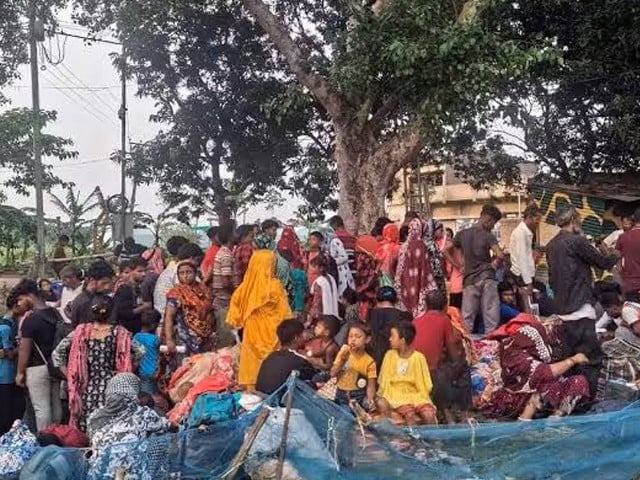
India orders migrant detention centres triggering expulsion fears
India's BJP has ordered holding centres for undocumented Bangladeshis and Rohingyas in West Bengal after taking power in the state. The move has raised fears among minorities and drawn criticism from rights activists.

NEW DELHI: India's ruling Bharatiya Janata Party has directed authorities in West Bengal to establish detention facilities for undocumented Bangladeshis and Rohingyas, a move that has triggered concern among minorities over the risk of arbitrary expulsions.
The directive was issued only days after Prime Minister Narendra Modi's BJP took power in the eastern state for the first time since India's independence in 1947. The order instructs local officials to create holding centres for apprehended foreigners awaiting deportation as part of a wider campaign against illegal migration.
The government has defended what it describes as a detect, delete, deport policy, saying those being targeted are migrants residing in the country unlawfully.
"Illegal migration has security and socio-economic ramifications which are often well beyond law enforcement," the order issued last week said.
The decision has heightened unease among West Bengal's nearly 35 million Muslims, many of whom have linguistic and cultural links with neighbouring Bangladesh. Critics say the step is in line with the BJP's long-standing hardline approach to immigration. They point to past remarks by senior party figures who described Bangladeshi migrants as termites and infiltrators.
Similar measures have previously been pursued in neighbouring Assam, where the BJP has overseen broad identification campaigns and large-scale detentions. Rights activists say hundreds of people have been deported from Assam to Bangladesh without due legal process, often on the basis of ethnic profiling.
According to activists and lawyers who have challenged the measures in court, many of those affected were allegedly forced across the border at gunpoint. They argue that the policies disproportionately affect Muslims by linking religious identity with illegal migration.
The proposed centres in West Bengal have drawn added concern because of the state's porous frontier with Bangladesh and its long history of migration. The inclusion of Rohingya refugees in the order has also been criticised.
Humanitarian groups have previously accused India of forcibly returning Rohingya refugees to Myanmar despite the continuing conflict there, raising concerns about possible violations of international refugee protection norms. Adding to concerns among Muslims, the BJP-led government in Assam on Monday introduced legislation to amend personal religious laws, a move critics say could further marginalise minorities.
Comments
No comments yet. Be the first to join the discussion!