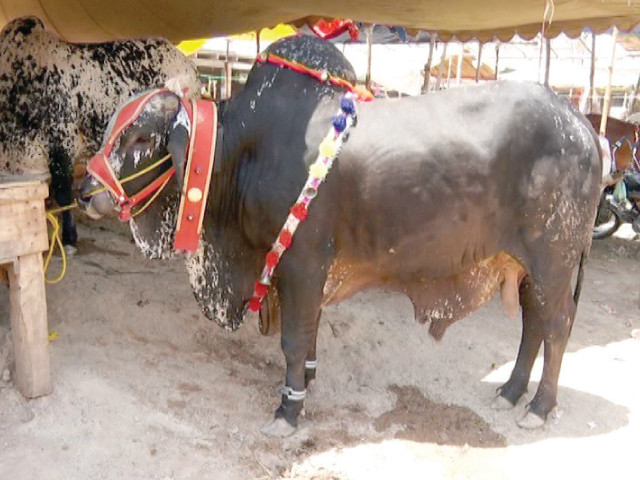
Cattle markets in KP see heavy Eid trade as buyers complain of high prices
Livestock markets across Khyber Pakhtunkhwa saw heavy Eidul Azha trading on Sunday, especially in Peshawar, where buyers also complained of high transaction charges and rising prices. In Charsadda, however, traders reported slower business amid inflation and weak purchasing power.

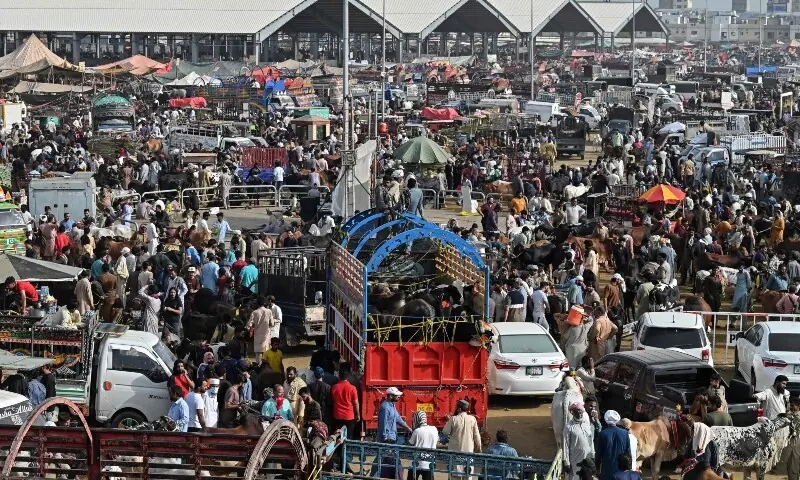
PESHAWAR: Livestock markets across Khyber Pakhtunkhwa recorded intense trading activity on Sunday ahead of Eidul Azha, with large numbers of buyers and sellers turning up in Peshawar and other districts as the sacrificial animal trade reached its peak.
In Peshawar, regular weekly livestock markets as well as privately run cattle farms drew heavy crowds. One of the busiest markets on Ring Road near the slaughterhouse that supplies meat to much of the provincial capital remained packed throughout the day. The rush led to long lines of vehicles and serious traffic congestion despite a heavy police presence for traffic management. Buyers said they were being charged Rs2,000 on the purchase of each animal at the market.
Another major market in the Sarband area on Bara Road continued supplying sacrificial animals to residents of Bara, Jamrud, Sheikhan, Pishtakhara, Hayatabad, Achini and nearby localities. Buyers there also complained about high fees imposed by market operators. A separate market at Palosai in suburban Tehkal remained active as well, where buyers were reportedly exempt from paying taxes. Residents from Regi, DHA, Tehkal, Board Bazaar, University Road, Bara Gate, Shaheen Colony, Shaheedabad and surrounding rural areas visited in large numbers.
Peshawar’s biggest cattle market, known as Kala Mandi on GT Road near Jhagra and Nasirpur, witnessed exceptional activity, with traders arriving from across Khyber Pakhtunkhwa, including Chitral. Located opposite the city’s fruit market, the site remained overcrowded, making movement difficult for pedestrians and motorists. The market has separate sections for buffaloes, cows, bulls and dairy animals. A railway track running through the middle of the market added to difficulties, with traders and buyers complaining about dust whenever trains passed through. Buyers said the administration was charging Rs1,500 per animal transaction.
The Sufaid livestock market on Kohat Road also remained crowded, attracting buyers from Budhber, Matani, Bazidkhel, Ahmadkhel, Nauthia, Scheme Chowk, Armar and Dara Adamkhel. Along with sacrificial animals, the market offered goats, rams, poultry, birds and vegetables. Other livestock markets in Peshawar, including Bara Market on Frontier Road, Chahil Ghazi Baba on Warsak Road, the Charsadda Road cattle market near Khazana and Naguman market, also reported strong business activity.
Despite brisk sales, many buyers said prices had risen. A government employee, Nasir Khan, said he had delayed his purchase in the hope that rates would come down closer to Eid, but that did not happen. Livestock traders, including Arab Khan and Qaiser Khan, said a large number of animals were sold on Sunday as Eid shopping gathered pace.
Preference for local breeds in Malakand
Residents in parts of Malakand division, including Chakdara, Mingora, Matta, Langar and Kat Kala, said buyers this year were showing greater interest in locally bred animals. They particularly preferred Achai breed cows and bulls and Azikheli buffaloes, saying lower transport costs had kept prices comparatively affordable.
Charsadda traders report slower business
In contrast to the strong activity in Peshawar, livestock traders in Charsadda said business at cattle markets remained slow. They linked the weaker trade to reduced purchasing power and high inflation. Although some momentum had emerged in the sale of sacrificial animals, traders said high prices were discouraging buyers.
A large number of animals had been brought to markets in the district, but many buyers were seen bargaining over prices and then leaving without making a purchase. Traders said customer turnout was lower than in previous years because many people were facing economic hardship. According to cattle dealers, buffaloes were being sold for Rs400,000 to Rs600,000, while cows and bulls were priced between Rs300,000 and Rs400,000. Goats were available from Rs50,000 to Rs100,000, while sheep were priced from Rs100,000 to Rs200,000. A goat priced at Rs400,000 drew large crowds in the market, though no buyer purchased it because of the high asking price.
Comments
No comments yet. Be the first to join the discussion!