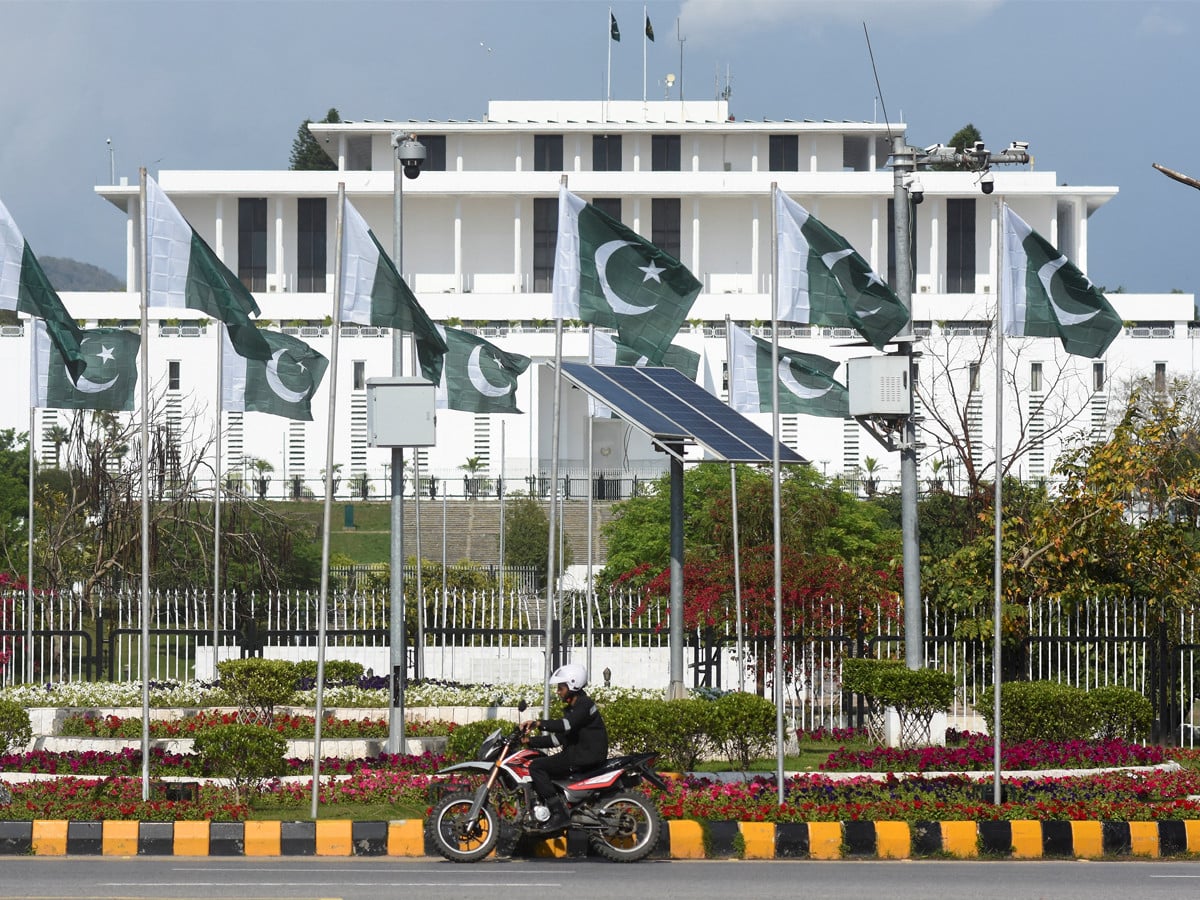
Pakistan-mediated Iran-US talks show breakthrough signs as ‘Encouraging Progress’ reported
Pakistan’s ISPR says Iran-US negotiations are making “encouraging progress” toward a final framework understanding. Iran focuses on drafting an MoU after Field Marshal Asim Munir’s high-level visit.

ISPR says negotiations moving toward ‘final framework understanding,’ as Field Marshal Munir completes ‘highly productive’ Iran visit
Iranian, Pakistani leadership holds high-level consultations on peace process as Pakistan credited for facilitating dialogue amid regional de-escalation push
Iranian Foreign Ministry spokesperson says in final stages of drafting a framework agreement aimed at ending the war with US
Says within a 30 to 60-day window, details of arrangement would be further negotiated before a final agreement is concluded
Iranian and Qatari delegations engaged in intensive discussions in Tehran to finalise a ‘temporary’ agreement with US: reports
TEHRAN/ISLAMABAD: Iran, the United States, and mediator Pakistan on Saturday said that significant progress has been achieved in talks aimed at ending nearly three months of conflict, with Pakistan’s military describing the latest round of negotiations as yielding “encouraging progress” toward a final understanding, while Tehran indicated focus on finalising a memorandum of understanding (MoU) following high-level engagements with Pakistan’s Chief of Defence Forces and Chief of Army Staff, Field Marshal Asim Munir.
According to Pakistan’s military media wing, the Inter-Services Public Relations (ISPR), the talks marked “encouraging progress” toward a framework for a final agreement with the United States after intensive diplomatic engagements with Iranian leadership.
In a statement issued on Saturday, ISPR said Field Marshal Asim Munir concluded a “highly productive” short visit to Iran, which formed part of ongoing mediation efforts aimed at de-escalation and constructive engagement amid regional tensions following the ceasefire of April 8, 2026.
Pakistan’s field marshal concludes ‘highly productive’ Iran visit: Military pic.twitter.com/pGEzWLnfLc
— Pakistan TV Digital (@PakistanTVcom) May 23, 2026
During the visit, the field marshal held high-level meetings with Iranian President Masoud Pezeshkian, Speaker of Parliament Mohammad Bagher Ghalibaf, Foreign Minister Abbas Araghchi, and Interior Minister Eskandar Momeni, the statement added.
Pakistani Army Chief Field Marshal Asim Munir met with Iranian President Masoud Pezeshkian in Tehran for high-level talks to advance diplomatic initiatives.
Follow: https://t.co/B3zXG74hnU pic.twitter.com/YAt0muXJi4— Press TV 🔻 (@PressTV) May 23, 2026
ISPR said the discussions focused on expediting the consultative process to support regional peace and stability and to move towards a conclusive agreement. It added that the engagements were held in a “positive and constructive environment” and contributed meaningfully to the mediation process.
“The intensive negotiations over the last twenty-four hours have resulted in encouraging progress towards a final understanding,” the military statement said, noting that the Iranian leadership appreciated Pakistan’s role in facilitating dialogue and promoting peaceful resolution of regional issues.
Separately, Iranian officials said discussions were now centred on finalising a memorandum of understanding as part of ongoing diplomatic efforts, while reiterating support for continued engagement.
Two Pakistani sources involved in the negotiations said the emerging understanding is “fairly comprehensive to terminate the war,” suggesting momentum toward a broader settlement framework.
The development comes amid renewed diplomatic activity involving all three sides as efforts continue to stabilise the region and move toward a lasting ceasefire arrangement.
Earlier Developments in Iran–US Mediation Efforts via Pakistan
Earlier upon arrival in Tehran, Chief of Defence Forces (CDF) Field Marshal Asim Munir was received by Iranian Interior Minister Eskandar Momeni, along with senior civil and military officials, marking the start of his engagements under ongoing Pakistan-facilitated mediation efforts. Interior Minister Mohsin Naqvi was also present at the reception.
According to Reuters, Iran’s top negotiator and Parliament Speaker Mohammad Bagher Ghalibaf told Field Marshal Munir during a meeting that Tehran would not compromise on the rights of its nation and country, state media reported. He added that Iran’s armed forces had rebuilt their capabilities during the ceasefire, warning that if the United States “foolishly restarts the war,” the consequences would be “more crushing and bitter.”
Field Marshal Munir arrived in Tehran on Friday as part of continuing mediation efforts aimed at supporting regional de-escalation.
In recent months, Pakistan has drawn international attention for its role in facilitating dialogue between Iran and the United States amid the broader Middle East crisis. Following the US-Israel offensive against Iran on February 28, Tehran retaliated with strikes targeting Israel and other Gulf countries hosting US assets.
Pakistan subsequently positioned itself as a key mediator, helping secure a temporary ceasefire and hosting what were described as the highest-level US–Iran talks since the 1979 Islamic Revolution. Although the “Islamabad Talks” concluded without a final agreement, the ceasefire largely held and was later extended at Islamabad’s request.
Since then, both sides have continued exchanging proposals and counter-proposals in an effort to bridge differences and resume structured dialogue aimed at ending the conflict, which has already disrupted regional stability and global energy flows.
While Pakistan remains hopeful about the resumption of direct talks, sources said there has been no “significant” shift in Iran’s earlier position on the nuclear issue in its response to US proposals.
According to sources, Tehran’s latest response—delivered to the United States via Islamabad last week—focuses primarily on an “immediate” end to hostilities, while offering limited movement on Washington’s core demands regarding Iran’s nuclear programme.
Iran, the sources added, has proposed that nuclear discussions be handled separately in “broader and structured” negotiations, citing the complexity of the issue. However, Tehran has reiterated its willingness to pause uranium enrichment for five years, while rejecting the US demand for a 20-year moratorium.
Sources familiar with the matter told Reuters that the proposed framework under discussion would proceed in three stages: a formal end to hostilities, resolution of tensions in the Strait of Hormuz, and a 30-day window to negotiate a broader agreement, extendable by mutual consent.
US President Donald Trump, speaking in an interview reported by Axios, said he would review the latest Iranian draft proposal with advisers and could decide within days on whether to resume military action.
“Either we reach a good deal or I’ll blow them to a thousand hells,” he was quoted as saying.
In a separate CBS interview, Trump said the United States and Iran were “getting a lot closer” to an agreement, while also warning of severe consequences if talks fail, stating that “no country will ever be hit as hard” if no deal is reached.
One Pakistani source involved in the process said there was still no guarantee that Washington would accept the memorandum under discussion. If both sides agree, the MoU would pave the way for further negotiations after the Eid holiday concludes on Friday.
Rubio says ‘there has been measurable progress in talks’
US Secretary of State Marco Rubio said there had been “measurable progress in talks,” although he did not rule out the possibility of military action if diplomacy fails.
“There might be some news a little later today. There may not be. I hope there will be,” Rubio told reporters in New Delhi during his first official visit to India.
“There’s been some progress done, some progress made. Even as I speak to you now, there’s some work being done,” he said, adding that developments could emerge “later today, tomorrow, or in a couple of days.”
Rubio reiterated Washington’s demands, including Iranian assurances over the Strait of Hormuz and the transfer of highly enriched uranium, while stressing that President Donald Trump prefers a negotiated solution.
“President Trump’s preference is always to solve problems such as these through a negotiated diplomatic solution. That’s what we’re working on right now,” Rubio said.
“But this problem will be solved, as the president has made clear, one way or the other,” he added.
Meanwhile, Iranian Foreign Ministry spokesperson Esmaeil Baghaei said Tehran was in the final stages of drafting a framework agreement aimed at ending the war with the United States.
Iran, US moving closer to 'finalizing memorandum of understanding': Baghaeihttps://t.co/FzJ3vZh9BQ
— Press TV 🔻 (@PressTV) May 23, 2026
He said that within a 30 to 60-day window, details of the arrangement would be further negotiated before a final agreement is concluded, noting that the current focus was on “finalising memoranda of understanding.”
“At this stage, we will not discuss the details of the nuclear issue… we have decided to prioritise an urgent issue for all of us: ending the war on all fronts,” Baghaei told state television.
‘Final stages' of drafting framework for deal with US: Iran pic.twitter.com/hsDXhfUPMb
— Pakistan TV Digital (@PakistanTVcom) May 23, 2026
He added that nuclear-related matters would be addressed separately at a later stage, while confirming that issues related to the Strait of Hormuz were part of a broader 14-point understanding, alongside concerns over US restrictions on international navigation.
Pakistani Army Chief Field Marshal Asim Munir met with Iran's Foreign Minister Araghchi in Tehran for late-night talks focused on diplomatic efforts to halt US-Israeli aggression and strengthen regional peace and stability.
Follow: https://t.co/B3zXG74hnU pic.twitter.com/L8tohHLcP2— Press TV 🔻 (@PressTV) May 23, 2026
Separately, multiple Pakistani government sources told Anadolu that Pakistani, Iranian and Qatari delegations were engaged in intensive discussions in Tehran to finalise a “temporary” agreement with the United States aimed at ending hostilities, with a “major breakthrough” expected by the end of the week.
According to sources familiar with the matter, Chief of Defence Forces and Chief of the Army Staff Field Marshal Asim Munir had made at least two telephonic contacts with US mediators, including Vice President JD Vance, over the past 24 hours.
Field Marshal Munir, who arrived in Tehran on Friday evening on his second visit in recent weeks, held meetings with Iranian President Masoud Pezeshkian, Parliament Speaker and chief negotiator Mohammad Bagher Ghalibaf, and Foreign Minister Abbas Araghchi to review drafts of a potential agreement.
Sources said Pakistani and Qatari delegations were holding parallel consultations with US and Iranian negotiators to bridge differences over key provisions, particularly Iran’s nuclear programme and maritime access through the Strait of Hormuz.
Washington is seeking “concrete and practical” assurances in a proposed interim deal, while Tehran insists these issues should be addressed in a second phase of negotiations after an initial agreement.
The draft framework under discussion reportedly includes an immediate cessation of hostilities across all fronts, including Lebanon, reopening of the Strait of Hormuz, an end to US restrictions on Iranian ports, and the initiation of nuclear talks within 30 days.
Sources added that issues such as the release of frozen Iranian assets, lifting of international sanctions, and war compensation would likely be addressed in direct US-Iran talks at a later stage.
If agreed, a second round of direct negotiations is expected to resume in Islamabad after Eidul Azha, according to earlier reports cited by Anadolu.
Trump to speak with Middle East leaders
Trump, whose ratings have been hit by the war’s impact on energy prices for US consumers, said on Friday he would not attend his son’s wedding this weekend, citing Iran among the reasons he planned to stay in Washington.
An Arab official told Reuters that Trump would hold a phone call on Saturday with leaders from Saudi Arabia, Qatar, the UAE, Jordan, Egypt, Turkey and Pakistan.
Pakistan’s mediation push aims to narrow differences between Iran and the US after weeks of war that have left the vital Hormuz waterway closed to most shipping despite a nervous ceasefire, upending global energy markets.
US Secretary of State Marco Rubio repeated Trump’s demands: “Iran can never have a nuclear weapon. The straits need to be open without tolls. They need to turn over their enriched uranium.”
Rubio, who is visiting India, said some progress had been made and work was continuing.
“Even as I speak to you now, there’s some work being done. There is a chance that, whether it’s later today, tomorrow, in a couple days, we may have something to say,” Rubio told reporters in New Delhi.
Iran denies it is pursuing nuclear weapons and says it has a right to enrich uranium for civilian purposes. It has demanded supervision of the strait, an end to the US blockade on its ports and the lifting of sanctions on Iranian oil sales.
There are still issues that need to be discussed through mediators
Iranian foreign ministry spokesperson Esmail Baghaei said: “The trend this week has been towards a reduction in disputes, but there are still issues that need to be discussed through mediators. We will have to wait and see where the situation ends in the next three or four days.”
Pakistan’s army chief Munir left Tehran on Saturday after talks with Iran’s top negotiator Mohammad Bagher Ghalibaf and Foreign Minister Abbas Araghchi.
Baghaei said the issue of the US blockade on Iran’s shipping was important, but that its priority was ending the threat of new US attacks and the ongoing conflict in Lebanon, where Iran-allied Hezbollah militants are fighting Israeli troops who have moved into the south.
Ghalibaf said Iran would pursue its “legitimate rights,” both on the battlefield and through diplomacy, but added that it could not trust “a party that has no honesty at all,” an allegation Iran has made several times before.
He said Iran’s armed forces had rebuilt their capabilities during the ceasefire and that, if the US “foolishly restarts the war,” the consequences would be “more forceful and bitter” than at the start of the conflict.
Despite weeks of conflict, Iran has preserved its stockpile of near-weapons-grade enriched uranium as well as missile, drone and proxy capabilities.
Comments
No comments yet. Be the first to join the discussion!