

Thalassemia fight gains momentum as University of Health Sciences Lahore team advances research
Researchers at the University of Health Sciences in Lahore have made progress on a gene-editing approach for beta-thalassemia. The project focuses on reactivating fetal hemoglobin and may support future gene-based therapies.

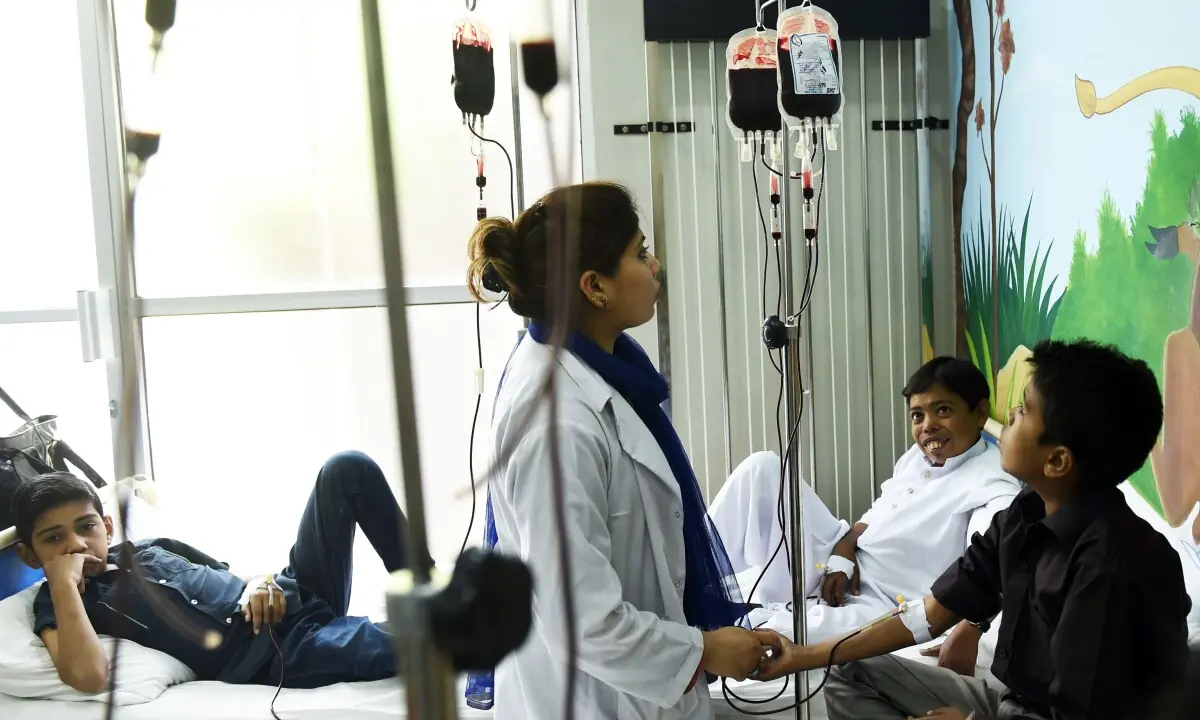
LAHORE: Researchers at the University of Health Sciences (UHS) have reported progress in work on a new gene-editing strategy aimed at treating beta-thalassemia, an inherited blood disorder that affects thousands of people in Pakistan and globally.
According to the university’s research update, beta-thalassemia results from a defect in the beta-globin gene, which is responsible for producing hemoglobin, the protein in red blood cells that carries oxygen through the body. When the gene does not function properly, the body is unable to make enough healthy hemoglobin, leading to severe anemia, weakness, delayed growth, bone complications and damage to vital organs. Many patients need lifelong blood transfusions and ongoing medical care.
Around 50,000 to 60,000 children are born with the disease worldwide each year. In Pakistan, about five to seven per cent of the population carries the thalassemia gene, while nearly 100,000 people are living with thalassemia major. An estimated 5,000 to 9,000 affected children are born in the country annually.
Focus on fetal hemoglobin
The research is being conducted under the supervision of Dr Mahmood Saba of the UHS Department of Human Genetics and Molecular Biology. The team is working with a gene-editing method known as multiplex prime editing, which is designed to enable highly precise changes in DNA.
As part of the project, UHS researchers have prepared recombinant genetic constructs targeting the gamma-globin gene, which regulates the production of fetal hemoglobin. Fetal hemoglobin is naturally present before birth and usually declines after infancy. Researchers believe that restoring fetal hemoglobin production in thalassemia patients could help offset defective adult hemoglobin and reduce the severity of the disease. This, in turn, may reduce dependence on repeated blood transfusions.
The university said that by developing these genetic constructs, the team has completed an important preliminary stage in efforts to create gene-based treatment options for beta-thalassemia.
Current treatment limits
At present, treatment for thalassemia mainly relies on regular blood transfusions, medicines used to remove excess iron from the body, and bone marrow transplantation in selected cases. While these interventions can help patients live longer, they do not correct the underlying genetic defect responsible for the disease.
The UHS project is focused on addressing the condition at its source through precision medicine and modern gene-editing methods. Researchers involved in the work say the latest progress offers a scientific basis for future clinical research and could support the development of advanced therapies for thalassemia and other inherited genetic disorders.
University leadership highlights research role
UHS Vice Chancellor Prof Ahsan Waheed Rathore said the development reflected the university’s focus on research intended to improve patient care and contribute to medical science. He said the project demonstrated innovation and commitment and could support therapies that may reshape future treatment of beta-thalassemia.
The university also highlighted the contribution of young researchers to the project. Student researcher Taqdees Arif expressed optimism about continuing the work and contributing to future treatments for inherited genetic diseases.
Comments
No comments yet. Be the first to join the discussion!


