

Sindh transgender job quota faces delay over medical examination condition
Sindh’s 0.5pc job quota for transgender persons remains stalled amid objections to a mandatory medical examination for gender verification. Activists call the rule discriminatory, while the provincial government says it is required under the law.

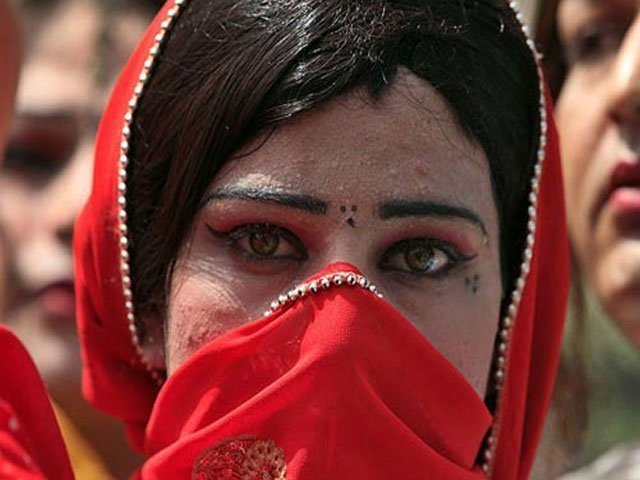
KARACHI: Nearly four years after Sindh announced a government employment quota for transgender persons, the measure has yet to be fully put into effect, with a mandatory medical examination for gender verification emerging as the central point of contention.
The Sindh Assembly passed the Sindh Civil Servants Amendment Bill in July 2022, reserving a 0.5 per cent quota for transgender persons in government jobs up to Grade 15. Under the law, applicants seeking to avail the quota must first obtain a certificate from a standing medical board, which verifies gender after a physical examination, and submit that certificate to the relevant department.
Members of the transgender community have objected to the requirement, describing it as discriminatory and humiliating, while the provincial government has said the legal conditions must be met for the quota to be implemented.
Community objections to verification rule
Karachi-based transgender activist and Gender Interactive Alliance Operations Manager Zehrish Khanzadi said the condition unfairly singles out transgender applicants.
Are male or female applicants asked to prove their gender through such certification for government jobs? If not, why is this condition imposed on transgender persons. For a long time, transgender people were not even issued identity cards. Although that issue has been resolved and legal recognition has been granted, challenges within government institutions persist.
Khanzadi also raised concerns about the size of the quota, saying the 0.5 per cent allocation may not translate into meaningful opportunities. She said that in a pool of 100 vacancies, such a percentage would amount to less than one post in practical terms, and argued that Sindh should raise the quota in line with Punjab, where she said a 2 per cent quota exists.
Government says law is being implemented
Sindh Human Rights Commission member and provincial government spokesperson Sukhdev Hemnani said the medical examination clause was included to maintain transparency in recruitment and to ensure that only genuine applicants benefit from the reserved quota.
The Sindh government has already begun implementing the law, and recently the Excise and Taxation Department included the transgender quota in its job advertisement for the first time. However, only those applicants who hold a medical certificate from the relevant board will be eligible.
Responding to criticism over the quota size, Hemnani said the allocation had been fixed in line with population figures and could not be increased at this stage.
In such cases the quota could be applied to the total number of vacancies across departments, and the government could also consider increasing overall job openings.
Rights advocates seek changes
Human Rights Commission of Pakistan Vice Chairperson Qazi Khizar also backed the transgender community’s position and called on the Sindh government to remove the medical examination requirement from the law.
Just as representation has been given in local government bodies, at least a one per cent job quota should also be ensured.
The report also highlighted differing estimates of the transgender population in Sindh. According to the 2023 digital census, there are 4,222 transgender persons in the province. A 2017 survey by the National AIDS Control Program, however, estimated 9,123 transgender persons in Karachi alone. Khanzadi, meanwhile, put the unofficial transgender population in Sindh at around 55,000, including more than 18,000 in Karachi.
The differing figures and the dispute over verification requirements have added to the difficulties surrounding implementation of the quota, which remains under debate despite having been legislated in 2022.
Comments
No comments yet. Be the first to join the discussion!


