Punjab’s out-of-school crisis persists despite enrolment drives
Punjab continues to record the country’s highest number of out-of-school children, with official and international data placing the figure at around 9.6 to 9.7 million. Experts and former officials cite poverty, weak infrastructure, teacher shortages and governance issues as key causes.

ISLAMABAD: Punjab continues to face a severe school enrolment challenge, with official and international data indicating that millions of children in the province remain outside the education system despite government efforts to bring them into classrooms.
Punjab is widely regarded as Pakistan’s educational centre, yet between 9.6 million and 9.7 million children are still out of school, the highest number among all provinces. UNICEF and the Pakistan Institute of Education have reported that more than 25 million children across the country are not attending school, with Punjab accounting for the largest share.
Barriers to schooling
Poverty, inflation, teacher shortages, inadequate school facilities and the financial strain on households are among the main reasons children are unable to continue or even begin their education in Punjab.
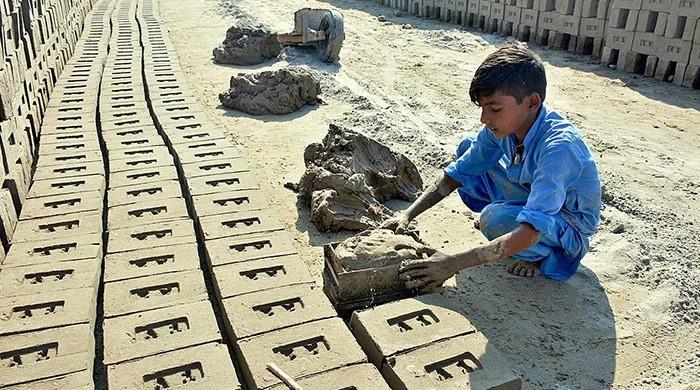
Former provincial education minister Imran Masood said worsening economic conditions in rural areas are pushing many families to send children to work instead of school.
Many families struggle to meet even daily food and household expenses, making educational costs impossible to bear. Girls are especially affected as they often leave school because of domestic responsibilities, early marriages, and social restrictions.
Masood also said there are two broad groups among out-of-school children in Punjab: those who leave after studying up to primary or middle level, and those who never enrol at all. He said some parents do not recognise the value of education and instead want children to help support household income. He added that in many rural areas schools are located far from communities and transport is unavailable, while some children become overage and are later refused admission.
There are mainly two categories of out-of-school children in Punjab. The first includes students who study up to primary or middle level and then leave education, while the second includes children who never enroll in school at all. Many parents lack awareness about the importance of education and prefer their children to contribute financially to household income. In several rural areas, schools are located far away and transport facilities are unavailable, making access to education difficult. Some children become overage and are later denied admission.
School conditions and staffing gaps
Thousands of schools in Punjab are being run by a single teacher responsible for the entire institution. Many schools also do not have basic amenities, including electricity, safe drinking water, furniture, toilets and computer laboratories. In some instances, school buildings were described as unsafe for children.
Parents cited said the standard of education in government schools remains weak, limiting meaningful learning opportunities for students. In cities, private school fees were reported to be beyond the reach of poor and middle-income families, while many rural communities still do not have schools nearby.
Masood said the crisis cannot be explained by poverty alone and pointed to administrative weaknesses as another major factor.
Weak administration, teacher absenteeism, political interference, poor monitoring, and insufficient educational budgets are worsening the situation.
Attendance data and official response
Education expert Rana Liaqat said school attendance is tracked through the School Information System, but added that the digital mechanism itself has contributed to lower attendance records because entries must be uploaded within a fixed time window.
Under the system, attendance must be uploaded online within a fixed time limit, after which entries cannot be made.
Attendance data from 37 districts of Punjab showed that more than 9.6 million students are registered up to grade 10. However, figures from April 21 showed that only around 370,000 students were marked present, while hundreds of thousands were absent and millions had no attendance entered. The highest number of unrecorded students was reported in Lahore and Khanewal.
The provincial government says it has started enrolment campaigns, teacher hiring, digital monitoring and public-private partnership initiatives to return children to school. Officials have said millions of children have been re-enrolled and that teacher training is improving.
Even so, education experts said these measures remain insufficient. They called for more schools in rural areas, scholarships for low-income families, a reduction in teacher shortages, improved infrastructure, awareness campaigns on the importance of education and stricter action against child labour. They also warned that without urgent and sustained reforms, the growing number of out-of-school children could create serious economic, social and security problems for Punjab and the country.
Comments
No comments yet. Be the first to join the discussion!