Karachi risks becoming 'more unliveable' amid rampant commercialisation
Residents, activists and legal experts in Karachi have warned that unchecked commercialisation of residential plots will worsen traffic, pollution and infrastructure stress. They called for a transparent master plan, public consultation and environmental safeguards before any land-use change.

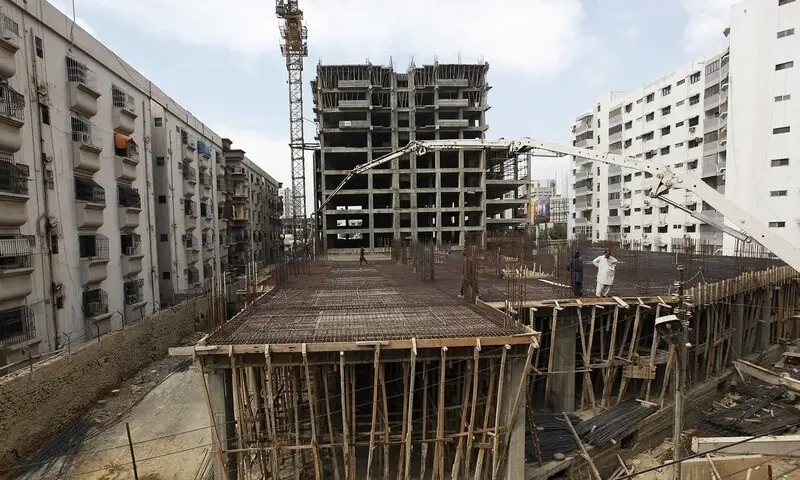
KARACHI: Residents, activists and legal experts on Wednesday voiced concern over the growing commercial use of residential plots in Karachi, saying the trend would intensify traffic congestion, pollution, infrastructure stress and environmental damage in a city already struggling with multiple civic problems.
The concerns were raised at a press conference titled Citizens Speak for a Liveable Karachi, organised by the Karachi Citizens Foundation (KCF) at the Karachi Press Club.
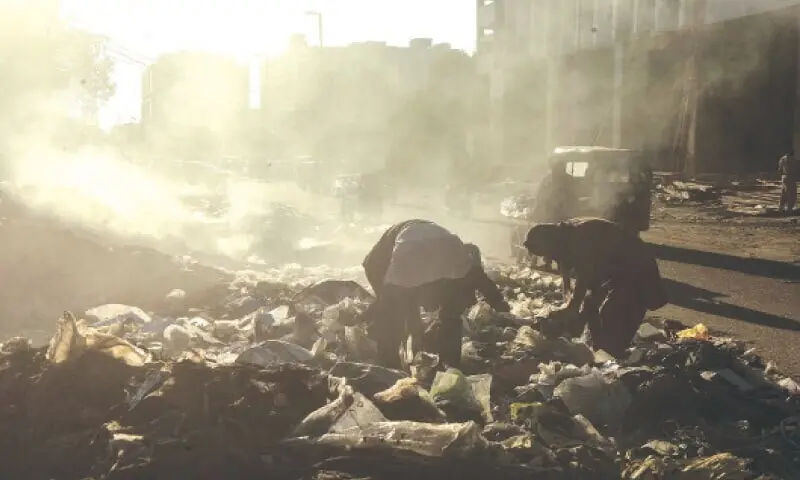
Participants said Karachi’s sewerage system was already under severe pressure. They noted that even moderate rainfall overwhelms drainage infrastructure, while unplanned development continues to combine sewage and stormwater systems, creating serious technical and environmental hazards. In that context, they said, allowing further commercial activity in residential neighbourhoods would aggravate existing problems.
Concerns over liveability and infrastructure
Speaking at the event, KCF Convenor Nargis Rehman said Karachi had already been placed among the world’s least liveable cities in the 2025 EIU Global Liveability Index because of weak infrastructure, inadequate healthcare and education, insecurity and poor municipal services. "Karachi ranks at 170 out of the total 173 cities of the world in terms of liveability. The other three cities below Karachi are war-torn cities. That’s why they are there. But what war is going on in Karachi that it’s become so unliveable?" she asked.
She warned that more commercialisation without corresponding infrastructure improvement, environmental protections and public consultation would place unbearable pressure on roads, sewerage networks and public utilities. She also said it would heighten safety concerns for residents, especially women, children and elderly people.
Planning failures and environmental damage
Barrister Shahab Usto said Karachi’s planning problems stretched back decades. He noted that the Karachi Development Authority Act was enacted in 1958 and that the city’s master plan was prepared around the same time, but no new comprehensive master plan had been implemented since then.
He said Karachi’s population was around 1.8 million at that time and had now grown to nearly 25 million. According to him, commercialisation in residential areas is generally permitted only in compelling circumstances in many parts of the world, but in Karachi it has spread without effective checks because of institutional dysfunction.
Usto also said around 500 million gallons of untreated sewage were being discharged into the sea every day because treatment plants were either not functioning or were ineffective. He said the resulting pollution was damaging marine life and mangrove forests. He further pointed to Karachi’s worsening water shortages, saying the city was facing serious problems related to water supply and filter plants.
He added that the judiciary needed greater awareness of Karachi’s urban and environmental challenges, while also remarking that the judicial system itself was in poor condition.
Impact on neighbourhoods
Journalist and activist Shanaz Ramzi said houses built for families were increasingly being turned into offices, clinics, restaurants, warehouses and other commercial outlets, putting heavy pressure on infrastructure never designed for such use. "The resulting traffic congestion, parking chaos, noise pollution and increased waste are not only inconveniencing residents but are also eroding the peace, privacy and community life that define residential areas," she said.
Saad Amanullah Khan, chairman of the Public Interest Law Association of Pakistan, said the matter was not simply about land use or construction, but one that directly affected citizens’ right to live in safe, peaceful, planned and liveable neighbourhoods.
The speakers collectively called for the protection of residential areas. They said any change in land use should be tied to matching upgrades in roads, sewerage, drainage, parking, utilities and environmental safeguards. They also demanded that no commercial conversion in residential localities should move forward without a transparent master plan, meaningful public consultation, Environmental Impact Assessments, and compliance with Sindh Environmental Protection Agency requirements.
Urban planner Mohammad Toheed, Zahid Farooq of the Urban Resource Centre and Rasha Tarek of the KCF also addressed the press conference.
Comments
No comments yet. Be the first to join the discussion!