

Gazans unable to perform Haj or offer Eid sacrifices amid border and livestock restrictions
Gazans are set to mark Eidul Azha without access to Haj and without sacrificial animals, as border restrictions and war damage continue to disrupt daily life. Officials in Gaza say movement remains severely limited and the livestock sector has been devastated.

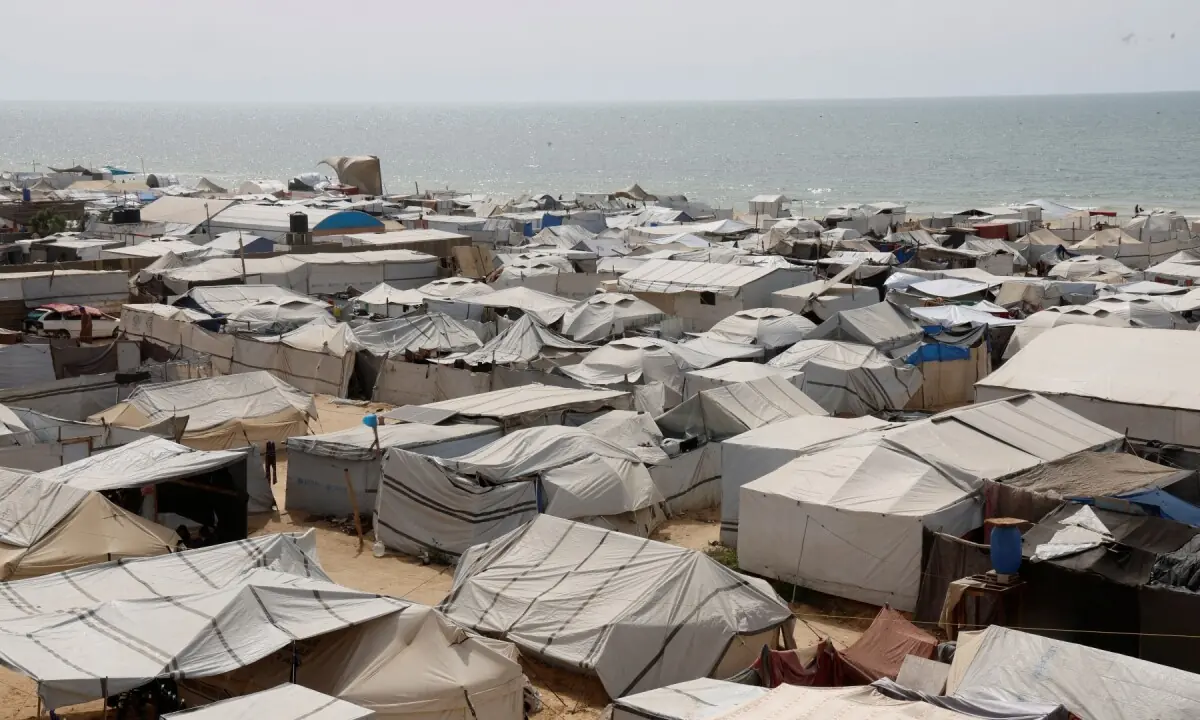
JERUSALEM: Palestinians in Gaza are set to approach Eidul Azha without access to Haj and, for a third consecutive year, without sacrificial animals, as movement curbs and the destruction of the livestock sector continue to affect the territory, according to Reuters and statements cited in the report.
In southern Gaza, 64-year-old Najia Abu Lehia said she and her late husband had been selected for Haj before the war, but were unable to travel after the conflict began and crossings were shut. Before the Israeli invasion in 2023, at least 3,000 pilgrims from Gaza performed Haj each year. Hopes for travel resumed after a US-brokered ceasefire in October halted major fighting, but those expectations were not realised because restrictions on movement remained in place.
Speaking from a tent camp in Khan Younis where she now lives, Abu Lehia described her continuing wish to undertake the pilgrimage.
We registered and our names got selected for the Haj before the war. Then the war broke out here and it became a barrier.
she told Reuters.
I am worried I’ll follow him (die) while I’m longing to perform the Haj. But God willing, we hope to perform the Haj despite the constraints, despite the siege.
she said.
Restricted movement through Rafah
Under the ceasefire arrangement, Israel allowed a partial reopening of the Rafah crossing with Egypt in February. The crossing is Gaza’s main route to the outside world. However, only a few hundred people have been allowed to pass each week, mainly patients and a limited number of escorts.
Abu Lehia said pilgrims were being prevented from travelling even though they only wanted to fulfil a religious obligation.
The border crossing is closed. Why is this happening to pilgrims? They want to fulfill their Haj obligation, they do not want to do anything else.
she told Reuters.
We were supposed to be there, we were supposed to be there in these holy days.
she added while watching footage of pilgrims in Makkah on her phone.
COGAT, the Israeli military agency responsible for overseeing access to Gaza, said the Rafah arrangement permits travel only for humanitarian cases. According to COGAT, passenger lists are set by Egyptian authorities and then approved by Israeli security services.
Gaza’s government media office said that since February, only 5,304 people had travelled in and out of Gaza, a figure it said was less than one-third of the expected number.
Eid sacrifices unavailable for third year
Gaza’s agriculture ministry said residents would observe Eidul Azha on May 27 without sacrificial animals for the third year in a row because of Israeli restrictions. The ministry said Israel’s military campaign since October 2023 had caused the systematic destruction of the livestock sector, including farms, barns, veterinary facilities and feed storage sites.
Before the war, Gaza used to import between 10,000 and 20,000 calves and 30,000 to 40,000 sheep each year for the Eid season.
COGAT said it facilitates the entry of meat, poultry, eggs and dairy products, adding that nearly 8,000 tons had been delivered over the past month, although no livestock was included.
Hamas said aid deliveries in May had reached only around a quarter of the expected level, despite repeated calls by United Nations officials for unrestricted access for humanitarian assistance and goods.
Comments
No comments yet. Be the first to join the discussion!


