Islamabad court sentences Umar Hayat to death in Sana Yousaf murder case
An Islamabad sessions court sentenced Umar Hayat to death for the intentional murder of teenage TikTok influencer Sana Yousaf, fining him Rs2.5m for heirs. The verdict awaits IHC confirmation.

Sessions court convicts TikToker under Section 302(b) for intentional murder, fining him of Rs2.5m as compensation to be paid to victim’s legal heirs
Judge says death sentence subject to confirmation by IHC, as multiple prison terms awarded on additional charges, to run concurrently
Parents hail verdict as ‘justice for all girls’ after 11-month legal battle
ISLAMABAD: An Islamabad sessions court on Tuesday sentenced Umar Hayat to death in the high-profile murder case of teenage TikTok influencer Sana Yousaf, who was shot dead at her residence in June last year.
Additional District and Sessions Judge Muhammad Afzal Majoka announced the verdict, convicting Umar Hayat under Section 302(b) of the Pakistan Penal Code (PPC) for qatl-i-amd (intentional murder) and awarding him the death penalty.
The court ruled that the sentence will be subject to confirmation by the Islamabad High Court (IHC) under Section 374 of the Code of Criminal Procedure (CrPC).
In addition to the capital punishment, the court imposed a fine of Rs2.5 million as compensation to be paid to the legal heirs of the deceased under Section 544-A of the CrPC. In case of non-payment, the convict will undergo six months’ simple imprisonment.
The written verdict further noted additional convictions under multiple provisions of law. Under Section 392 (robbery) of the PPC, Umar Hayat was sentenced to 10 years’ rigorous imprisonment with a fine of Rs200,000. Under Section 499 (defamation), he received another 10-year sentence with a fine of Rs200,000. Under Section 411 (dishonestly receiving stolen property), he was awarded one year of rigorous imprisonment along with a fine of Rs100,000.
The court ordered that all sentences will run concurrently and granted the convict the benefit of Section 382-B of the CrPC, allowing time already spent in custody to be counted towards his sentence.
According to court proceedings, Umar Hayat — arrested within 20 hours of the June 2, 2025 killing in Islamabad — had earlier recorded a confessional statement under Section 164 of the CrPC detailing the motive and circumstances of the crime. However, he later retracted his confession and denied all allegations in his statement under Section 342 of the CrPC, claiming false implication.
He was indicted on September 20, 2025, by Judge Majoka’s court, where he denied the charges. The court also noted that he had challenged various trial proceedings before the Islamabad High Court, but his petitions were dismissed.
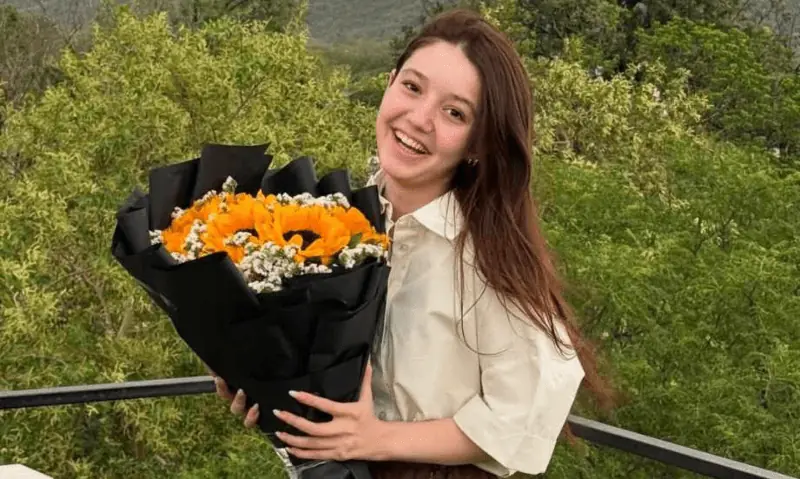
Sana Yousaf, a 17-year-old social media influencer with over a million followers, was known for her lifestyle content, including café visits, skincare routines and traditional attire videos. Her killing sparked nationwide outrage and renewed debate on women’s safety in Pakistan.
‘Justice for all girls’
Following the verdict, Sana Yousaf’s parents welcomed the court’s decision, expressing satisfaction over the judgment.
Her mother, Farzana, said she had received justice and thanked the legal team, police and media for their support throughout the case.
“The culprit has been given the right punishment,” she said.
Her father, Yousaf Hassan, said the family had waited nearly 11 months for justice.
“This verdict is not just for me; it is for society. It is a lesson for criminals,” he said, terming the decision “justice for all girls.”
The family’s lawyer praised the court’s conduct of proceedings, commending the judge’s patience during the trial and alleging that attempts were made to complicate the case through pressure tactics.
Case background
According to the prosecution, Umar Hayat was arrested from Faisalabad within 20 hours of the incident. Police had earlier described the case as driven by “obsessive behaviour.”
In his earlier confessional statement before a magistrate under Section 164 CrPC, he had detailed his alleged motive, travel to Islamabad, and actions leading up to the killing. He later retracted the statement, denying any personal connection or conflict with the victim and claiming social media pressure led to his implication.
The case had drawn widespread public attention and sparked debate on digital harassment, influencer safety, and violence against women in Pakistan.
Comments
No comments yet. Be the first to join the discussion!