Trade deficit fears deepen
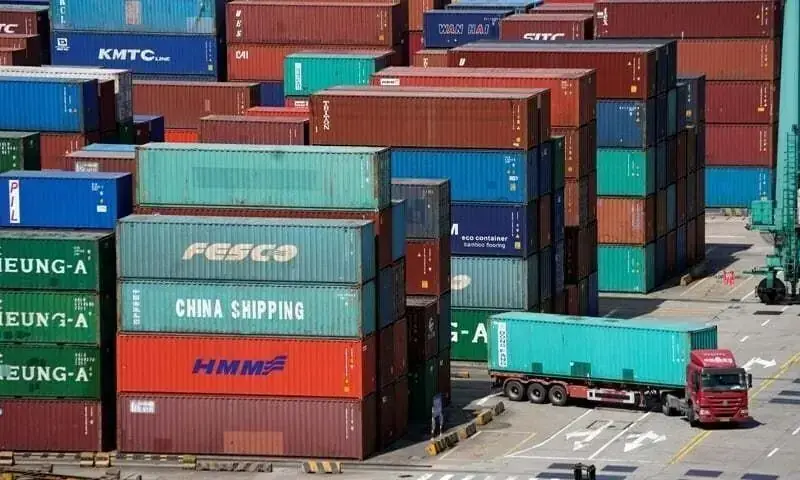
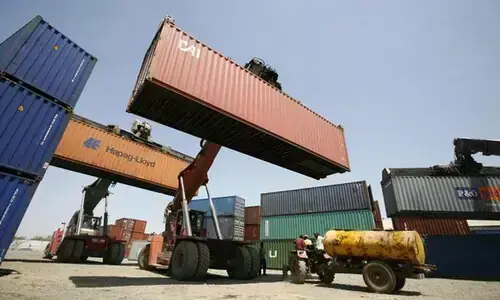
Business leaders have warned that Pakistan’s trade and current account pressures are intensifying ahead of the 2026-27 budget. They say rising global prices, industrial weakness and Middle East-related disruptions could push deficits beyond official projections.

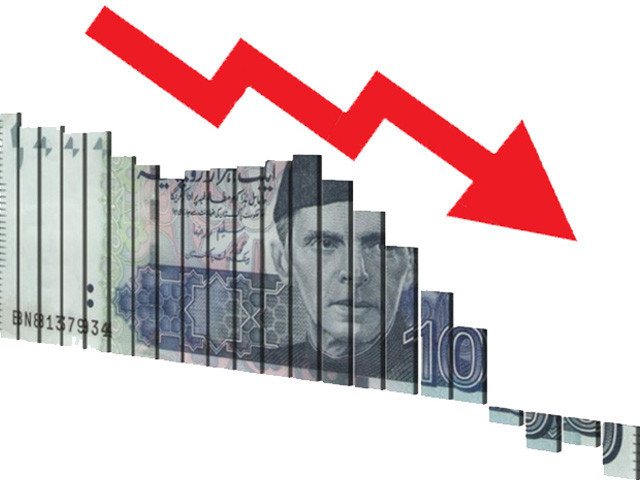
ISLAMABAD: Business leaders and economists are voicing concern that Pakistan’s external sector is coming under renewed strain ahead of the federal budget for 2026-27, with fears that both the trade deficit and current account deficit could exceed official estimates.
According to Raja Waseem Hassan, vice chairman of the Pakistan Industry and Traders Association Front (PIAF), higher international prices are already affecting the country’s trade balance. He said the annual trade deficit is now expected to reach nearly $7 billion by the end of the current fiscal year.
Hassan said the pressure is also being felt across domestic industry, where shortages of imported inputs are affecting production. He pointed to an 8% decline in fertiliser production in March and a 7% drop in cement output. He also said the textile sector, which has long been central to Pakistan’s exports, remains weak and has yet to show clear signs of recovery.
He said these trends reflect an economy that is struggling to expand exports at a time when export growth is urgently needed.
Concerns over policy and industrial slowdown
Similar concerns are being raised by other members of the business community. Mian Bilal Hanif, described as a mid-level businessman, said the country has depended on temporary measures for too long and warned that official projections often fail to match conditions on the ground.
"We have been relying on short?term fixes for far too long. Every budget cycle, we are presented with projections that look good on paper but fail to hold up against ground realities; the industrial slowdown we are seeing today is not accidental. It is the result of years of policy inconsistency and an overdependence on imports that we simply cannot afford anymore," Hanif said.
Hanif said that without structural reforms alongside the coming budget, the economy could face a longer period of stagnation.
Middle East conflict adds to risks
Hassan also linked the worsening outlook to the ongoing conflict in the Middle East, saying it has already started to produce measurable negative effects on Pakistan’s finances. He said disruptions in global supply chains and continued volatility in energy prices could push the current account deficit for 2025-26 well beyond earlier projections.
According to him, that would place renewed pressure on the country’s foreign exchange reserves, a development that has historically been associated with currency weakness and inflation.
IMF targets seen as harder to meet
Hassan said the International Monetary Fund programme has added to the challenge, as the targets originally set for the current year are becoming more difficult to achieve in a rapidly changing economic environment. He said Pakistan now needs to reassess both its fiscal obligations and development priorities in light of shifting conditions.
Despite the concerns, Hassan expressed cautious optimism that the upcoming budget, together with considered policy action by the State Bank of Pakistan, could help place the economy on a steadier course for 2026-27.
He urged policymakers preparing the budget to avoid overly optimistic assumptions and instead present figures that reflect prevailing conditions and acknowledge the scale of the challenges facing the economy.
Comments
No comments yet. Be the first to join the discussion!