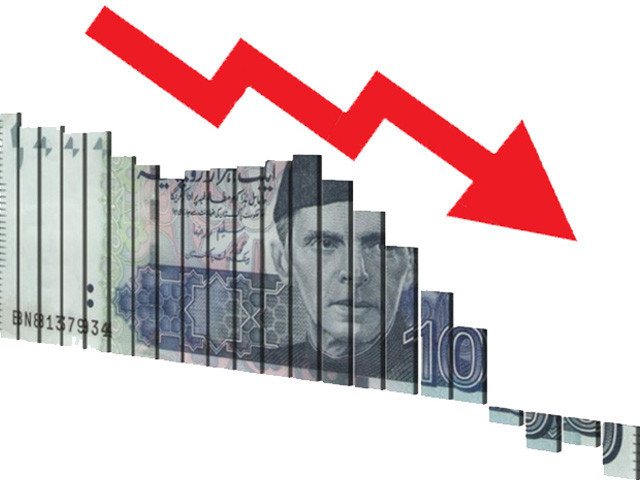
Widening trade deficit raises pressure on balance of payments
KARACHI: A widening trade deficit of as much as $32 billion is increasing pressure on Pakistan’s balance of payments as the fiscal year nears its close. Analysts cited foreign outflows, import growth and exchange-rate management among the key concerns.

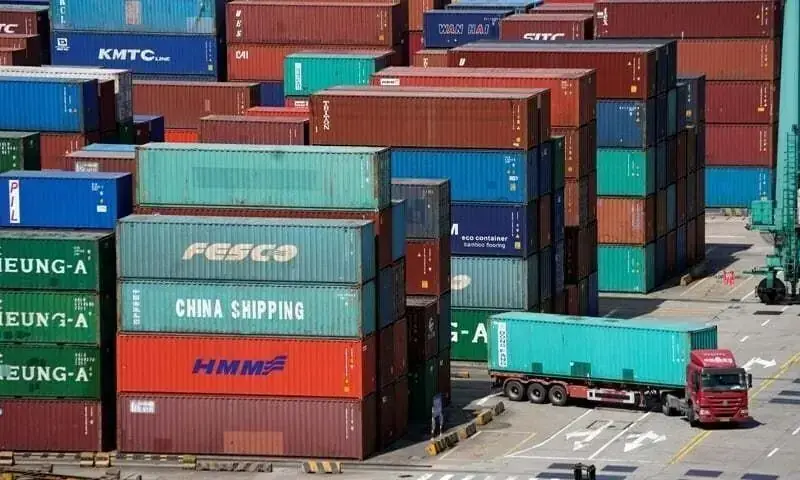
KARACHI: Pakistan’s expanding trade deficit is adding to pressure on the external account as the fiscal year approaches its close, with industry circles warning that end-of-year payment obligations due before June 30 could further strain the balance of payments.
The trade gap has risen to as much as $32 billion. Financial experts cited said the managed exchange rate had produced adverse outcomes by making the dollar relatively cheaper and encouraging a surge in imports, including luxury goods such as expensive new vehicles.
They contrasted the situation with India, where the rupee has fallen sharply over the past 12 months and was still weakening. The Indian rupee touched its lowest level of Rs95.40 to a dollar this week, while India was also facing significant foreign capital outflows, particularly after the start of the Gulf war.
Pakistan’s equity market has also seen substantial foreign outflows, according to State Bank data. During the first 10 months, inflows into the equity market stood at $247 million, while outflows reached $884m. A similar trend was reported in domestic bonds, where 94 per cent of foreign investment exited the country.
Faisal Mamsa, CEO of Tresmark, said prolonged regional instability could deepen the pressure on Pakistan’s external position.
“If the war-like situation persists for another month, Pakistan could be in trouble since final payments at the end of the year are made while the cost of imported petroleum products would remain high, eating into our reserves,” said Faisal Mamsa, CEO of Tresmark told Dawn.
However, he did not agree with the view that the dollar was cheaper in Pakistan than in India. Some currency dealers had earlier said cryptocurrency transactions had attracted dollars at rates of up to Rs292, suggesting to them that the rupee still had room to weaken, which could make the dollar more expensive and slow the sharp rise in imports.
Oil bill and import trends
The prime minister recently said the country’s imported oil cost had risen from $300 million per week before the Gulf war to $800m. Many currency experts found that claim difficult to reconcile, as it implied a 167 per cent jump in oil prices.
Import figures showed that the petroleum import bill during July-April of FY26 remained below the level recorded in the same period of the previous fiscal year. Pakistan imported petroleum worth $10.45bn in the first 10 months of the current fiscal year, compared with $11.25bn in the corresponding period last year.
The relatively cheaper dollar was reflected in a sharp increase in vehicle-related imports. Imports of completely built units rose to $317m during the 10-month period, up from $76m a year earlier. Imports of completely knockdown units reached $1.37bn, compared with $780m in the same period last year.
Exchange rate and reserve concerns
The rupee traded as high as Rs306 in the interbank market in 2023 before being pulled back to Rs286 in October 2023. Since then, it has largely moved in the Rs277 to Rs282 range in the interbank market. Since July FY26, the Pakistani rupee has appreciated gradually against the US dollar and is now trading below Rs280 per dollar.
A financial expert said pressure on the current account remained likely despite strong remittance inflows.
“There is no doubt that the country would face a current account deficit, and the size of the deficit could hit the country's reserves hard even if the inflow of remittances remained around $40bn,” Dawn quoted a financial expert as saying.
The widening trade imbalance, foreign investment outflows and uncertainty linked to higher import costs were combining to increase risks for Pakistan’s external sector as the fiscal year nears its end.
Comments
No comments yet. Be the first to join the discussion!