Trump lands in Beijing seeking trade gains, China market access
Donald Trump arrives in Beijing for talks with Xi Jinping to secure trade gains, preserve a fragile tariff and rare earth truce, and push for greater access for US businesses, amid AI and semiconductor tensions.

-- Trump to urge Xi for greater access to Chinese markets during Beijing summit
-- Elon Musk, Nvidia chief join US delegation amid AI and tech trade tensions
-- Washington and Beijing seek to preserve fragile tariff and rare earth truce
-- Iran conflict, Taiwan arms sales and semiconductor curbs to dominate high-stakes talks
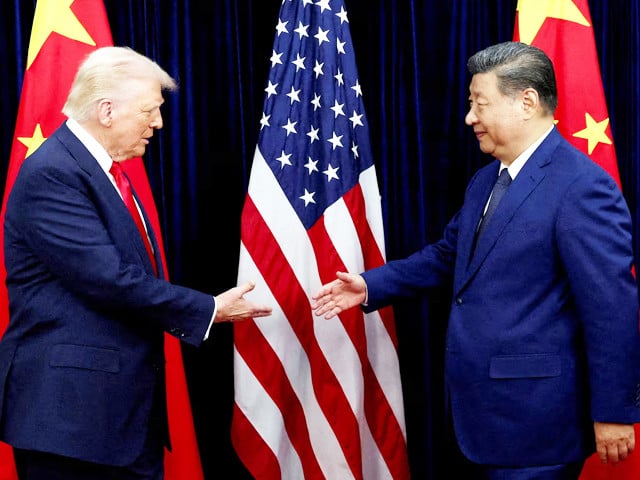
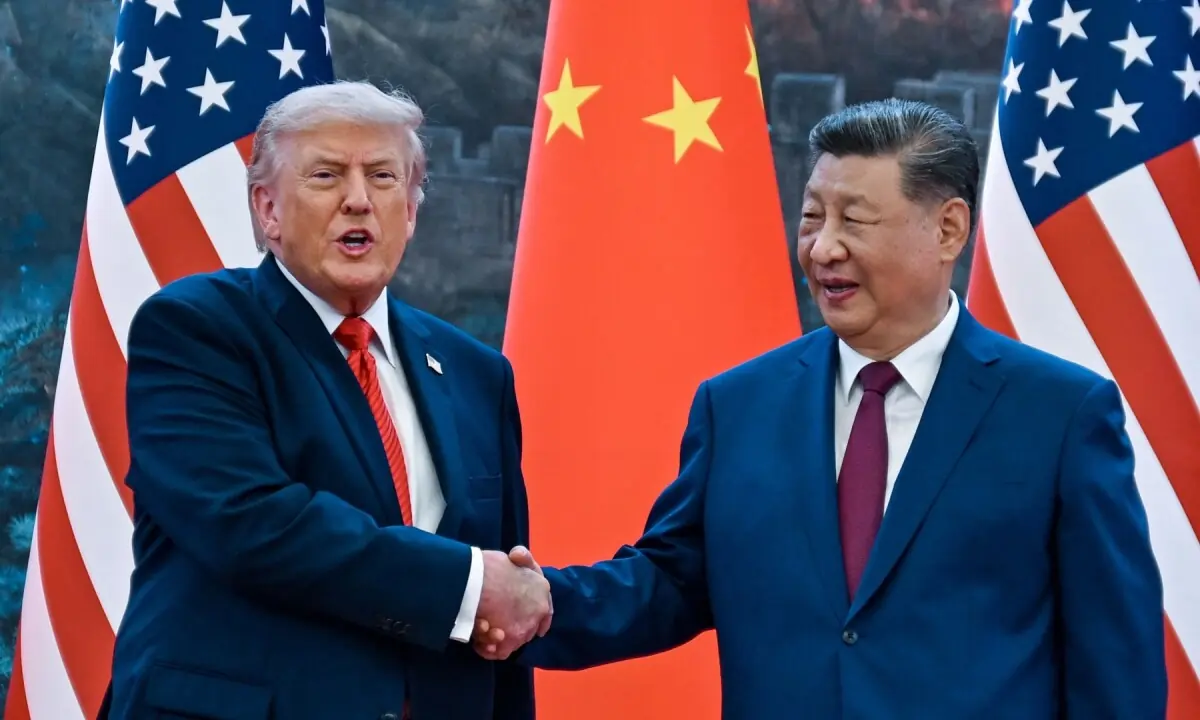
BEIJING: US President Donald Trump arrived in Beijing on Wednesday for a high-stakes two-day summit with Chinese President Xi Jinping, aiming to secure economic deals, preserve a fragile trade truce and push for greater access for American businesses in China.
Trump was accompanied by a high-profile delegation of business leaders, including Elon Musk and Jensen Huang, reflecting Washington’s focus on resolving commercial disputes and expanding cooperation in advanced technology sectors.
Before departing, Trump said he would urge Xi to “open up” China further to American firms, describing the Chinese leader as “a leader of extraordinary distinction”.
According to sources familiar with the matter, Nvidia chief Jensen Huang joined the trip at Trump’s request as the company seeks approval to expand sales of its advanced H200 artificial intelligence chips in China.
China responded cautiously but positively to Trump’s remarks, with Chinese foreign ministry spokesperson Guo Jiakun saying Beijing was ready to “expand cooperation, manage differences and inject more stability and certainty into the turbulent world”.
The summit marks the first visit by a US president to China in nearly a decade and comes at a sensitive moment in global politics, with the ongoing Iran conflict, tensions over Taiwan and unresolved trade disputes dominating the agenda.
Trump’s meetings in Beijing are expected to include discussions on tariffs, semiconductor restrictions, artificial intelligence cooperation and expanded US exports, including Boeing aircraft, agricultural products and energy supplies. Beijing, meanwhile, is seeking relief from American restrictions on chipmaking equipment and advanced semiconductor exports.
Ahead of Trump’s arrival, US Treasury Secretary Scott Bessent held three hours of preparatory talks with Chinese Vice Premier He Lifeng in South Korea. Chinese state media described the discussions as “candid, in-depth and constructive”.
The talks also come as Washington and Beijing attempt to maintain a trade truce reached last October, under which the United States suspended steep tariffs on Chinese goods while China refrained from disrupting global supplies of rare earth minerals crucial to industries ranging from electric vehicles to defence manufacturing.
Beyond economics, Trump is expected to press China to use its influence with Iran to encourage negotiations aimed at ending the ongoing conflict in the Middle East, although he has publicly downplayed the need for Beijing’s assistance.
China, meanwhile, reiterated its opposition to US arms sales to Taiwan, with uncertainty remaining over a proposed $14 billion American weapons package awaiting Trump’s approval.
Despite Trump’s repeated praise for his relationship with Xi, analysts say Washington enters the talks under greater political pressure due to rising inflation, legal challenges to Trump’s tariff policies and growing concerns ahead of November’s midterm elections.
Still, many in China expressed cautious optimism over the visit, hoping the summit could stabilise trade ties and ease tensions between the world’s two largest economies.

The writer is Head of News at Pakistan Today. He has a special focus on current affairs, regional and global connectivity, and counterterrorism. He tweets as @mian_abrar and also can be reached at [email protected]
View all articles →Comments
No comments yet. Be the first to join the discussion!