

SC reverses own ruling against Anwar Saifullah Khan in corruption case
The Supreme Court has overturned its 2016 conviction of former minister Anwar Saifullah in a graft case and restored his 2002 acquittal by the Lahore High Court. The court said the earlier ruling suffered from legal and factual infirmities.

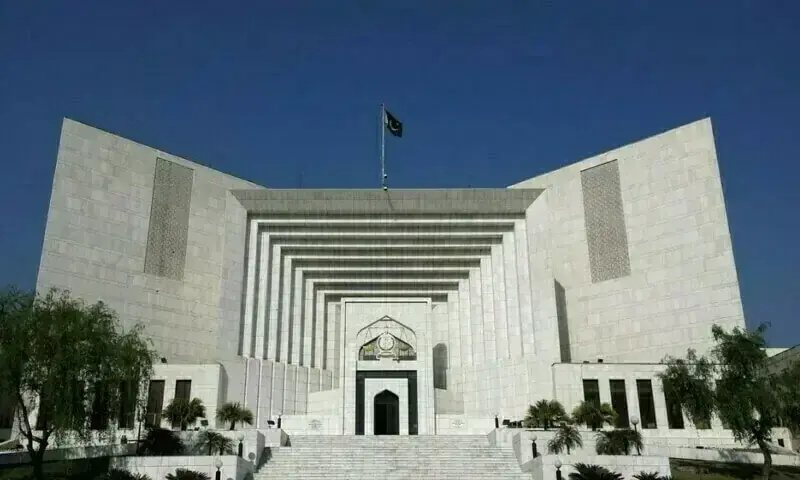
ISLAMABAD: The Supreme Court on Monday set aside its 2016 ruling that had convicted former federal minister for petroleum and natural resources Anwar Saifullah in a corruption reference, restoring the Lahore High Court’s 2002 acquittal.
The order came on a review petition filed by Saifullah against the Jan 20, 2016 Supreme Court judgment, which had upheld his conviction through a majority decision and awarded him one year in prison along with a fine.
A three-member bench headed by Justice Muhammad Hashim Khan Kakar heard the matter. Justice Salahuddin Panhwar, who was part of the bench, authored the verdict.
In the judgment, Justice Panhwar said an appellate court should not replace one view with another merely because a different conclusion could also be drawn from the same evidence.
"Where a trial court has convicted an accused, but an appellate court later reassesses the entire record and acquits him, the presumption of innocence is not only reinstated, but reinforced with greater strength than in an ordinary acquittal by a trial court at first instance," he observed.
Saifullah had originally been convicted in 2000 by an accountability court under the National Accountability Ordinance (NAO) 1999. The case related to allegations that he had misused his authority by facilitating and approving temporary appointments at the Oil and Gas Development Company Limited (OGDCL) after relaxing the applicable rules.
In 2002, the Lahore High Court acquitted him after what the Supreme Court judgment described as a full reappraisal of the evidence. That acquittal was later overturned by the Supreme Court in 2016, but the latest review ruling has now reinstated the high court’s decision.
Scope of review jurisdiction
Justice Panhwar said the Supreme Court’s power to review a criminal judgment was narrow, though not ineffective. "It is a well-settled principle that the power of the Supreme Court to review a judgement in a criminal case is limited, though not toothless," he stated.
"To attract correction in review, the error must not only be manifest, it must also have a material bearing upon the ultimate outcome of the case," the verdict further said.
It also stressed that an acquittal should remain undisturbed unless there is a clear failure to read or properly assess material evidence, or the conclusions are such that no prudent person could have reached them. "Unless there is [a] clear misreading or non-reading of material evidence, or the conclusions drawn are such that no prudent person could have reached them, the acquittal must be allowed to stand," in the words of the judgment.
Justice Panhwar also pointed to what he described as legal and factual defects in the 2016 majority judgment. According to the verdict, the conviction had been maintained under Section 9(a)(vi), read with Section 14(d), of the NAO 1999, even though the acts alleged in the reference dated back to 1996, three years before the ordinance came into force.
Allowing the criminal review petition, the Supreme Court set aside its Jan 20, 2016 majority judgment and restored the Lahore High Court’s June 13, 2002 verdict acquitting Saifullah.
Comments
No comments yet. Be the first to join the discussion!


