RSS says it is lobbying abroad to counter criticism over minority rights
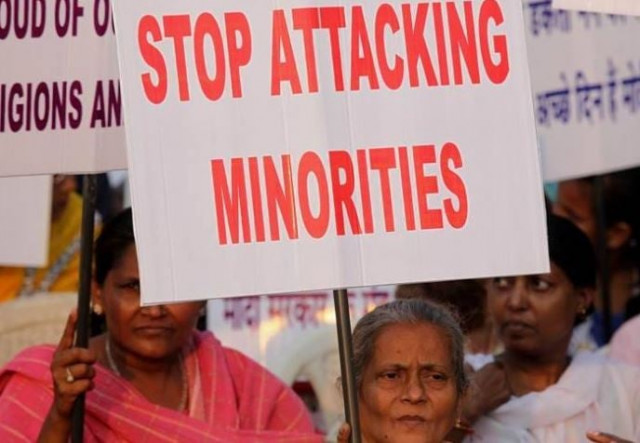
The RSS says it is expanding outreach in the US, Europe and elsewhere to counter criticism that it promotes intolerance against minorities. The move follows a US religious freedom report that accused the group of decades of violence and intolerance.

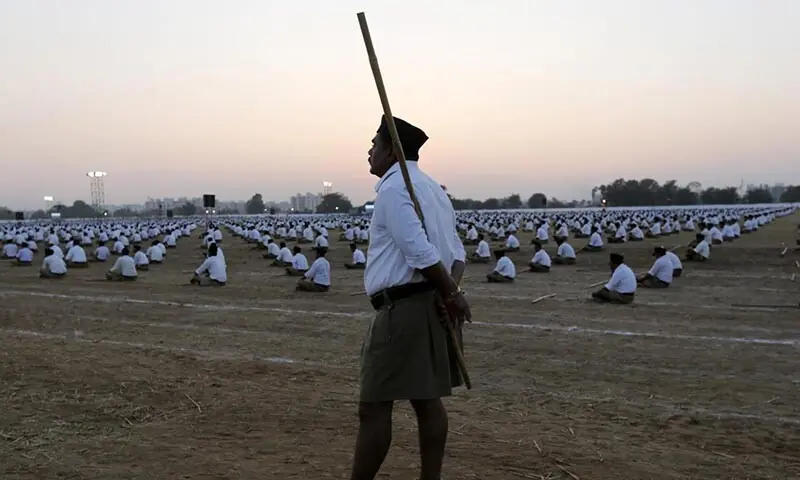
NEW DELHI: The Rashtriya Swayamsevak Sangh (RSS), a powerful Hindu organisation closely linked to India’s ruling political establishment, said on Tuesday it has stepped up outreach abroad, including in the United States, to challenge what it described as misconceptions about the group.
The effort comes after the US Commission on International Religious Freedom said in a report in November that the RSS “has been involved in acts of extreme violence and intolerance against members of minority groups for decades”. The commission is a bipartisan US federal body that tracks religious freedom globally and makes policy recommendations to the president, secretary of state and Congress.
RSS general secretary Dattatreya Hosabale told a rare briefing for foreign media in the organisation’s newly constructed 12-storey headquarters in Delhi that he had addressed gatherings in the United States, Germany and Britain, and that more such engagements were planned.
“dispel certain misgivings and misconceptions about the RSS”
Hosabale said the allegations commonly levelled against the RSS were that it was “pulling society backwards”, that it was a paramilitary organisation, that it promoted Hindu supremacist ideas and that others had been reduced to second-class citizens.
“The fact is entirely different,”
According to Hosabale, he met academics, policymakers and business leaders during his foreign visits. He said RSS representatives would travel to additional countries in Europe, Southeast Asia and other regions as part of the campaign to explain the organisation’s position.
Organisation’s role and criticism
The RSS, or National Volunteer Organisation, describes itself as a “Hindu-centric civilisational, cultural movement” whose aim is to “carry the nation to the pinnacle of glory”, including through Hindu unity and protection of the religion.
Prime Minister Narendra Modi joined the RSS when he was young, and the rise of his Bharatiya Janata Party (BJP) to near-national dominance has widely been linked to the RSS’s extensive volunteer network. This political ascent has unfolded during a period of sharpening Hindu-Muslim divisions in officially secular India, where Hindus form the majority.
The organisation has been banned multiple times since it was founded in 1925. One such ban followed the 1948 assassination of independence leader Mahatma Gandhi by a former RSS member.
Opposition leaders in India, especially Congress leader Rahul Gandhi, have repeatedly accused the RSS of advancing a divisive majoritarian ideology that, he says, undermines India’s secular character and contributes to intolerance toward minorities.
RSS agenda and political backdrop
Modi has already implemented two major long-standing priorities associated with the RSS: the construction of a temple to the Hindu god Ram at the site where the Babri mosque was demolished in 1992, and the revocation of the special status of occupied Kashmir, previously India’s only Muslim-majority state.
Hosabale said another major objective was to eliminate discrimination rooted in the Hindu caste system.
The political backdrop to these remarks includes the 2024 national election, in which India’s opposition successfully mobilised concerns among underprivileged castes, dealing Modi an uncommon setback. In that election, his party failed to secure a majority on its own and had to depend on allies.
Comments
No comments yet. Be the first to join the discussion!