Senators assail fuel price hike, debate blue passports for lawmakers’ children
The Senate saw strong criticism of the latest petroleum price increase, with opposition lawmakers calling it an added burden on the public and linking it to inflation and debt. The house also debated a bill seeking blue passports for senators’ children.

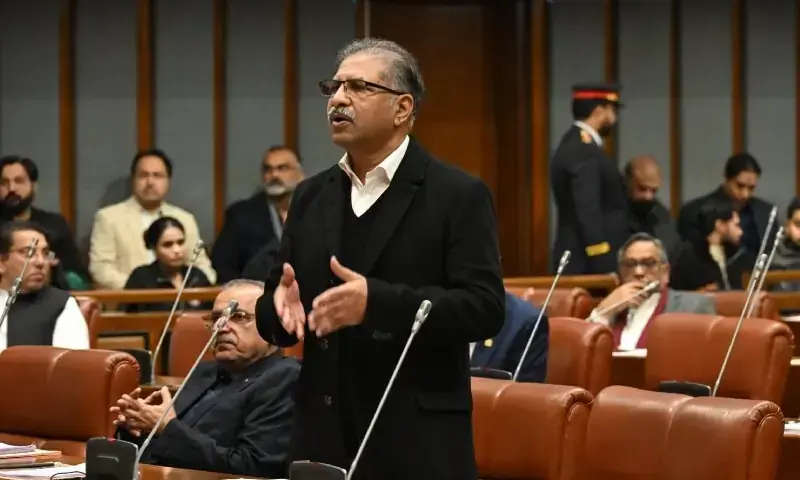
ISLAMABAD: The Senate on Monday witnessed sharp criticism of the latest increase in petroleum prices, with opposition lawmakers describing the move as an added burden on the public and linking it to wider concerns over inflation, debt and the country’s economic direction.
Pakistan Tehreek-i-Insaf (PTI) parliamentary leader in the Senate Barrister Syed Ali Zafar called the latest increase a petrol bomb and described it as economic oppression. Speaking on the floor of the house, he rejected the government’s position that the rise was driven by international oil prices, arguing instead that global crude prices had fallen.
“Instead of reducing prices, the government has sharply increased petroleum levies on the public,” he said.
Zafar said the government was collecting more than Rs117.5 per litre in petroleum levy, which he said was above the IMF-agreed limit of Rs80. He termed the policy daylight robbery and said it was being used to conceal economic incompetence. Referring to the French Revolution, he said Queen Marie Antoinette was attributed as saying, “Then let them eat cake,” and used the example to criticise what he described as a disconnect between rulers and the hardships faced by ordinary people.
He also criticised the Punjab government over the purchase of a luxury aircraft at a time of inflation, unemployment and rising fuel prices, saying the move reflected rulers living in comfort while the public struggled. Zafar said crude oil in Dubai had dropped from $170 per barrel to around $95, but petrol was about Rs278 per litre in Delhi and Rs310 in Dhaka, adding that Pakistanis were paying Rs100 to Rs140 more per litre.
According to Zafar, the latest increase would fuel another round of inflation in agriculture, transport and food. He said electricity tariffs had gone up by 53 per cent and flour prices by 51pc, leaving people unable to cope. He further said the government was celebrating IMF instalments even though, in his words, the country would soon carry an additional Rs1.5 trillion in debt.
Zafar claimed that Rs37tr had been borrowed in four years without meaningful industrial or economic development. He said the State Bank governor had admitted that the government bought $27bn from the open market since 2023 to artificially support the rupee rather than strengthen the real economy, and accused the government of misleading parliament after earlier denying such purchases.
He also referred to findings by the Federal Investigation Agency, saying powerful oil marketing companies had been illegally obtaining subsidies and alleging that the government was protecting vested interests while shifting the burden onto citizens. He demanded immediate reversal of the fuel increase, an end to what he called cruel taxation, and transparency in the pricing mechanism. He added that Pakistan’s debt had risen from Rs44tr to Rs81tr in four years, with Rs7.5tr spent on buying dollars to support the rupee.
“The people of Pakistan could no longer bear weekly mini-budgets, endless inflation, mounting debt, and economic deception,” he said.
Muttahida Qaumi Movement-Pakistan Senator Aamir Waliuddin Chishti also raised concern over energy costs and exports, saying Pakistan had the most expensive energy and the lowest exports in the region.
“Today, the most expensive energy in the region is in Pakistan. Pakistan has the lowest exports in the region,” he said. “If the situation remains the same, we will not be able to get out of the IMF’s clutches.”
Chishti said trade growth was directly linked to tax policy.
“Increase in trade is only possible through reduction in taxes,” he said. “Reduction in taxes will increase economic activity.”
“We all have to find a solution to inflation together,” Chishti stated.
Separately, JUI-F Senator Kamran Murtaza expressed concern over Senator Abdul Shakoor being placed on the Fourth Schedule. He said the senator had to report to a police station for attendance even as party workers were facing targeted killings.
“Senator Abdul Shakoor has been placed on Schedule IV. Senator Abdul Shakoor has to go to the police station to mark attendance,” he said.
“Our people are targeted and killed, they are martyred,” he added.
Under the Anti-Terrorism Act, 1997, Schedule IV includes individuals suspected of terrorism or sectarianism. Those placed on the list face restrictions on movement, arms licences and bank accounts, and are required to report to police regularly.
Bill on blue passports sparks debate
The upper house also took up a bill seeking to extend eligibility for official blue passports to the children of senators up to the age of 28, prompting debate over passport rules and privileges available to public office holders.
Senator Abdul Qadir moved an amendment to the Passport Act 1974, arguing that senior bureaucrats, including Grade-22 officers, were already entitled to official passports for their dependents under certain conditions. He said the proposed law sought to provide similar facilitation to lawmakers’ families.
The proposal was opposed by State Minister for Interior Tallal Chaudhry, who said the current rules were explicit and did not permit the issuance of blue passports to the children of parliamentarians.
“The passport regulations are well-defined, and children are not eligible for official passports under current law,” said Chaudhry.
Following the discussion, the Senate chairman referred the bill to the relevant committee for further consideration and detailed review. The blue passport is generally issued to government officials travelling on official duty, along with eligible dependents, under strict regulations.
Comments
No comments yet. Be the first to join the discussion!