

Experts warn world is edging closer to nuclear catastrophe
Speakers at a Karachi conference warned that global instability and conflicts involving nuclear-capable states have pushed the world dangerously close to catastrophe. They also called for stronger international cooperation and peaceful coexistence among major powers.

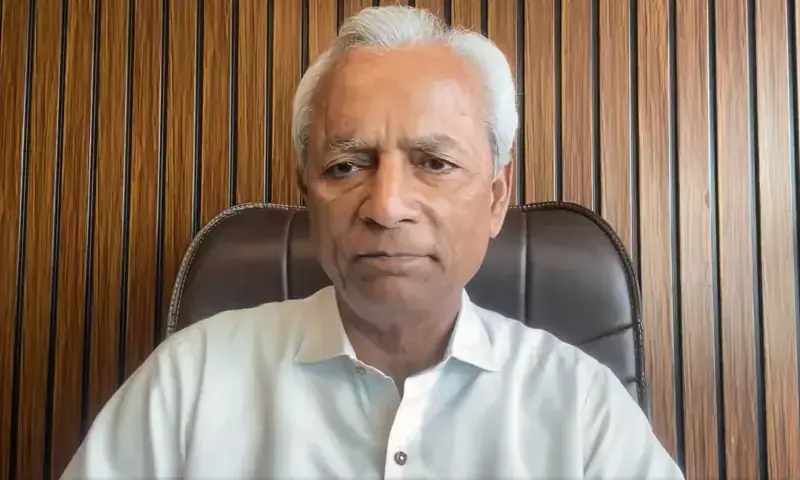
KARACHI: Speakers at a two-day conference hosted by the Pakistan Institute of International Affairs (PIIA) warned on Saturday that mounting global conflicts, the weakening of the post-World War II order and the risks surrounding nuclear-armed states have brought the world dangerously close to catastrophe.
Addressing the inaugural session of the conference, titled Living on the Threshold of Global Crises, Sindh Governor Syed Nehal Hashmi questioned the effectiveness of international institutions in the face of ongoing wars and humanitarian crises.
“When I think of Gaza and what happened there, I think of international efforts. Would all this have happened if international efforts worked properly. I also think about the United Nations and wonder if it has become weak in front of Benjamin Netanyahu and Israel? But it was strong when imposing sanctions on Iraq, Iran, Libya and other small ‘Third World’ countries,” he said.
The governor also asked, “What is war? What is genocide?” and referred to recent tensions involving Pakistan and India. “Our neighbouring country also tried playing with us a similar game as what Netanyahu is playing these days, but grace to Allah, the brave soldiers of Pakistan, under the leadership of Field Marshal Asim Munir, and the Government of Pakistan, under the leadership of Shehbaz Sharif, who taught them a great lesson.”
He said meaningful international efforts, treaties and binding arrangements were necessary for peaceful coexistence, while also referring to concerns over water. “True, without successful international effort or a successful international treaty or bindings, we won’t be able to live on this globe. But there is also a higher power. Today, we hear things such as the Indian Prime Minister planning to block Pakistan’s water. But air and water has been promised to us by God Almighty. No one can stop it from reaching us,”
Conference focuses on global instability
Earlier, PIIA Honorary Chairperson Dr Masuma Hasan said the world was moving from a unipolar system towards an emerging multilateral order in which middle powers were becoming more significant, but added that global politics remained marked by violence.
She cited conflicts in Ukraine, Sudan, Myanmar and the Sahel, saying they had caused deaths, displacement and widespread suffering. She also referred to what she described as the unprovoked attack by Israel and the United States on Iran.
Dr Hasan said millions of people had been displaced by wars and crises worldwide, but described the suffering of Palestinians as the most brutal. She said Israel’s actions in Gaza and the West Bank had killed and injured thousands and had also targeted universities, schools, hospitals and healthcare facilities, while blocking humanitarian aid, food, sanitation and water and using starvation as a weapon of war. She said rebuilding Gaza and restoring life and dignity there would take generations, calling it a grave moral tragedy.
Nuclear risks highlighted in keynote address
The first keynote address was delivered by Ambassador Zamir Akram, Adviser to the Strategic Plans Division, Government of Pakistan. He said the world was facing a “perfect storm” and described the current moment as one in which the international system created after World War II was breaking down.
According to Ambassador Akram, although that order had been imperfect, it had still provided a degree of security and stability. He said its decline recalled earlier historical breakdowns that preceded the two world wars.
He said the present era differed from earlier systems because the balance of power was now shaped by nuclear weapons rather than conventional military means. Referring to the Doomsday Clock established in 1947 by scientists including Albert Einstein and J. Robert Oppenheimer from the University of Chicago, he said it measured how close the world was to catastrophe based on the potential use of nuclear weapons, technological advances and climate change.
Ambassador Akram said the world was farthest from “Armageddon” in 1991, when the clock stood at 17 minutes to midnight after the collapse of the Soviet Union. He added that, as of January 2026, it had moved to 85 seconds to midnight.
“We were that close to disaster. Why is this the case? First, because of wars and crises that have taken place between countries that are nuclear weapon states or are potential possessors of nuclear weapons.”
He said the war in Ukraine was not only a conflict between Russia and Ukraine but also involved the Nato alliance, and warned that a nuclear exchange, even by accident, could result from a single miscalculation. He also referred to the short 2025 conflict between Pakistan and India, saying it lasted no more than four days but still carried the danger of miscalculation. He further said the attacks by the United States and Israel on Iran and its nuclear facilities raised the risk of radioactive release and could push Iran towards acquiring nuclear weapons.
Call for cooperation between major powers
The second keynote address was delivered via Zoom from Beijing by Dr Wang Huiyao, founder and president of the Centre for China and Globalisation, a Chinese non-governmental think tank. He said major powers, particularly the United States and China, needed to work together and focus on building rather than destroying.
“China and the US have to find a way to co-exist peacefully as major powers need to take on major responsibility,” he added.
The conference continues for a second day.
Comments
No comments yet. Be the first to join the discussion!


