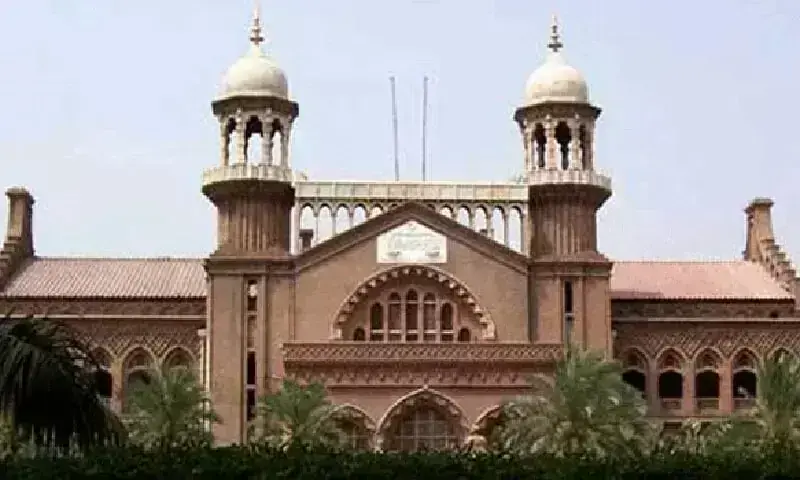
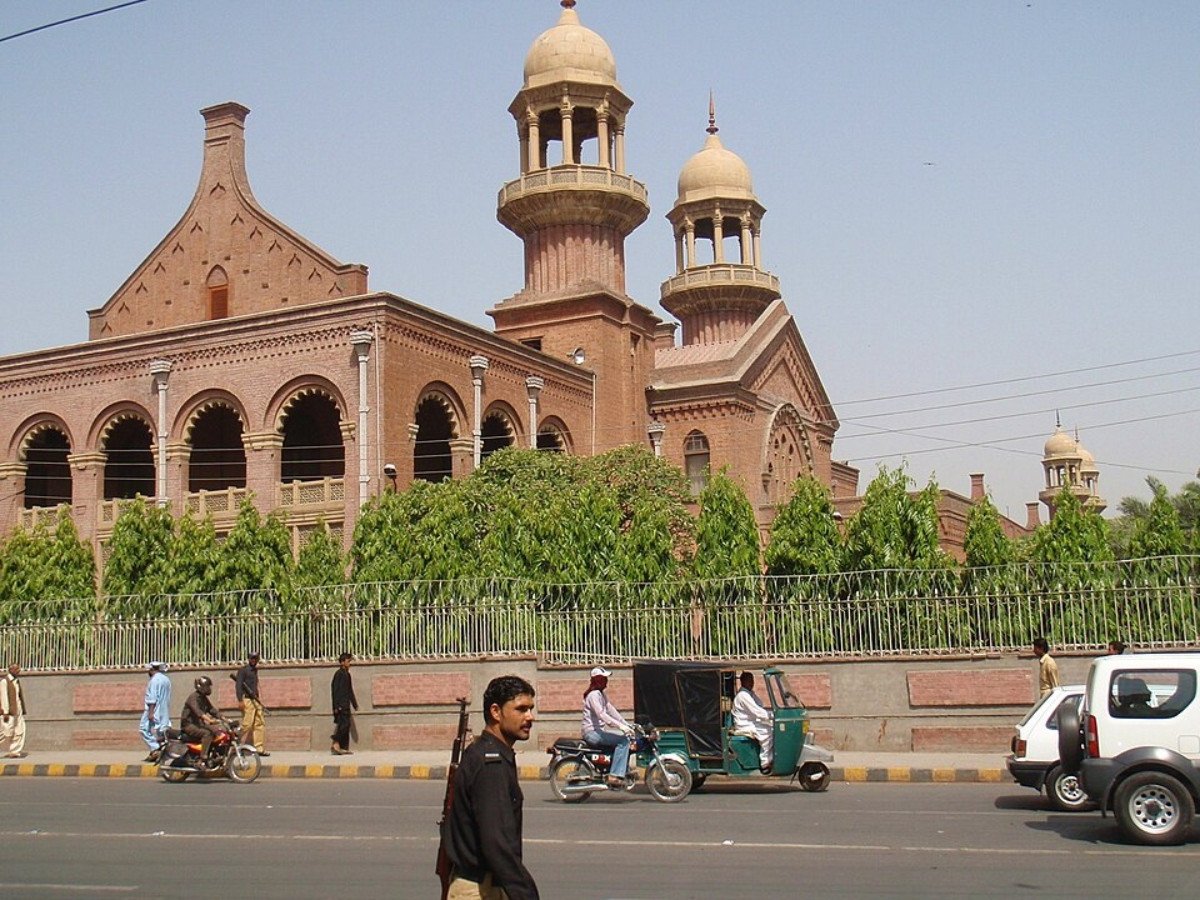
LHC, law ministry narrow differences over Nikahnama reform
The Lahore High Court and the law ministry have moved closer on proposed Nikahnama reforms after legal practitioners helped bridge differences. The process focuses on removing discrepancies in the Urdu and English text, particularly in clauses related to dower and dowry.

ISLAMABAD: Differences between the Lahore High Court (LHC) and the Ministry of Law and Justice over the scope of legal reform on the Nikahnama have been resolved through the involvement of the legal community, according to a report published by Dawn.
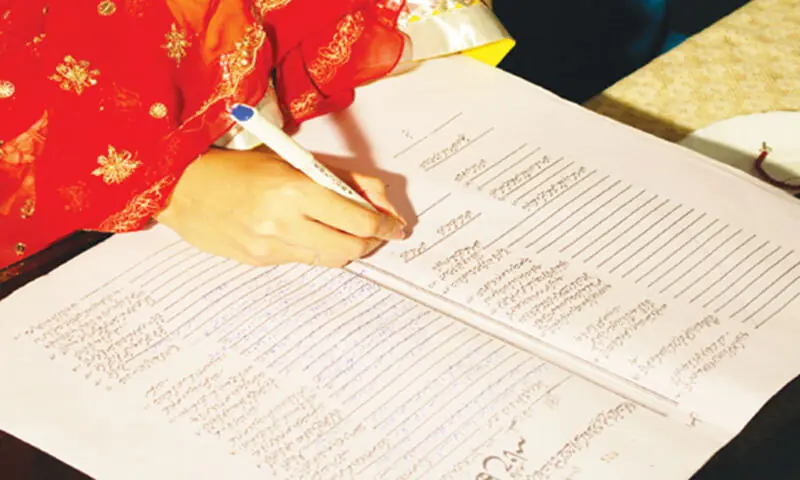
The issue arose during proceedings before Justice Jawad Hassan at the Rawalpindi bench of the LHC, where the judge described the matter as one of public importance. The court highlighted inconsistencies between the Urdu and English versions of columns 13 and 16 of the Nikahnama, which relate to dower, or haq mehr, and dowry particulars.
According to the court’s observations, unclear and inconsistent wording in the two versions had led to confusion, extended litigation and difficulties for women pursuing such cases. The LHC said there was a need to settle the matter once and for all through legislative clarity.
The court also assigned an eight-member committee to examine amendments to the Muslim Family Laws Ordinance, 1961, with particular attention to Section 10A dealing with matrimonial property rights.
The law ministry, however, raised concerns about judicial involvement in the legislative sphere. It argued that pre-legislative scrutiny could weaken democratic processes and maintained that constitutional forums, including parliament and the Council of Islamic Ideology, were the proper institutions to assess whether laws complied with Islamic injunctions and constitutional requirements.
Despite these reservations, the reform effort has continued under the court’s doctrine of continuing mandamus. Legal observers noted that the active role of lawyers not only drew attention to structural shortcomings but also helped shape proposals intended to safeguard women’s property rights and cut down litigation stemming from unclear marriage contracts.
Consultative process under way
Acting on the court’s directions, the Ministry of Law and Justice began a consultative exercise and formed a technical committee. The committee held several meetings to review transcription mistakes as well as wider legal questions linked to the Nikahnama.
It recommended that the revised English text should be officially translated into Urdu by the National Language Authority in coordination with the Ministry of Religious Affairs and district administrations.
Lawyers were closely involved in the discussions. Additional Attorney General Haseeb Paracha, along with counsel for the petitioners, worked with government officials to refine the proposals.
Stakeholders were hopeful that after further deliberations and legislative input, a standardised bilingual Nikahnama could be introduced to provide greater clarity, enforceability and legal protection for parties entering marriage contracts across Pakistan.
1 Comment
No comments yet. Be the first to join the discussion!