May 5, 2026
Lack of incentives for emergency specialists hurting patient care in KP, experts say
Health experts in Khyber Pakhtunkhwa say poor financial and career incentives for emergency medicine specialists are weakening patient care. They say stronger emergency departments and better training could reduce deaths and disabilities.

May 5, 2026
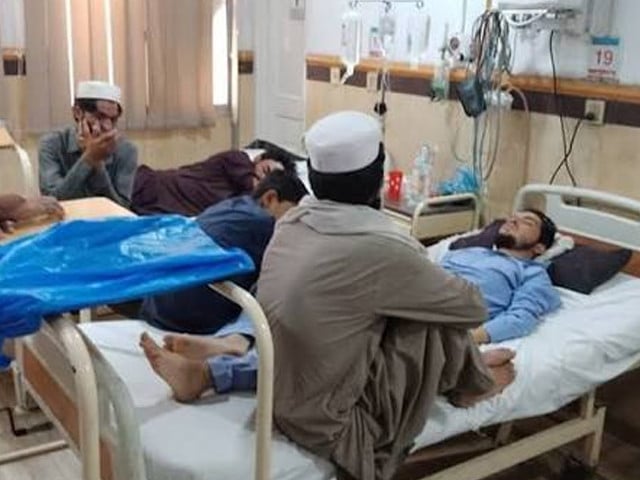
PESHAWAR: Health experts have said that the absence of financial and career incentives for emergency medicine specialists is undermining the proper treatment of critically ill and injured patients in hospitals across Khyber Pakhtunkhwa.
A senior doctor at the accident and emergency department of a medical teaching institution said emergency medicine specialists rely entirely on their salaries because they do not have the option of private practice. He said patients in serious condition and those injured in trauma cases are taken to hospitals rather than clinics, making it necessary to offer attractive salary packages to retain such specialists.
“Emergency medicine specialists are totally dependent on their salary because they cannot do private practice. Seriously-ill and trauma-hit patients are brought to hospitals instead of clinics. Therefore, they require lucrative salary package to retain their services,”
The doctor said many physicians avoid choosing emergency medicine as a career because, unlike colleagues in medicine, surgery, paediatrics and other clinical fields, they do not have similar promotion prospects. “This is the main problem that the province couldn’t develop good emergency departments,” he added.
He said emergency departments should be set up and granted academic status like other medical departments so that stronger trauma services could be developed and replicated in militancy-affected areas.
Specialists leaving for jobs abroad
The same doctor said an emergency specialist who had served as a consultant in the United Kingdom for 15 years was appointed director of the accident and emergency department at Lady Reading Hospital a few years ago. According to him, the specialist improved services and trained many doctors, but later left because he was not given financial incentives and moved abroad, where such expertise is in high demand. He added that several doctors trained by him also went overseas.
He said emergency physicians receive strong compensation packages in foreign countries, but in Pakistan they are not treated on par with other specialists. He added that the province needs doctors with the skills to provide immediate care to critically ill patients and save lives, particularly because Khyber Pakhtunkhwa faces risks from terror incidents and natural disasters such as floods.
Experts link stronger emergency care to lower mortality
A senior physician said better emergency services, supported by training for healthcare workers, could reduce deaths and disabilities to a certain extent. He added that stronger emergency care could also help curb rising mortality linked to maternal and child health conditions.
“Serious patients develop more complications while being transported from the sites of bombs and suicide attacks or road traffic accidents but a strong emergency care system will improve survival rate,” he added.
Another senior doctor at Khyber Medical University Hospital and Research Centre said the institution was in the process of launching an emergency department that would be linked with all 13 campuses of Khyber Medical University in the province. “Skill development alongside practical work is very important to enhance the techniques of personnel and cut down mortality from avoidable causes. Better emergency care can ensure better management of patients with stroke, high blood pressure and heart attacks etc.”
He said all hospitals needed properly managed, fully staffed and well-equipped emergency departments to deal with the growing number of critically ill patients during disasters. He also said the system should be supported by an efficient transport mechanism to move patients to hospitals during emergencies and improve their chances of survival.
According to him, post-emergency care and rehabilitation are also necessary. He said improving the skills of doctors, nurses and paramedics in trauma care and patient management could bring significant gains because emergency consultants have the expertise to handle different types of emergencies.
“We have the services of an emergency physician with experience in foreign countries to develop state-of-the-art emergency department. Soon, we will conduct basic life support courses for our staff to enable them to save lives through standard services,”
0 Comments
No comments yet. Be the first to join the discussion!