

Pakistan requires up to 70,720MW more power capacity by 2035
Pakistan’s revised IGCEP 2025–35 projects the country may need up to 70,720MW in additional power capacity by 2035. The plan also outlines a shift toward hydropower and renewables, alongside major generation and transmission investment needs.

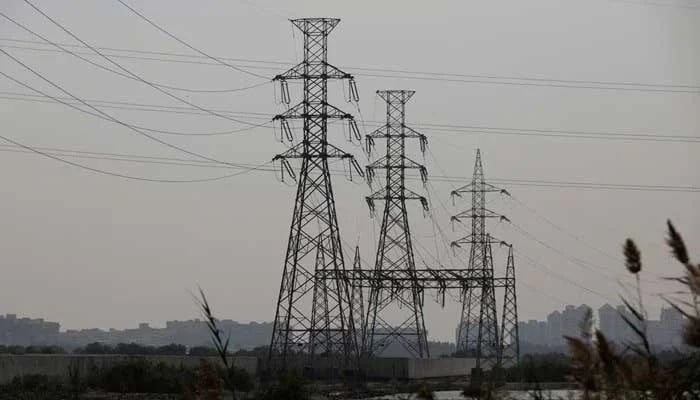
ISLAMABAD: Pakistan is projected to require between 62,660 and 70,720 megawatts of additional electricity generation capacity by 2035 to sustain economic growth ranging from 3.5% to 6.4%, according to the revised Indicative Generation Capacity Expansion Plan (IGCEP) 2025–35.
The plan, prepared by the Independent System and Market Operator in coordination with the National Electric Power Regulatory Authority (Nepra), outlines a decade-long roadmap for expanding power generation and transmission infrastructure across the country, including the K-Electric network.
Based on three GDP-linked scenarios — low (3.52%), medium (4.95%) and high (6.37%) growth — the country’s additional capacity requirements have been estimated at 62,657MW, 66,459MW and 70,720MW, respectively.
While the projections assume rising electricity demand driven by economic recovery and industrial growth, they come amid a decline in consumption. The system’s load factor has dropped from 70–73% to around 58–60%, reflecting underutilisation of existing capacity.
Distribution companies attribute the decline to economic pressures as well as the rapid uptake of rooftop solar and net metering. However, planners expect demand to stabilise over time, with measures aimed at improving efficiency and raising the load factor to around 70% by 2035.
The IGCEP also signals a shift in the energy mix towards domestic and renewable sources. Hydropower is projected to account for 34% of installed capacity by 2035, while solar and wind are expected to contribute 27%.
Reliance on imported fuels is set to decline, with furnace oil phased out, and imported coal and re-gasified liquefied natural gas (RLNG) projected to contribute 7% and 13%, respectively.
Planned additions include 21,400MW of hydropower, up to 13,200MW of solar, and as much as 11,500MW of wind capacity, alongside 8,224MW of RLNG and 4,730MW of nuclear energy.
The financial outlay remains significant, with generation investments estimated between $46 billion and $54 billion, and a further $4.6 billion to $6 billion required for transmission expansion.
The plan also factors in the growing role of distributed generation, with net metering expected to add over 8,000MW to the system by 2035. Electricity supply from the national grid to K-Electric is projected to increase to 3,456MW, up from the currently contracted 2,050MW.
Analysts caution that while the plan aims to ensure adequate base-load capacity, its success will depend on actual demand trends. Continued expansion of decentralised solar and weaker-than-expected growth could result in excess capacity and higher costs for consumers.
Comments
No comments yet. Be the first to join the discussion!


