Upper Dir residents lament four years of local bodies with little development
The four-year local government term in Upper Dir has ended with residents and elected representatives saying it brought little development and limited authority. Representatives across party lines said funds were withheld while civic needs remained unmet.

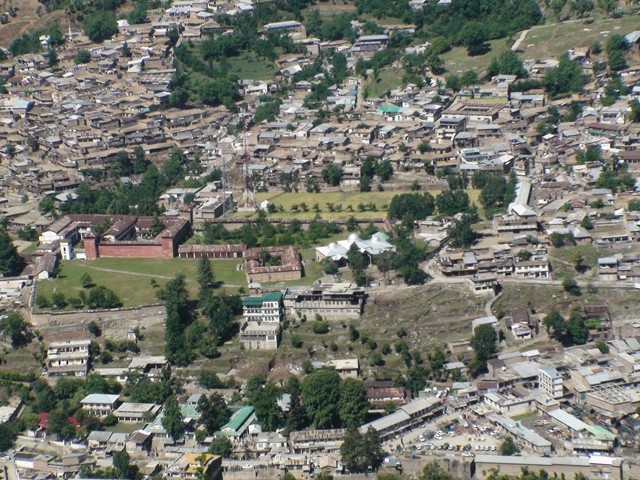
PESHAWAR: The four-year term of the local government system in Upper Dir has ended amid widespread dissatisfaction, with residents and elected representatives saying the arrangement failed to deliver meaningful development or effective grassroots governance.
Local government elections were held in phases in 2022, with the Election Commission spending billions of rupees to put the system in place. In Upper Dir, the outcome produced a divided political landscape. PTI-backed candidates Ayanullah Khan and Abdul Latif Khan won in Tehsil Wari and Larjam Darora, respectively. In Sheringal, PPP’s Shah Wali Khan became the first tehsil chairman after the area was granted tehsil status. Jamaat-e-Islami candidates Rafiullah Khan and Jahan Alam Khan won in Dir City and Barawal, while Kalkot’s seat later went to JI’s Malik Ziaur Rehman after a tribunal ruling.
According to local representatives, the provincial government later amended the Khyber-Pakhtunkhwa Local Government Act 2013, a move they said reduced the authority of elected local bodies and prevented the release of development funds. What had begun as an effort to shift power to the grassroots, they said, turned into a prolonged dispute between the provincial administration and elected representatives at tehsil, village and neighbourhood levels.
Representatives from different political parties staged protests both inside the provincial assembly and outside Adiala Jail, calling for restoration of their powers and the immediate release of funds. Legal challenges were also filed against some of the amendments, but the central issues of financial resources and administrative independence remained unresolved during the four-year period.
Representatives describe lack of funds and authority
In Sheringal, PPP’s Malik Shah Wali Khan said the newly upgraded tehsil did not receive any development allocation during the entire term. “This was the first time Sheringal received tehsil status, but unfortunately, not a single rupee of development funds was released in four years,” he said.
He said the tehsil municipal administration had no independent sources of income and struggled to operate. According to him, employees remained unpaid for as long as 10 months.
PTI’s Ayanullah Khan, the tehsil chairman of Wari, also acknowledged the failure of the system. “As a PTI worker, I admit that Tehsil Municipal Administration Wari did not receive even one rupee in development funds from the provincial government,” he said. He added that the problem was not limited to his tehsil and said all 131 tehsils in the province faced the same situation.
A woman councillor from Village Council Darora said women elected on reserved seats had entered office with expectations of working on women’s rights and local issues, but found themselves unable to act because funds were not released. “We made promises to the women of our areas, but when no development funds arrived, facing them became difficult,” she said.
She also questioned the purpose of holding elections if authority was not to be devolved. “If they were so afraid, they should not have conducted the polls at all. Having done so, they had no right to treat elected women councillors this way,” she added. She urged female members of the provincial assembly to speak up for thousands of elected women representatives across Khyber-Pakhtunkhwa.
Spending on perks contrasted with lack of civic facilities
Financial figures from the four-year period showed that Upper Dir’s local bodies spent about Rs14.25 crore on honoraria and office rents alone. The amount included Rs5.856 crore paid to 122 village council chairmen at Rs10,000 per month each, Rs6.096 crore in rent for 177 village and neighbourhood council offices, and Rs2.304 crore paid to six tehsil chairmen at Rs80,000 per month.
Further spending on fuel, stationery, telephones and food increased the overall cost, even as many areas continued to lack streetlights, drinking water schemes remained unfinished, and waiting areas for men and women were absent in numerous localities.
With the term now over, many residents and representatives in Upper Dir say the promise of empowered local governance remained unfulfilled. Several elected officials, now see little reason to take part in the system again unless authority and resources are genuinely transferred to local bodies.
Comments
No comments yet. Be the first to join the discussion!