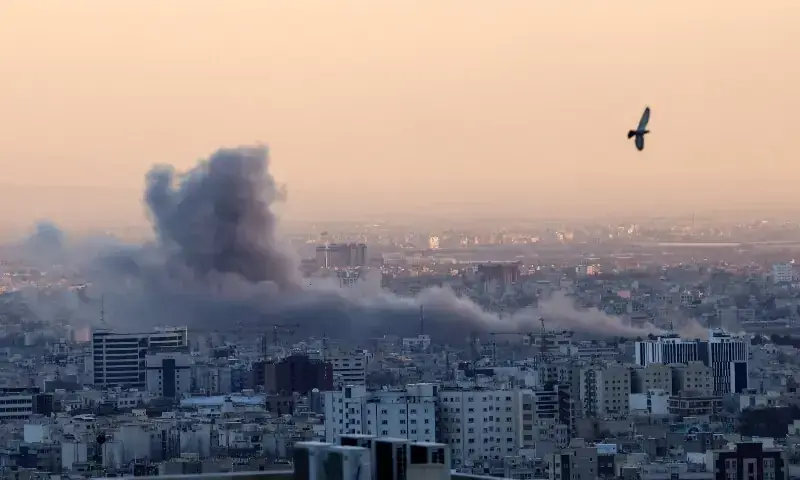
Government says Middle East war will slow Pakistan’s growth this year and next
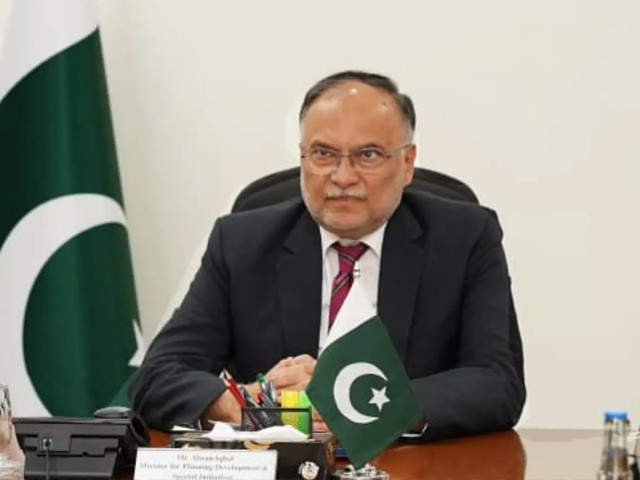
The government says Pakistan’s growth will slow in the current and next fiscal years due to Middle East war-related supply disruptions, higher oil prices and cuts in development spending. Planning Minister Ahsan Iqbal said the PSDP was reduced to fund fuel subsidies and ease inflationary pressure.

ISLAMABAD: The government said on Monday that Pakistan’s economic growth would come under pressure in the current and next fiscal years because of a sharp reduction in development spending, fuel subsidies and inflationary effects linked to supply chain disruptions caused by the war in the Middle East.
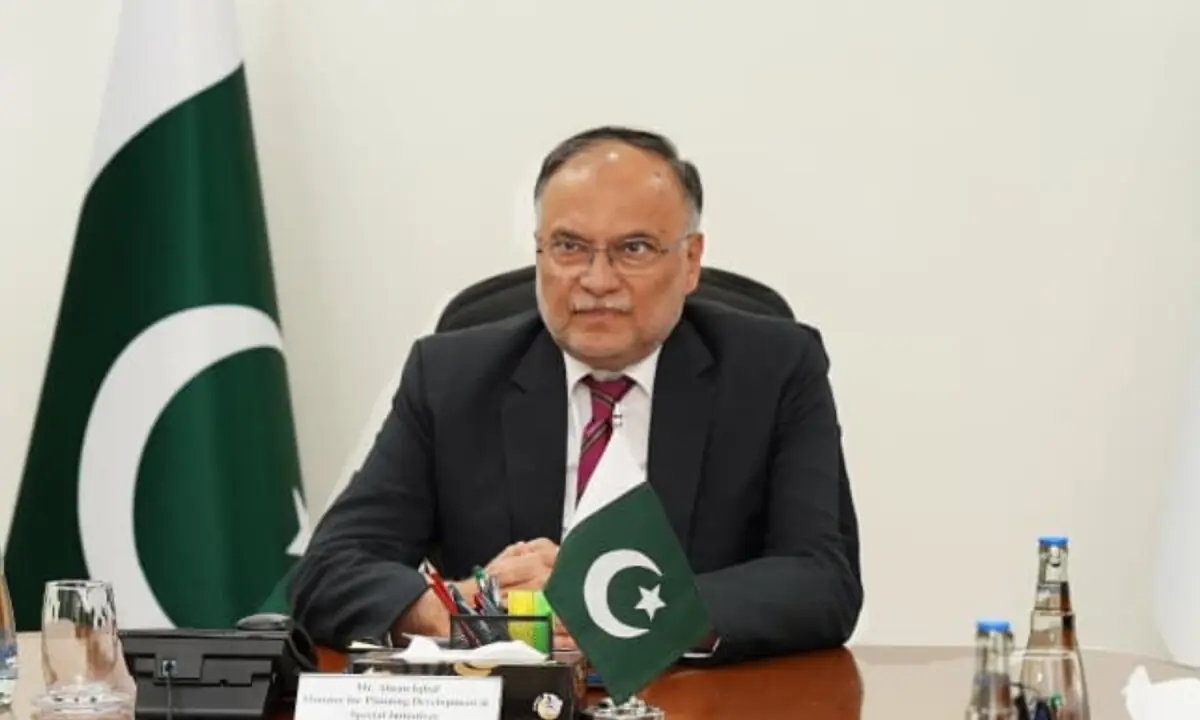
Planning Minister Ahsan Iqbal told a news conference that the cut in development allocations would weigh on economic activity. He said,
“This (cut in development budget) will have a negative impact and, coupled with international oil prices and inflation, will result in economic slowdown and affect our growth target of 4.2pc” for the current year.
His remarks marked the first official acknowledgement that growth may fall short of the target, although international lenders had already projected Pakistan’s growth rate in the range of 3.2pc to 3.5pc.
Development spending reduced
Responding to a question, the minister said the Public Sector Development Programme (PSDP) for the current fiscal year had been cut by Rs173 billion, bringing it down to Rs837bn from the budgeted Rs1.01 trillion.
He said the reduction was made to help finance the Prime Minister’s Austerity Fund, which was set up to subsidise fuel prices, especially diesel, during the harvesting season.
Iqbal said Pakistan’s gross domestic product grew by 3.8pc in the first two quarters, from July to December, compared to 1.9pc in the same period last year, before what he described as an external shock from the Middle East crisis affected Pakistan and other economies.
He said the impact on the growth outlook would be smaller in the current fiscal year because the crisis emerged after three quarters had already passed, but warned that the effect would be more pronounced in the first six months of the next fiscal year even if the war ended immediately. He added that global supply chains and markets usually required six to nine months to return to normal.
Oil prices, inflation and subsidies
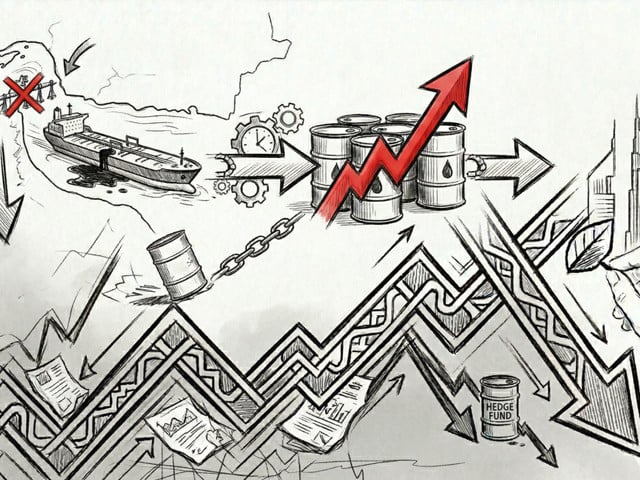
The planning minister said oil prices and uninterrupted supply were critical for the global economy and that higher prices had raised export costs internationally. He said Pakistan had avoided disruptions in oil supplies through proactive decisions, but added that consumption had to be controlled through price adjustments to prevent domestic and external deficits from widening.
Under that approach, he said, the government first raised diesel and petrol prices by Rs55 per litre and then kept them unchanged for the next two weeks by providing a Rs129bn subsidy through a Rs100bn reduction in development spending.
He said that as the shutdown of the Strait of Hormuz continued, petrol and diesel prices had to be increased by Rs137 and Rs184 per litre, respectively. He added that the prime minister then reduced the diesel price by Rs135 per litre to limit cost-push inflation and protect farmers during crop harvesting.
According to the minister, a further Rs73bn cut in the development budget followed a Rs80 per litre reduction in diesel prices.
He also said the continuation of the conflict would affect petrochemicals and fertilisers.
Diplomacy and global outlook
On the second round of US-Iran talks being facilitated by Pakistan, Iqbal expressed cautious optimism. He said “Such complex and deep-rooted disputes are difficult to end overnight.”
He added “Both parties will have to show flexibility to end global tension and threat to the global economy.”
He said Pakistan’s leadership had intensified diplomatic efforts to help contain the war between the United States and Iran because its continuation would be damaging not only for Pakistan but for economies more broadly through rising oil and commodity prices.
The minister said he hoped the talks would lead to durable peace and help avert what he described as a global inflationary storm and the risk of stagflation.
He also referred to revised global projections by the International Monetary Fund, saying the IMF had lowered its world growth forecast to 3.1pc from 3.3pc and raised its inflation estimate to 4.4pc from 3.8pc.
Inflation and government response
Iqbal said Pakistan’s average inflation rose to 5.7pc in the first nine months of the fiscal year, compared to 3.5pc in the same period last year. He said consumer inflation in March climbed to 7.3pc, against 0.7pc a year earlier, mainly because of increases in non-food and energy prices.
He said the government had shifted meetings of the National Price Monitoring Committee from a monthly to a weekly schedule and, in consultation with provincial governments, had worked to enforce price controls and lower transport fares in line with the prime minister’s decision to reduce diesel prices.
Looking ahead, the planning minister said the government would try to make up for economic losses through budget proposals for exports, exports and exports, saying this was the only way to narrow the gap between foreign exchange inflows and outflows.
Comments
No comments yet. Be the first to join the discussion!