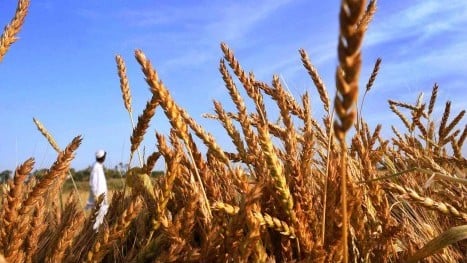
Mechanised wheat harvest boosts efficiency but squeezes farmers, displaces labour
Modern harvesting machines are rapidly changing wheat farming in Khanewal, improving efficiency but raising costs for farmers. The shift has also reduced seasonal employment opportunities for rural labourers.

KHANEWAL: The rapid shift towards mechanised harvesting is transforming wheat farming across Khanewal district, replacing traditional labour-intensive practices with high-speed machinery while triggering new economic pressures for both farmers and field workers.
Known as one of Pakistan’s key wheat-producing regions, Khanewal has long relied on manual harvesting, where large groups of labourers would spend days cutting crops with sickles. That landscape is now changing, as modern harvester machines increasingly dominate fields, completing the same work within hours.
These machines not only cut the crop but also separate grain from straw in a single process, significantly reducing the need for manual labour. Farmers say this has helped minimise risks associated with unpredictable weather and crop damage, while ensuring faster turnaround during peak harvest season.
However, the transition has come at a cost. Local farmer Chaudhry Liaqat said the use of machinery, while efficient, has increased financial strain due to rising diesel prices and higher rental charges for equipment. He noted that harvesting costs have climbed from around Rs5,000 per acre to nearly Rs8,000 per acre in recent years.
He added that fuel price hikes have had a cascading effect, pushing up the cost of fertilisers, pesticides and other essential inputs, further tightening margins for farmers already dealing with fluctuating crop returns.
For agricultural labourers, the impact has been more direct. Tariq, a farm worker from the area, said seasonal employment opportunities have sharply declined as machines replace manual work.
“Earlier, harvesting would last several days, and we were often paid partly in wheat, which supported our families for months,” he said. “Now, the machines finish everything in a few hours, and there’s little work left for us.”
Industry stakeholders say the cost of adopting mechanisation is also significant. Mehar Aftab Sargana, who is associated with the harvesting machinery business, said purchasing a harvester requires an investment running into millions of rupees, with additional expenses for maintenance and spare parts.
He noted that most farmers rely on renting machinery during the harvest season, but rental rates have increased due to rising fuel costs and expensive components.
Experts warn that while mechanisation is a necessary step towards improving agricultural productivity, it must be balanced with policies that address its social impact. They emphasise the need for alternative employment opportunities and social protection measures for displaced rural labour.
They also highlight environmental concerns, noting that increased reliance on heavy machinery contributes to higher fuel consumption and noise levels, potentially affecting the rural ecosystem.
As mechanisation continues to expand, Khanewal’s wheat economy is being reshaped — bringing efficiency gains on one hand, while raising complex economic and social challenges on the other.
1 Comment
No comments yet. Be the first to join the discussion!