

China records strongest first-quarter trade growth in nearly five years
China’s foreign trade rose 15% year-on-year to 11.84 trillion yuan in the first quarter of 2026, the fastest growth in nearly five years. Official data showed imports outpaced exports, while private firms and diversified markets drove the increase.

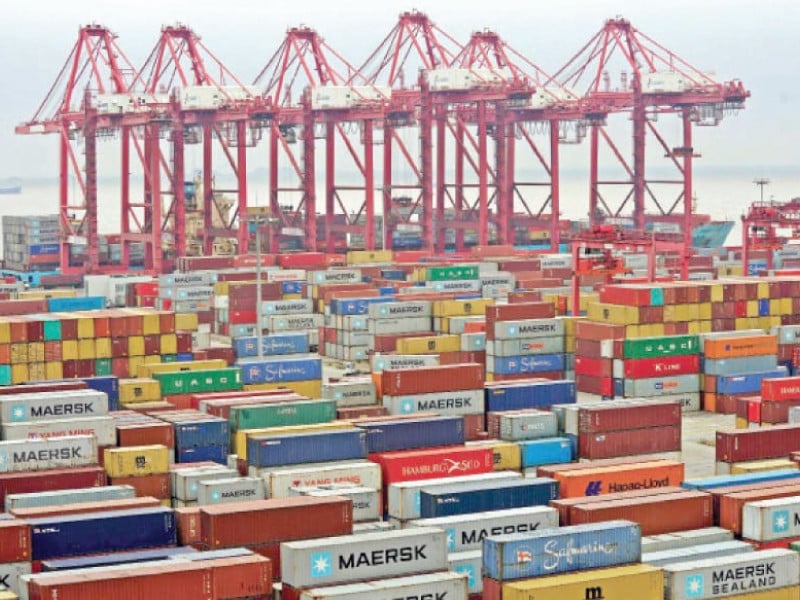
Beijing: China’s foreign trade climbed to a record level in the first quarter of 2026, according to official data, in what authorities described as a strong opening to the year despite a difficult global environment.
Figures released by the General Administration of Customs showed total imports and exports reached 11.84 trillion yuan, or $1.63 trillion, during January to March, up 15% from a year earlier. It was the first time China’s first-quarter trade crossed 11 trillion yuan, while the pace of growth was the fastest in almost five years.
According to Xinhua and CGTN, officials said the performance reflected resilient demand, broader market diversification and the increasing contribution of private businesses. Exports rose 11.9% to 6.85 trillion yuan, while imports increased 19.6% to 4.99 trillion yuan, an uncommon instance in which import growth outpaced exports.
Analysts said the faster rise in imports pointed to firmer domestic demand and a more balanced trade pattern. Wang Jun, deputy head of the General Administration of Customs, said the data showed a stable base and robust momentum in China’s external trade even though the international environment remained complicated and uncertain.
He said China’s quarterly trade has stayed above 10 trillion yuan for 12 straight quarters, with growth returning to double digits since late 2022.
Private firms and foreign-invested enterprises expand role
The first-quarter figures also highlighted the growing weight of private enterprises in China’s trade. Their imports and exports totalled 6.78 trillion yuan, up 16.2% year-on-year, lifting their share of overall trade to 57.3%.
This reflected stronger competitiveness, flexibility and innovation among private firms in both traditional and newer markets. Foreign-invested enterprises also posted growth, with trade reaching 3.47 trillion yuan, up 16.1%, marking their eighth consecutive quarter of expansion.
That performance, suggested China continued to attract global investors despite heightened geopolitical risks.
Trade diversification and changing composition
China’s efforts to broaden its trade relationships also showed gains in the first quarter. Trade with Belt and Road Initiative partner countries rose 14.2% and accounted for 51.2% of total trade. Trade with ASEAN and Latin America increased 15.4%, while trade with Africa rose 23.7%.
Trade with the European Union and the United Kingdom also registered double-digit growth, offsetting a decline in trade with the United States. Economists said wider diversification was helping China withstand external shocks and lowering reliance on any single market.
The composition of trade also indicated structural changes in the economy. Exports of higher-value and green products rose sharply, including electric vehicles, lithium batteries and 3D printers. On the import side, growth was driven by stronger demand for mechanical and electrical products as well as consumer goods.
Imports of mechanical and electrical products rose by more than 21%, while consumer goods imports increased 5.4%, indicating a steady recovery in domestic consumption.
Experts point to domestic demand, but warn of risks
Experts said the near 20% increase in imports was especially notable. Tu Xinquan, a trade expert at the University of International Business and Economics, described the trend as relatively rare, saying it showed a broad-based rebound in domestic demand that had been building since late last year.
Looking ahead, analysts said global uncertainties including rising tensions in the Middle East, volatile energy prices and fragile supply chains could affect trade in the coming months. The World Trade Organisation has already warned that global trade growth may slow significantly in 2026.
Even so, Chinese officials and experts said they remained cautiously optimistic, arguing that the country’s industrial base, complete supply chains and expanding domestic market could cushion external pressures. Tu said higher energy prices in other economies could strengthen China’s competitive position by creating shortages elsewhere.
"China’s supply capacity is very strong," he said, adding that this could improve pricing power and support export values even if shipment volumes remain unchanged.
Officials also reiterated China’s commitment to further opening up its economy. They said the country aimed to serve not only as the world’s factory but also as the world’s market with policies intended to encourage imports and create opportunities for international businesses.
Measures including wider zero-tariff access for least developed countries and stronger trade ties with emerging markets were expected to reinforce China’s role as a stabilising force in the global economy.
Comments
No comments yet. Be the first to join the discussion!


