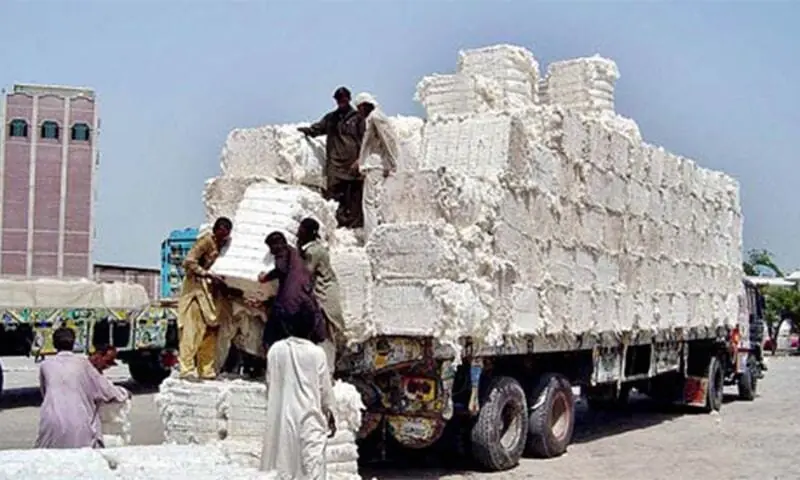
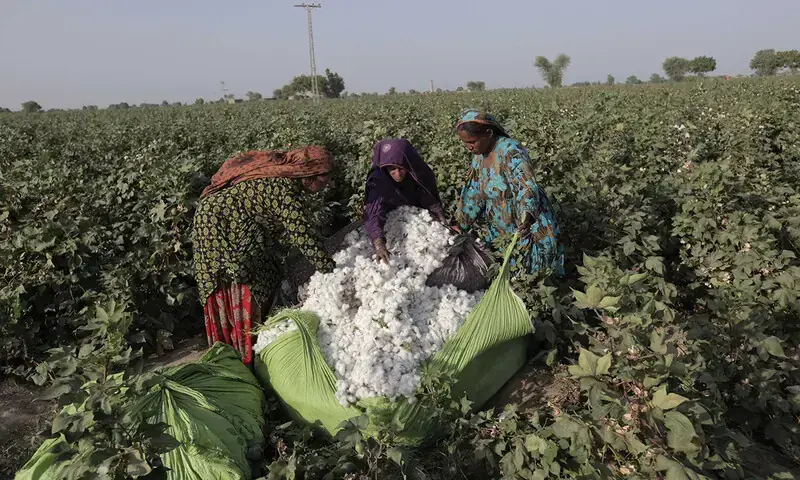
Govt sets cotton output target at 9.64 million bales for Kharif 2026-27
The government has fixed a cotton production target of 9.64 million bales for Kharif 2026-27 at a meeting of the Federal Committee on Agriculture. Targets for rice, maize and sugarcane were also approved, while officials reviewed water, seed, fertiliser and credit availability.

ISLAMABAD: The federal government has set a cotton production target of 9.64 million bales for the upcoming Kharif 2026-27 season, with cultivation planned over 2.16 million hectares, according to decisions taken at a meeting of the Federal Committee on Agriculture (FCA).
The meeting was held on Tuesday under the chairmanship of Federal Minister for National Food Security and Research Rana Tanveer Hussain. The committee, which is tasked with overseeing strategic measures related to food security, reviewed production goals for major Kharif crops and fixed targets for rice, maize, sugarcane and cotton.
Under the targets approved by the committee, rice production has been set at 9.17 million tonnes from 3.39 million hectares, while maize output is projected at 9.77 million tonnes from 1.5 million hectares. The sugarcane target was fixed at 80.3 million tonnes from 1.14 million hectares. Targets were also identified for other crops, including moong, mash and chillies.
Pakistan’s cotton output in 2025-26 stood at 5.607 million bales, according to the figures shared at the meeting. The report noted that this was far below the 15 million bales recorded in 2014-15, which was described as the highest output level.
Rabi crop review
During the meeting, the FCA was also briefed on the performance of Rabi crops for 2025-26. Wheat production was estimated at 29.31 million tonnes from 9.38 million hectares.
Onion production was estimated at 2.70 million tonnes from 163,000 hectares, showing a slight decline in both output and cultivated area compared to the previous year. Tomato production was put at 555,000 tonnes from 42,000 hectares, reflecting an 11.9% drop due to a 12.1% reduction in cultivated area from last year.
Potato production was estimated at 12.17 million tonnes from 466,000 hectares, which was 23.2% higher than the previous year. Gram output was assessed at 262,000 tonnes from 782,000 hectares, up 52.4% from a year earlier.
Water, seed and fertiliser availability
On the availability of agricultural inputs for the Kharif season, the committee was informed that water availability at canal heads would remain at 67.45 million acre feet during the season.
The Pakistan Meteorological Department told participants that above-average rainfall from March to the first 10 days of April had improved the situation to some extent in most parts of the country. It was also noted that rainfall in April and May, along with rising temperatures in northern areas, could improve water availability in major reservoirs. The committee stressed the need for careful use of available water, particularly in lower parts of the country.
The committee was further informed that rice and maize seed supplies would be sufficient to meet requirements. The chief of the National Fertiliser Development Centre told the meeting that urea availability would remain comfortable because of local production and existing stocks.
Minister outlines policy measures
Addressing the meeting, Rana Tanveer Hussain said food security required a clear focus on improving agricultural productivity, especially through higher per-acre yields. He said that while food availability was generally adequate, affordability remained a major issue, particularly for low-income groups.
The minister said the interim National Wheat Policy 2025-26, approved by the cabinet on November 19, 2025, was being implemented across the country to support farmers and encourage private-sector investment in the wheat value chain.
He added that the food ministry, working with provincial governments and the Green Pakistan Initiative, had prepared an agricultural roadmap focused on mechanisation, reforms in the seed system, revival of the cotton crop, value addition, improved access to finance and export growth.
He also said the establishment of the National Agri-Trade and Food Safety Authority would help harmonise food safety standards, improve quality assurance and strengthen the competitiveness of Pakistan’s agricultural exports.
A representative of the State Bank told the meeting that the expected allocation of agricultural credit for FY26 would be Rs3,062 billion, which is 19% higher than last year’s disbursement of Rs2,577 billion.
1 Comment
No comments yet. Be the first to join the discussion!