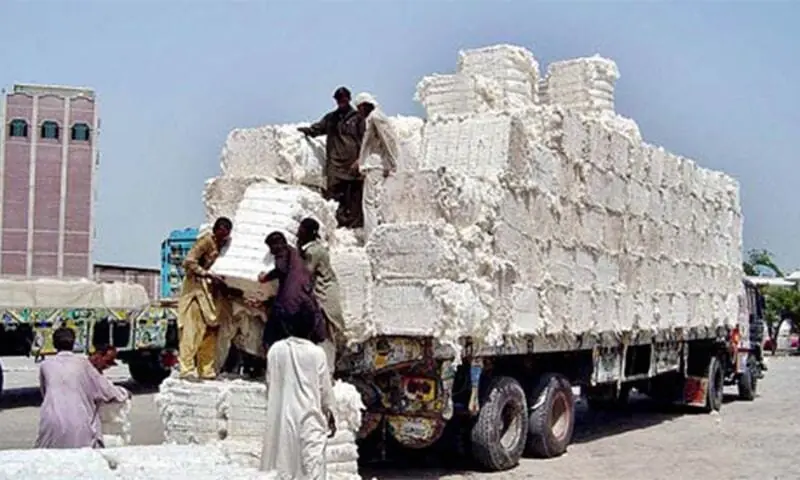
Textile sector projects import of 7.2m cotton bales to bridge shortfall
Pakistan’s textile industry may need to import 7.2 million cotton bales in 2026-27 as domestic output is projected to decline to 6.94 million bales against consumption of 14.15 million. Industry representatives have also urged tax relief in the upcoming budget.


LAHORE: Pakistan’s textile industry is expected to import about 7.2 million cotton bales in the 2026-27 cotton year to bridge a widening gap between domestic production and consumption, as output is projected to fall further while demand remains higher, according to industry estimates and a report by the United States Department of Agriculture (USDA).
The USDA has estimated Pakistan’s cotton production for the coming season at 6.94 million bales, each weighing 160 kilograms. The figure is 272,000 bales lower than last year’s level. At the same time, domestic consumption has been projected at 14.15 million bales, although the actual level of demand will depend on future government policy decisions and the operating capacity of the textile industry.
The report also placed Pakistan in the broader global cotton market, saying China is likely to remain the world’s largest producer this year with output of 45.6 million bales. India is expected to produce 32.6 million bales, followed by Brazil with 23.8 million bales and the United States with 18 million bales.
Ginning season begins gradually
The new cotton ginning season has started slowly in Pakistan. During the past week, six ginning factories became operational in Punjab, while two factories in Sindh had already begun operations before Eidul Azha. Industry stakeholders expect the full ginning season to gather pace after Eid.
Prices in the local cotton market remained largely unchanged. Phutti, or seed cotton, was selling at around Rs11,500 per 40 kilograms, while cotton was quoted at about Rs22,500 per maund. Market participants expect a clearer direction on whether prices will rise or fall after Eid, when arrivals improve.
Industry concerns over taxation and costs
Cotton Ginners Forum Chairman Ihsanul Haq voiced concern over what he described as a record 84 per cent sales tax burden on the cotton ginning sector. He said the tax pressure had driven many ginners and oil mill owners toward undocumented business activity, which, according to him, was causing losses to the national exchequer and making official cotton production figures increasingly disputed.
Haq urged the federal government to accept the Pakistan Cotton Ginners Association’s demands in the upcoming budget by removing sales tax on cottonseed, cottonseed oil and oilcake. He said such steps could encourage cotton cultivation, help save billions of dollars spent each year on cotton and edible oil imports, and lower the prices of ghee and cooking oil for consumers. He added that the move could also help reduce undocumented business activity in the sector.
He further said the textile industry was passing through one of the most severe economic crises in its history because electricity, gas, markup and taxation rates in Pakistan were significantly higher than those in competing countries. Leading industrialists are calling on the government to provide substantial relief to textile and other industries in the coming budget, particularly through the abolition of super tax, so that factories can return to full-scale operations and support the economy.
Haq also suggested that, instead of allocating hundreds of billions of rupees to welfare and charity programmes such as the Benazir Income Support Programme and provincial relief funds, the government should direct more resources toward industrial revival and broader economic relief. According to him, encouraging business activity rather than dependence on charity would help ease inflation, generate employment on a large scale and support economic growth.
Comments
No comments yet. Be the first to join the discussion!