

Peshawar faces mounting pollution as population pressure strains environment
Peshawar is facing worsening pollution and environmental stress as rapid population growth and weak urban planning strain the city’s resources. Experts say plantation drives alone are not enough without broader policy action and changes in public behaviour.

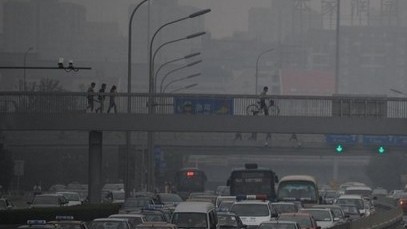
PESHAWAR: Peshawar, once widely known as the City of Flowers, is increasingly grappling with worsening environmental conditions as air quality deteriorates and urban expansion places growing pressure on the city’s resources.
According to the 2023 digital census, the population of Khyber Pakhtunkhwa has crossed 40.8 million, while Peshawar’s population stands at more than 4.26 million. As the provincial capital, the city has for years drawn people from across the province. The influx has intensified further in recent years due to displacement from the former tribal districts amid insecurity, adding to pressure on infrastructure, natural resources and the environment.
Successive governments have pledged to revive Peshawar’s greenery, but those promises have not translated into lasting results. After coming to power in 2013, the Pakistan Tehreek-e-Insaf launched the Billion Tree Tsunami project, presenting it as a major environmental intervention. However, the initiative later faced allegations of financial mismanagement and did not deliver the scale and sustainability that had been promised.
More recently, the Khyber Pakhtunkhwa government announced on March 23, 2026, that it would plant one million saplings in a single day under the Ehsas Tree Plantation Campaign. But officials themselves acknowledged that the target was not realistic.
Deputy Director Agriculture Department Muhammad Ibrahim Khan told The Express Tribune that the department had distributed saplings from official nurseries to colleges, universities and government institutions, but the one-day goal of planting one million trees could not be achieved. "Systems such as online tracking, GPS monitoring, and dashboards have been introduced to oversee plantation efforts, reflecting a degree of institutional progress. However, the campaign fell short of its numerical goals. Instead, it succeeded, to some extent, in raising public awareness about environmental protection," he said.
Environmental specialist Ayaz Ali said plantation campaigns alone could not address the broader crisis. He said trees account for around 30 per cent of environmental improvement, while the remaining 70 per cent depends on human conduct and daily practices.
Ali also said that although developed countries are the biggest contributors to carbon emissions, areas such as Pakistan, especially Khyber Pakhtunkhwa, are facing an unequal share of climate-related consequences, including extreme weather and natural disasters.
Another environmental expert, Muhammad Haseeb Khan, said governments of different political parties had not shown sufficient seriousness on environmental protection. Referring to the Bus Rapid Transit project in Peshawar, he said thousands of trees were cut during construction and there was little visible evidence that enough replantation had taken place to offset the loss. He said,
Experts believe Peshawar’s environmental crisis cannot be addressed through symbolic drives or short-term campaigns alone. They have called for a long-term strategy combining urban planning, environmental safeguards and public accountability, along with sustainable practices including organic living, recycling systems, green building codes and wider climate mitigation measures.
Without an effective and enforceable framework at both the provincial and national levels, the city’s environmental decline is likely to continue.
Comments
No comments yet. Be the first to join the discussion!


