

Emperor penguins moved to endangered species as climate change shrinks sea ice
The IUCN has upgraded the emperor penguin’s status from near threatened to endangered, citing climate change and shrinking sea ice. It said the species’ population could fall by half by the 2080s.

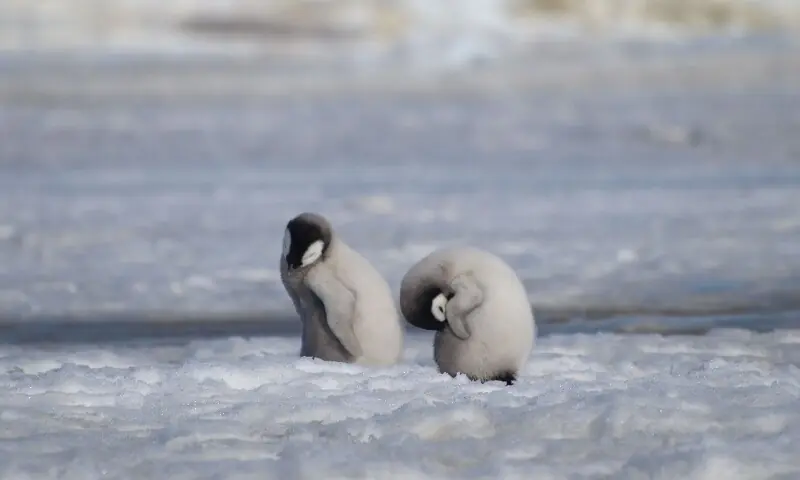
PARIS: The emperor penguin has been reclassified as an endangered species, with the International Union for Conservation of Nature (IUCN) saying climate change is pushing one of Antarctica’s most recognisable animals closer to extinction.
The species had previously been listed as near threatened. Its new status, announced on Thursday, highlights the growing risks facing animals that depend on sea ice as rising global temperatures continue to transform Antarctica.
Emperor penguins depend on stable sea ice to survive, feed and reproduce. These frozen stretches of ocean serve as essential platforms for their daily life cycle. According to the IUCN, warming caused by greenhouse gas emissions has led to earlier break-up of sea ice during the year, contributing to a sharp decline in the species’ numbers.
The IUCN, which brings together scientists, governments and conservation organisations, said projected changes in sea ice could reduce the emperor penguin population by half by the 2080s.
Philip Trathan, who was part of the IUCN expert group involved in the Red List assessment, said in a statement that they “concluded that human-induced climate change poses the most significant threat to emperor penguins”.
The IUCN Red List of Threatened Species is regarded as the global benchmark for assessing the extinction risk of plants, animals and fungi. It is maintained by the IUCN and uses six categories ranging from least concern to extinct.
With the latest revision, emperor penguins are now placed two levels below extinction in the wild, a category used for species that survive only in captivity and no longer exist in nature.
In the same update, the Antarctic fur seal was also reclassified as endangered. The species had once been hunted to the brink of extinction for its pelts. The IUCN said its population has fallen by more than 50 percent since 1999.
The latest assessment adds to concerns over the impact of climate change on wildlife in polar regions, particularly species whose survival is closely tied to the presence of sea ice.
Comments
No comments yet. Be the first to join the discussion!


