Mpox outbreak in Khairpur raises alarm
AKUH experts have urged an immediate public health response after a confirmed mpox outbreak in Khairpur infected seven newborns and killed four. They also warned that recent cases suggest possible local transmission beyond travel-related infections.

KARACHI: Experts at the Aga Khan University Hospital (AKUH) have raised concern over the recent mpox outbreak in Khairpur, urging healthcare providers and policymakers to treat the viral disease as an urgent public health priority.
The outbreak came to light last week when the Sindh health department confirmed seven newborn babies in Khairpur had contracted mpox, a zoonotic viral infection, with four of the infants succumbing to the disease.
In response, AKUH convened a media roundtable to discuss the outbreak, noting that the cases were no longer solely imported. The experts highlighted that one of the two mpox cases confirmed in Karachi this year suggested possible local transmission, while the Khairpur outbreak indicated the virus had infiltrated healthcare settings, revealing critical gaps in infection prevention and control beyond major urban centers.
Dr Faisal Mahmood, Professor of Infectious Diseases at AKUH, emphasised that awareness is crucial at this stage. “We are at a moment where awareness can make the difference between containment and spread. People, including physicians, need to know the signs, act early, and not wait,” he said.
Pakistan recorded 53 confirmed mpox cases in 2025, the majority linked to international travel. However, this year’s pattern indicates the virus may now be spreading locally.
Mpox spreads primarily through close skin-to-skin contact and contact with contaminated materials such as bedding or clothing. Transmission may also occur through respiratory droplets during prolonged close contact and, in certain situations, from mother to child during pregnancy or birth. Specific outbreaks have reported exposure via potentially unsterilized medical equipment, though the virus is not considered airborne.
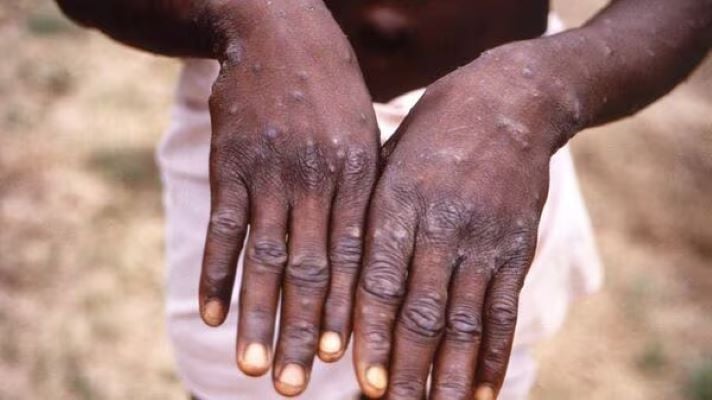
Typical symptoms include fever, swollen lymph nodes, and a distinctive rash or lesions on the face, palms, soles, and genital area. Most individuals with a healthy immune system recover within two to four weeks, but newborns, pregnant women, and immunocompromised patients face a higher risk of severe illness.
Dr Fatima Mir, Professor of Paediatric Infectious Diseases at AKUH, warned that ignoring symptoms, delaying isolation, and lax infection control in healthcare facilities could lead to uncontrolled cross-infection. “Mpox spreads through physical skin-to-skin contact and inhalation of the virus from an infected patient. All of this is avoidable,” she said.
Currently, a child from Khairpur is being treated for mpox at AKUH, with Dr Mir confirming that the patient’s condition is stable. “We are treating the patient as per the protocol,” she added.
Experts urged anyone developing symptoms consistent with mpox to isolate immediately and seek medical attention. Those with known or suspected exposure to confirmed cases should monitor for symptoms for 21 days. Healthcare facilities, especially neonatal and maternity units, have been called on to reinforce infection prevention protocols without delay, as early intervention remains the most effective defense.
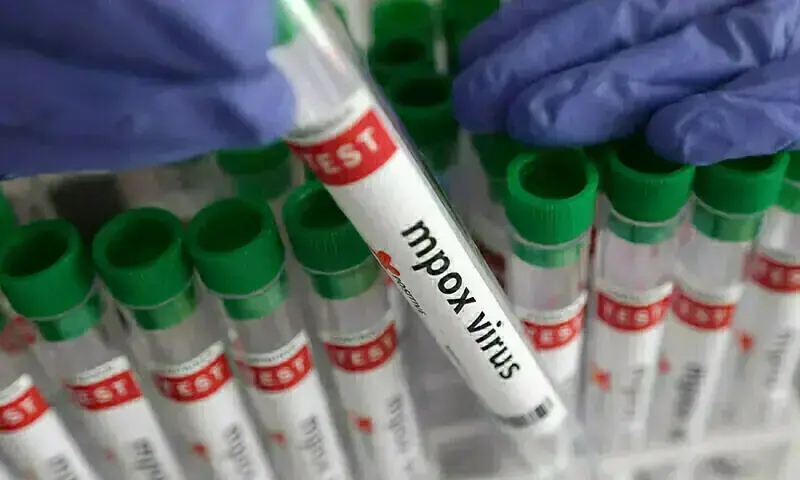
The Sindh health department reported on April 4 that it had first received information about “unusual skin pimples” affecting children in Khairpur on March 14. Blood samples from the affected children were sent to Karachi, where laboratory tests confirmed seven cases of mpox.
Comments
No comments yet. Be the first to join the discussion!