Japan considers fresh oil reserve release as Hormuz disruption persists
Japan is considering another oil reserve release of about 20 days' worth as uncertainty continues over the Strait of Hormuz. The country has already made available about 50 days of oil consumption from stockpiles.

TOKYO: Japan is weighing another release from its oil reserves, potentially equivalent to about 20 days of consumption, as early as May, amid continued uncertainty over the reopening of the Strait of Hormuz despite a ceasefire between the United States and Iran.
Japan, which relies on the Middle East for around 95% of its oil imports, began releasing oil from its stockpiles on March 16 both in coordination with other countries and through its own measures. Altogether, the country is making available oil equal to roughly 50 days of consumption and has also asked the International Energy Agency to consider a coordinated second round of releases.
Japan currently holds reserves sufficient for 230 days.
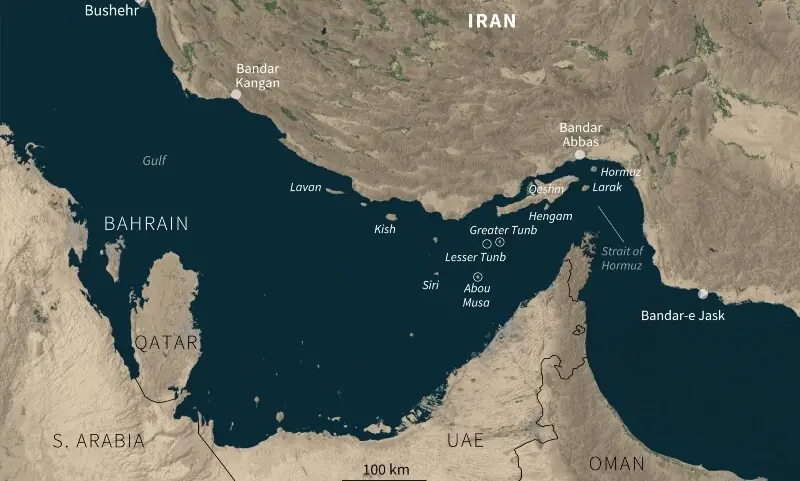
On Tuesday, US President Donald Trump agreed to a two-week ceasefire with Iran on the condition that Tehran reopen the Strait of Hormuz. However, the waterway, which normally handles about 20% of global oil supply, remains largely closed.
An unnamed official was quoted as saying, As a resumption of safe navigation in the Strait of Hormuz is uncertain, an additional release of oil is under consideration to stabilise supply.
Asked about the report, Narumi Hosokawa, deputy director-general for immediate crisis management at Japan’s Ministry of Economy, Trade and Industry, told reporters that the ministry was continuing to assess the situation.
The supply disruption has already affected domestic refining activity. With lower crude availability, Japanese refineries reduced their utilisation rate to 67.7% of designed capacity in the week ending April 4, the lowest level since June.
To manage the energy supply strain, Japan has begun seeking crude from outside the Middle East, introduced gasoline subsidies and increased coal-fired power generation to reduce demand for liquefied natural gas. LNG supplies have also been affected by the closure of the Strait of Hormuz.
A Ministry of Economy, Trade and Industry document released on Thursday said that while Japan had secured enough crude oil and naphtha for the country overall, some regions were facing supply imbalances and distribution bottlenecks.
Supply concerns remain in focus
The latest deliberations reflect Japan’s continued concern over energy security as shipping through one of the world’s most important oil transit routes remains disrupted. The country has already taken a series of steps to cushion the impact on domestic fuel availability and power generation, while also seeking broader international coordination on reserve releases.
The possible additional release is being considered as part of efforts to stabilise supply if safe passage through the Strait of Hormuz does not resume soon.
Comments
No comments yet. Be the first to join the discussion!