Twin cities receive 16 hours of rain as Murree landslides block roads
Rawalpindi and Islamabad received 16 hours of continuous rain, while landslides in Murree blocked roads at multiple points. Authorities said no casualties were reported, as the Met Office warned of more rain, flash floods and urban flooding.


RAWALPINDI: The twin cities of Rawalpindi and Islamabad received 16 hours of uninterrupted rainfall, with the wet spell lowering the temperature to 14 degrees Celsius, according to the Met Office.
In Murree, the rain caused landslides on Kashmir Road, at Aliot and along Murree Improvement Trust, where five feet of land caved in and blocked traffic.
Murree Deputy Commissioner Agha Zaheer Shirazi said landslides had occurred at two locations in Murree, but no casualties were reported. He said the district administration had been fully mobilised to respond to the situation.
Referring to the Jhika Gali landslide that took place a day earlier, the deputy commissioner said rehabilitation work was continuing swiftly in the affected localities, while emergency operations were underway to reopen roads, clear debris and remove risks to the public.
Mr Shirazi said all possible facilities would be provided to the affected people and added that no negligence of any kind would be tolerated. He said five houses and a mosque had been affected in Jhika Gali, and residents had been shifted to a government building where they were being provided food, medicines and other facilities.
The deputy commissioner also visited the Jhika Gali area, reviewed the administration’s response and met the affected residents. During the visit, he listened to their concerns and assured them of full cooperation.
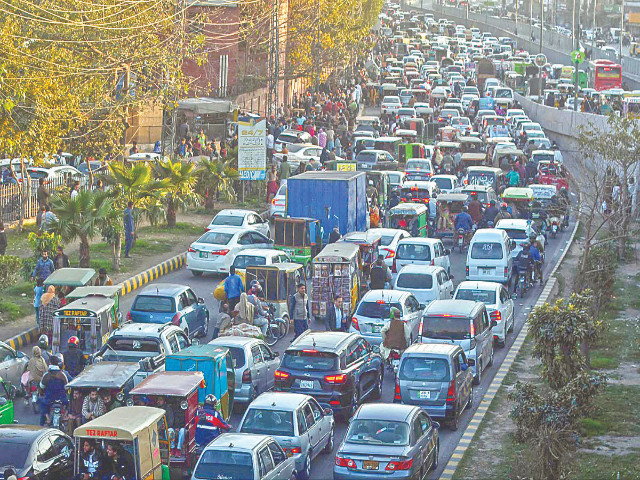
In Rawalpindi, residents, particularly those living in low-lying neighbourhoods, spent much of the day removing water from their homes. Traffic congestion was reported on Ayub Park Road, Jhelum Road, Ch. Bostan Khan Road, Jhanda Chichi Road, Tyre Bazaar, Hamilton Road and other areas.
The road from Fawara Chowk to Hamilton Road, also known as Dingi Khoi, had already been closed because of construction work on a pedestrian street being carried out by the Rawalpindi Municipal Corporation. In addition, Wasa had excavated Hamilton Road and Tyre Bazaar for the relocation of a nullah.
On the alternate route linked to Kutchery Chowk remodelling, Chaklala Cantonment Board, District Council and Rawalpindi Development Authority had not repaired Ch. Bostan Khan Road, Jhanda Chichi Road and Ayub Park Road, where rainwater collected in potholes. This created difficulties for motorists and motorcyclists and added to traffic jams in those areas.
Rainfall data and forecast
According to the Met Office, rainfall in Islamabad measured 52mm at Islamabad International Airport, 44mm in Saidpur, 35mm in Golra, 33mm in Zero Point and 28mm in Bokra.
In Rawalpindi, 46mm of rain was recorded in Chaklala, 44mm in New Kattarian, 40mm in Kutchery, 38mm in Shamsabad, 35mm in Pirwadhai, 32mm in Gawalmandi and 38mm in Murree.
A Met Office official said a strong westerly wave was affecting most upper and central parts of the country and was expected to persist in upper areas until April 9.
The official said, ‘More rain-windstorm/thunderstorm is expected in Khyber Pakhtunkhwa, upper Punjab, Islamabad and Kashmir. Dry and partly cloudy weather is expected elsewhere in the country,’ and added that the weather was likely to clear before Wednesday afternoon.
The Met Office said the minimum temperature in the twin cities was 14 degrees Celsius, while the maximum was 16 degrees Celsius.
It also warned that heavy rain could trigger flash floods in local nullahs in Kashmir, Khyber Pakhtunkhwa, Murree and Galiyat on April 8, while landslides were likely in hilly areas during the same period.
Urban flooding was also forecast in Peshawar, Nowshera, Mardan, Islamabad, Rawalpindi, Gujrat, Gujranwala and Sialkot on April 8. The Met Office further warned that windstorms, hailstorms and lightning could damage vulnerable structures, including electric poles, billboards and solar panels, during the forecast period. Hailstorms and windstorms might also affect standing crops in Punjab and Khyber Pakhtunkhwa.
Comments
No comments yet. Be the first to join the discussion!