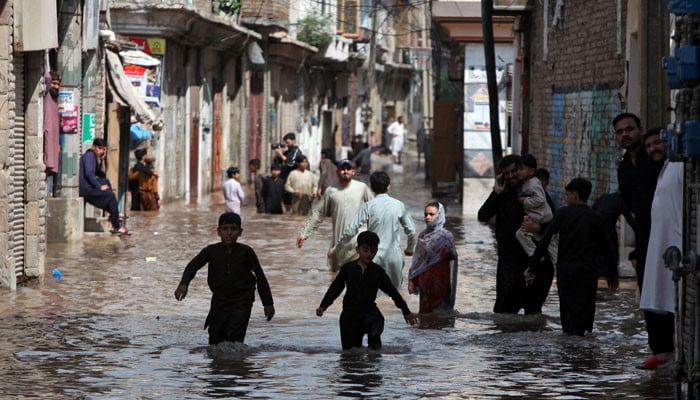
Flood alert, rain emergency as KP, Karachi tally deaths
Pakistan faces extreme weather: KP PDMA warns of flooding in Kabul River and flash-flood risks as rain kills 25 and injures 77. Karachi declares a rain emergency after torrential downpours, hail, and 5 deaths.

PDMA says 25 dead, 77 injured in rain-related incident across KP since March 25
Warns of flooding in Kabul River at Nowshera with flash flood risk rises in Kohat Toi, Kurram and Gomal rivers
Karachi rain kills five in electrocution, building collapse incidents as Hailstorm, 69.6mm rain swamp city, disrupt traffic
Rain emergency declared as authorities on high alert amid fresh spell of rain forecast until Apr 4
PESHAWAR/KARACHI: Pakistan grappled with a fresh wave of extreme weather on Thursday as authorities issued flood warnings in parts of Khyber Pakhtunkhwa (KP) following deadly rain-related incidents, while Karachi was placed under emergency after torrential downpours claimed five lives and paralysed parts of the metropolis.
The Provincial Disaster Management Authority (PDMA) in KP sounded a high alert for potential flooding in major rivers and tributaries, warning that the ongoing spell of heavy rains — which has already killed at least 25 people and injured 77 since March 25 — could intensify over the coming days.
Simultaneously, Karachi witnessed intense rainfall accompanied by a hailstorm in some areas, triggering electrocution incidents, structural collapse, widespread urban flooding, and traffic disruptions, prompting city authorities to declare a rain emergency and mobilise emergency response teams across districts.
KP faces flood threat as death toll rises
According to the KP PDMA, torrential rains since March 25 have resulted in at least 25 fatalities and injuries to 77 individuals, while more than 80 houses have been damaged across multiple districts.
پی ڈی ایم اے کی جانب سے 25 مارچ سے اب تک ہونے والی بارشوں کے باعث صوبہ کے مختلف اضلاع میں جانی و مالی نقصانات کی رپورٹ جاری@GovernmentKP @KPChiefMinister @CSKPOfficial @infokpgovt @kptourism @Arifulah86 pic.twitter.com/9wJ6d2W32B
— PDMAKP OFFICIAL (@PDMAKP) April 2, 2026
“These incidents occurred across several districts of the province, including Bannu, Abbottabad, Kohat, Peshawar, Nowshera, Bajaur, Lakki Marwat, Kurram, Hangu, Shangla, Buner, Malakand, Upper Dir, Battagram, North Waziristan and Tank,” the PDMA said in its latest report.
The authority warned of a high-level flood risk in the Kabul River at Nowshera, cautioning that connected tributaries could overflow and inundate surrounding areas.
PDMA Updates | Flood Alert@GovernmentKP @CSKPOfficial @infokpgovt @KPKUpdates @Arifulah86 pic.twitter.com/j2t3Eej439
— PDMAKP OFFICIAL (@PDMAKP) April 2, 2026
“There is a risk of high-level flooding in the Kabul River at Nowshera, while tributaries linked to the river may also overflow,” the PDMA said, directing district administrations to remain on maximum alert.
Flash flood warnings have also been issued for key waterways, including Kohat Toi, Kurram River, and Gomal River, with authorities fearing sudden surges due to continuous rainfall and snowmelt.
Vulnerable districts identified by the PDMA include Peshawar, Nowshera, Charsadda, Mohmand, Bannu, Kohat, Kurram, and Dera Ismail Khan, where local administrations have been instructed to activate contingency plans and ensure rapid response readiness.
The Pakistan Meteorological Department (PMD) has forecast another spell of rain across the province until April 4, raising concerns about further casualties and infrastructure damage.
Adding to the threat, the PDMA also warned of glacial lake outburst flooding (GLOF) in upper regions of KP.
خیبر پختونخوا کے بیشتر اضلاع میں 2 سے 4 اپریل کے دوران تیز بارشوں کا امکان.
تیز بارشوں کے باعث دریائے کابل اور اس کے منسلک ندی نالوں میں
تیز بارشوں کے باعث پانی کی سطح بڑھنے کا خدشہ۔@GovernmentKP | @KPChiefMinister | @CSKPOfficial | @infokpgovt | @Arifulah86 | @kptourism pic.twitter.com/pNzHylrMJn— PDMAKP OFFICIAL (@PDMAKP) April 1, 2026
“Continuous rainfall and melting snow may cause rivers and streams to swell. Melting of glaciers could pose a serious threat to low-lying populations,” the authority cautioned.
Residents have been advised to avoid rivers, streams and flood-prone areas, while livestock owners have been urged to relocate animals to safer ground.
Karachi reels under torrential rain, five killed
In Karachi, heavy rainfall lashed large parts of the city, leaving at least five people dead in separate rain-related incidents, primarily due to electrocution and structural collapse.
According to police and rescue officials, four individuals lost their lives after coming into contact with live electrical currents, while another person was killed when part of a building collapsed.
In Ahsanabad, 40-year-old Shahabuddin died after suffering an electric shock while attempting to fix an electrical fault. Officials said he was believed to be an employee of K-Electric.
Separately, 35-year-old Abdul Waleed died after touching an electric pole near Faizan Milad Masjid in PIB Colony, according to police officials.
In another tragic incident, seven-year-old Dua Batool Sarfraz was electrocuted inside her home in Sector 7-A, highlighting the dangers posed by exposed wiring during heavy rainfall.
The Edhi Foundation reported that a 23-year-old man, Sartaj, also died of electrocution inside his home in Hasan Brohi Goth near Bashir Chowk.
Meanwhile, a passerby lost his life after a three-storey building near Bismillah Hotel in Pak Colony partially collapsed. Rescue teams retrieved the victim from the debris and shifted him to Abbasi Shaheed Hospital, where he was pronounced dead.
Rainfall data and widespread disruption
Karachi experienced a mix of light morning showers followed by torrential rainfall after 2pm, inundating roads and disrupting daily life across the city.
Official data showed that Nazimabad (Paposh Nagar) recorded the highest rainfall at 69.6mm, followed by Kemari (56mm) and Saadi Town (48mm).
Other major areas included:
University Road: 44.2mm; Bahria Town: 43.5mm; Orangi Town: 39.4mm; Gulshan-e-Maymar: 36.0mm; Jinnah Terminal and Surjani Town: 35.0mm each; Old Airport Area: 32.6mm; DHA Phase II: 33.0mm and PAF Faisal Base: 30.4mm.
Lower rainfall levels were recorded in: North Karachi: 28.8mm; PAF Masroor Base: 29.0mm; Korangi: 18.2mm; Gulshan-e-Hadeed: 17.0mm.
A Pakistan Meteorological Department official confirmed that a hailstorm was reported in Mauripur, adding to the severity of the weather system.
Power outages and infrastructure strain
K-Electric stated that power supply was temporarily suspended in certain areas as a precautionary measure during the rainfall.
“As a safety measure, power supply may be temporarily suspended in some areas; it is restored after rain subsides and clearance from field teams,” a spokesperson said.
Take safety precautions during the rainy season to avoid any unpleasant incidents. Share these recommended safety measures with your loved ones.
بارش کے موسم میں شہری حفاظتی تدابیر اختیار کریں تاکہ کسی بھی ناخوشگوار واقعے سے بچا جا سکے۔ اپنے پیاروں کے ساتھ ان تجویز کردہ حفاظتی… pic.twitter.com/nbnAhKzn45— KE (@KElectricPk) April 2, 2026
In a later update, the utility confirmed that its distribution system remained largely stable despite the downpour.
“After heavy rain and hailstorm, KE’s power distribution system remains stable; uninterrupted electricity supply continues from around 2,000 out of over 2,100 feeders,” the spokesperson said.
کے-الیکٹرک پاور سپلائی اپڈیٹ، 2 اپریل 2026، شام 6:30 بجے
شدید بارش اور ژالہ باری کے بعد کے-الیکٹرک کا بجلی تقسیمی نظام مستحکم ہے؛ 2100 سے زائد فیڈرز میں سے تقریباً 2000 فیڈرز سے بلا تعطل بجلی کی فراہمی جاری ہے۔ ترجمان کے-الیکٹرک
بارش اور ژالہ باری کے بعد تقریباً 500 فیڈرز متاثر… pic.twitter.com/ZkrybbLto1— Imran Rana, Spokesperson, K-Electric (@imranrana21) April 2, 2026
At the peak of the rainfall, around 500 feeders were affected, but most were restored swiftly once conditions improved.
Traffic chaos and emergency response
Heavy rain led to widespread urban flooding, leaving multiple roads submerged and causing severe traffic disruptions across Karachi.
Karachi Traffic Police reported closures and diversions on key arteries, including Sharea Faisal, where traffic from Nursery to Baloch Colony was suspended and rerouted.
Congestion was also reported on Agha Khan Road, Jinnah Avenue, and routes leading from the airport due to water accumulation.
Authorities issued alternative routes to ease the burden on commuters, while several underpasses were temporarily affected before being cleared.
Mayor Karachi Murtaza Wahab, in a video message, said the situation had improved by evening.
Current situation of the city…. pic.twitter.com/djOf9JN0uu
— Murtaza Wahab Siddiqui (@murtazawahab1) April 2, 2026
“It’s around 8:15pm … and traffic flow is normal at all major arteries. All 14 underpasses are also open for traffic,” he said.
He added that earlier disruptions had been addressed and urged citizens to exercise caution, particularly as another spell of heavy rain was forecast between 9pm and midnight.
Emergency declared, authorities on high alert
In response to the deteriorating situation, Karachi Commissioner Syed Hassan Naqvi declared a rain emergency, activating city-wide response mechanisms.
Rescue services were placed on high alert, and citizens were advised to contact helpline 1299 for assistance.
Municipal agencies, including the Karachi Water and Sewerage Corporation (KWSC) and Sindh Solid Waste Management Board (SSWMB), were deployed across the city, with de-watering pumps installed in low-lying areas and staff stationed at key drainage points.
Help desks and emergency camps were established across districts, including East, South, Keamari, and Central, to facilitate rapid response.
Sindh Senior Minister Sharjeel Inam Memon said advance arrangements had been made and leaves of essential staff had been cancelled.
کراچی میں بارش کے پیش نظر حکومت سندھ نے شہریوں سے احتیاط برتنے کی اپیل کی ہے اور تمام متعلقہ اداروں کو ہائی الرٹ کر دیا گیا ہے، پیشگی انتظامات کے تحت ضروری عملے کی چھٹیاں منسوخ کر دی گئی ہیں اور افسران کو فیلڈ میں موجود رہنے کی ہدایت دی گئی ہے۔ نشیبی علاقوں میں برساتی پانی کی… pic.twitter.com/hLNsZM1Y0b
— Sindh Information Department (@sindhinfodepart) April 2, 2026
“The officers of the relevant provincial government institutions and local government institutions have been instructed to remain in the field on high alert,” he said.
Sindh Inspector General of Police Javed Alam Odho also directed police units to maintain coordination with rescue agencies to handle emergency situations effectively.
Climate vulnerability in focus
The latest spell of extreme weather once again underscores Pakistan’s vulnerability to climate change.
The country has witnessed increasingly erratic weather patterns in recent years, including intense rainfall, flash floods, and heatwaves that have exposed weaknesses in infrastructure and disaster preparedness.
In 2022, catastrophic floods triggered by unprecedented monsoon rains killed more than 1,700 people and affected over 33 million nationwide.
Last year, heavy monsoon rains caused further devastation, killing over 900 people and submerging vast agricultural lands, particularly in Punjab.
Recent weeks have also seen storm-related fatalities, including at least 21 deaths in Karachi alone prior to the current spell.

1 Comment
No comments yet. Be the first to join the discussion!