Pakistan seeks IMF flexibility as global oil surge forces shift in fuel pricing strategy
Pakistan’s finance minister says it will seek greater IMF programme flexibility to manage soaring global oil prices, adjust fuel pricing transmission, and target subsidies to vulnerable groups.

ISLAMABAD: Facing mounting pressure from soaring global oil prices, Pakistan on Thursday announced it would seek greater flexibility in its programme with the International Monetary Fund to navigate emerging economic challenges stemming from the ongoing US-Israel war on Iran.
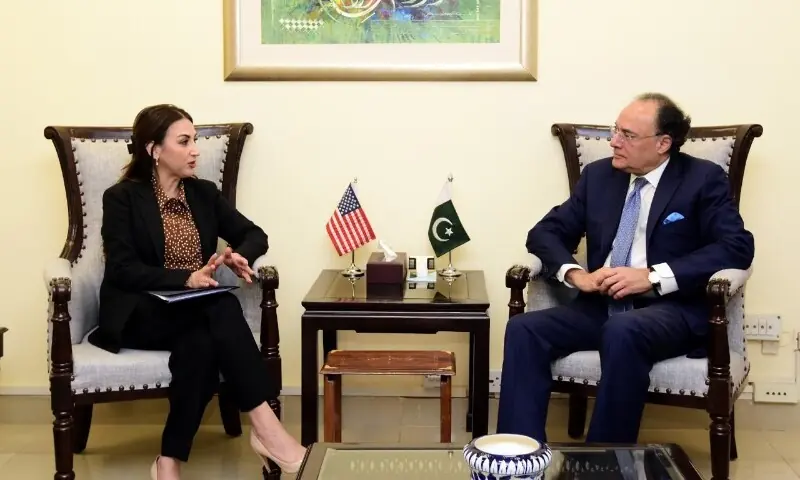
The development came during a meeting between Finance Minister Muhammad Aurangzeb and US Chargé d’Affaires Natalie Baker ahead of the upcoming spring meetings of the IMF and the World Bank later this month.
According to a statement issued by the Ministry of Finance, the minister reaffirmed Pakistan’s commitment to fiscal discipline but stressed the need for flexibility in the IMF programme to respond to evolving global and regional uncertainties. He highlighted that the government was actively managing energy sector challenges, including procurement strategies, pricing mechanisms, and subsidy reforms.
Aurangzeb indicated that while fuel supply arrangements remained stable, the government was moving towards improved price transmission — a signal that the burden of rising international petroleum prices would increasingly be passed on to consumers. At the same time, he emphasised that subsidies would be more targeted, focusing on vulnerable groups such as small farmers and public transport users.
Pakistan has so far kept petrol and diesel prices frozen for three weeks despite a sharp spike in global markets, absorbing an estimated cost of Rs129 billion. However, with international diesel prices surging by over 220 per cent and petrol by around 80 per cent since the conflict began — including a record jump of more than $46 per barrel — the government is now reassessing its approach.
Officials said the federal government had engaged provinces to take responsibility for targeted subsidies, particularly for bikers, farmers and transport operators, while allowing retail fuel prices to reflect actual import costs.
The finance minister also warned that rising oil prices could significantly impact Pakistan’s import bill, fuel inflationary pressures, and strain overall macroeconomic stability.
During the meeting, both sides reviewed Pakistan’s broader economic outlook and ongoing reform efforts. Baker reaffirmed US support for Pakistan’s economic stabilisation agenda and acknowledged the government’s efforts to maintain reform momentum under difficult conditions. She also highlighted Washington’s interest in expanding investment in key sectors, including energy, mining, technology, and logistics.
Discussions further explored opportunities to boost bilateral trade and investment, with a focus on infrastructure development, digital connectivity, and regional integration. Aurangzeb reiterated Pakistan’s commitment to structural reforms, export-led growth, and improving the business environment to attract foreign investment.
The meeting also included a broader exchange on Pakistan-US relations and recent developments, including a symposium in Washington hosted by the Pakistan Caucus in the US Congress, reflecting growing engagement between the two countries.
Comments
No comments yet. Be the first to join the discussion!