Pakistan cautiously drives diplomacy for US-Iran mediation ‘despite obstacles, rhetoric’: FO
Pakistan’s FO spokesperson Tahir Andrabi says diplomatic momentum for US-Iran negotiations remains intact, citing Beijing’s peace plan and Islamabad’s quadrilateral outcomes, while warning against misinformation.

-
FO Spokesperson cites Beijing plan, outcome of the quadrilateral talks in Islamabad as key breakthroughs
-
Tahir Andrabi says rhetoric won’t derail fragile diplomatic momentum, highlighting US, Iran expressed confidence in Pakistan’s facilitation role
-
Our position anchored on principles, on principles of human charter, and with aim of promoting peace, stability in region: FO
-
Warns of a ‘deep nexus’ between purveyors of fake information in Afghanistan and India, describing them as ‘habitual liars’
-
Says Afghanistan must demonstrate visible and verifiable action against terrorist groups using its soil against Pakistan
-
Stresses ‘our participation reiterates our core concerns,’ saying burden of a real process, however, lies with Afghanistan
ISLAMABAD: Pakistan on Thursday expressed cautious optimism over ongoing efforts to facilitate US-Iran negotiations, underscoring that despite heightened rhetoric from various sides, diplomatic momentum remains intact, reinforced by broad international support for Pakistan-backed peace initiatives emerging from Beijing and Islamabad.
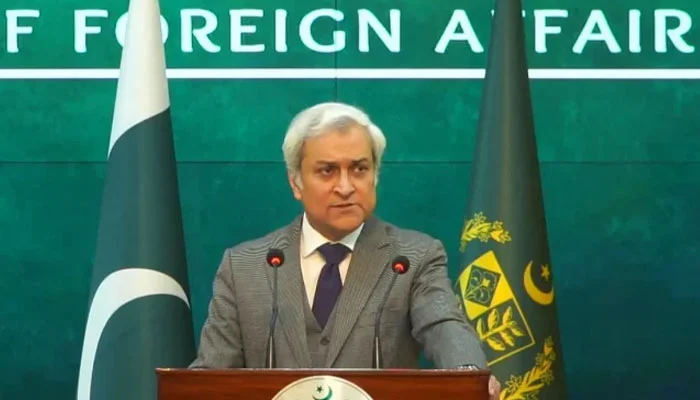
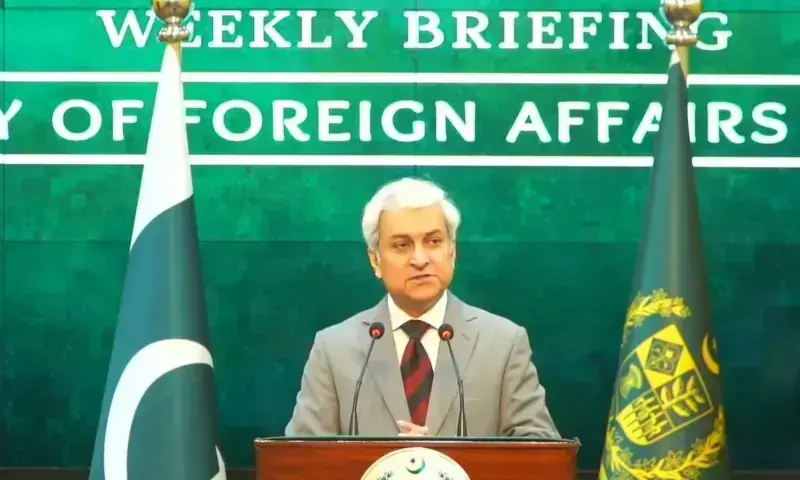
Highlighting the growing traction of the five-point peace plan unveiled in Beijing and the seven-point outcome of the quadrilateral talks in Islamabad, Foreign Office spokesperson Tahir Andrabi said these frameworks reflected a collective push towards de-escalation and dialogue.
Weekly Press Briefing by the Spokesperson @TahirAndrabi — Ministry of Foreign Affairs - Pakistan (@ForeignOfficePk) April 2, 2026
On Peace Efforts by Pakistan, 5-Points Initiative, and Schedule/Delegates for Peace Talks. pic.twitter.com/jagETX9pGn
“It is an effort towards ending war. It is an effort towards cessation of hostility. And it is an effort towards paving the way for a sustainable pathway towards finding a lasting settlement of these ongoing hostilities,” Andrabi said during his weekly press briefing.
He said Pakistan was encouraged by the confidence shown by both the United States and Iran in its role as a facilitator, reiterating that Islamabad’s approach remained principled and balanced. He noted that Pakistan had condemned attacks carried out against Gulf countries by Iran, as well as earlier strikes on Iran itself.
“Our position is anchored in principles—on the principles of the human charter—with the aim of promoting peace and stability in the region,” he said.
Weekly Press Briefing by the Spokesperson @TahirAndrabi — Ministry of Foreign Affairs - Pakistan (@ForeignOfficePk) April 2, 2026
On the Strait of Hormuz, Humanitarian Assistance in the Middle East, and Op. Ghazab Lil Haq. pic.twitter.com/g1cQiVxomi
Responding to queries regarding potential visits of US and Iranian delegations, Andrabi said the scheduling, composition, and agenda of such engagements would be determined by the concerned parties.
On the possible participation of Israeli representatives, he said he had no information but noted that Pakistan remained engaged with the United States, European partners, the OIC, and GCC countries—some of which maintain diplomatic ties with Israel.
“So, our efforts will continue despite the complications inherent in this challenging facilitative process. While obstacles exist, our pursuit of dialogue and advocacy for diplomacy remains unwavering,” he added.
The spokesperson firmly rejected suggestions that Pakistan was pressuring Iran to accept US demands, clarifying that Islamabad’s role was limited to facilitating dialogue and should not be misconstrued as policy imposition.
🔴LIVE: Spokesperson's Weekly Press Briefing 02-04-2026 at Ministry of Foreign Affairs, Islamabad https://t.co/2CIL4Nphhm — Ministry of Foreign Affairs - Pakistan (@ForeignOfficePk) April 2, 2026
In a positive development, he said Iran had allowed 20 additional Pakistan-flagged ships to transit the Strait of Hormuz, with two vessels crossing daily.
“This announcement marks a meaningful step forward in strengthening collective efforts towards dialogue, diplomacy, and confidence-building measures—the only viable path forward,” he added.
Deep nexus between fake news networks in Afghanistan, India
Andrabi cautioned against the spread of misinformation, saying remarks by the Iranian foreign ministry’s spokesperson regarding participation in talks had been misrepresented.
He warned of a “deep nexus” between purveyors of fake information in Afghanistan and India, describing them as “habitual liars.”
“At a time when a delicate and sensitive facilitation process is underway, and amid prevailing hostilities in the region, such misinformation can be extremely dangerous,” he said.
He added that the European Council, along with countries including Malaysia, had endorsed the outcomes of the quadrilateral talks and the Beijing peace plan.
“So, everybody wants peace. Any supporter of peace would appreciate this initiative by Pakistan. While rhetoric from parties amid ongoing hostilities is expected, we are not deterred by it and will continue our efforts,” he maintained.
‘India’s remarks on Shia community cynical, diversionary’
Rejecting comments by the Indian government regarding Pakistan’s Shia community, Andrabi termed them “cynical and diversionary.”
He said portraying the Shia community through a majority-minority lens was misleading and dangerous, as they are an integral part of Pakistan’s Muslim mainstream, and accused India of attempting to foment sectarian discord.
Citing what he termed verifiable records, he alleged that around 100 incidents of lynching of Muslims occurred annually in India, with perpetrators often escaping accountability under state patronage.
‘Burden of real process lies with Afghanistan’
On Pakistan-Afghanistan engagements in Urumqi, Andrabi said Pakistan’s participation aimed at supporting a credible process for a durable solution to the issue of militant sanctuaries and cross-border terrorism.
“Our participation reiterates our core concerns. The burden of a real process, however, lies with Afghanistan, which must demonstrate visible and verifiable action against terrorist groups using its soil against Pakistan,” he said.
Referring to recent contacts between UAE and Afghan foreign ministers, he stressed that verbal assurances from Kabul must be backed by concrete, written guarantees that Afghan territory would not be used for cross-border terrorism.
He noted that similar commitments made under the 2021 Doha agreement had not been fulfilled.
The spokesperson added that Operation Ghazab-Lil Haq remained ongoing, with recent actions carried out by Pakistan’s security forces, and clarified that the operation continued independently of any diplomatic engagements.
Intensive diplomatic outreach continues
Highlighting diplomatic activity over the past week, Andrabi said Prime Minister Shehbaz Sharif held telephone conversations with the Crown Prince of Kuwait, Iranian President Dr. Masoud Pezeshkian, and President of the European Council António Costa.
Deputy Prime Minister and Foreign Minister Ishaq Dar also engaged with his counterparts from China, Egypt, Qatar, Indonesia, and Iran, as well as UN Secretary-General António Guterres.
He said these interactions focused on regional developments as well as bilateral and global issues of mutual concern.
Comments
No comments yet. Be the first to join the discussion!